August 10, 2026 • Neil Hayes • 10 min reading time • Prices verified June 25, 2026
Budget Kids Bike Trailers Under $150: Allen Sports, InStep, and Schwinn Compared by Real Parents
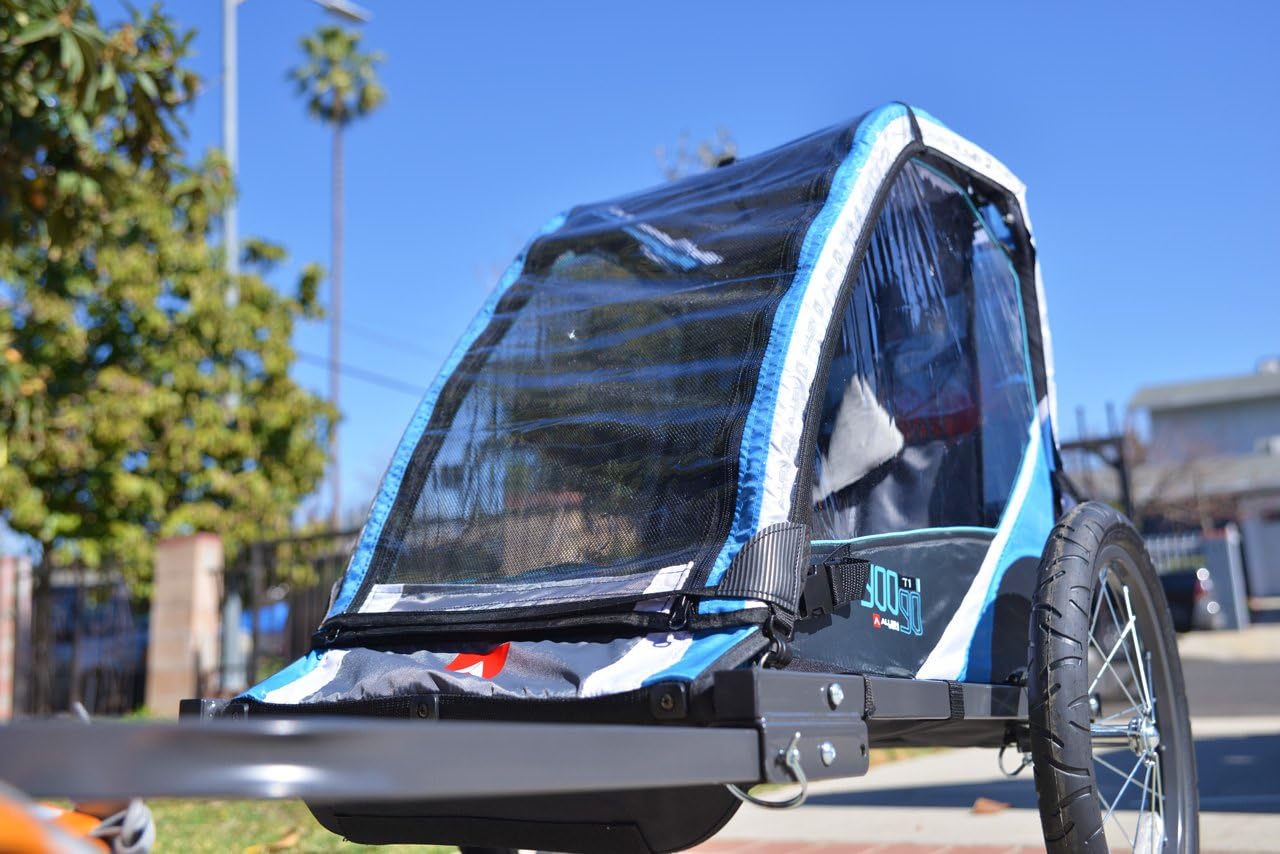
A kids’ bike trailer is exactly what it sounds like: an enclosed two-wheeled carriage that hitches to the rear axle or seatpost of your bicycle and carries one or two young children — typically up to age five or six — while you pedal. They’re one of the most popular ways families get outside together on two wheels, and the good news is you don’t have to spend $400–$600 on a Thule or Burley to get a functional, safe ride. The under-$150 tier, dominated by Allen Sports, InStep, and Schwinn, is where a lot of first-time buyer research stalls out. Reviews are mixed, the price gap versus premium brands feels significant, and it’s genuinely hard to tell whether you’re trading away safety or just stainless cup holders. This article cuts through that noise. It draws on aggregated owner sentiment, published manufacturer specifications, and editorial comparisons from named sources — including Wirecutter’s “The Best Bike Trailers for Kids,” Bicycling Magazine’s family gear coverage, Consumer Reports’ “Bike Trailer Buying Guide,” and PeopleForBikes’ family biking resources — to give you a clear-eyed picture of what you’re actually getting, and who each trailer is right for.
| EDITOR'S PICKSchwinn Echo Child Bike Trailer | Mid-tierInStep Take 2 Kids Bike Trailer | Budget pickInstep Sync Single Seat Bike Ch… | |
|---|---|---|---|
| Max weight | 80 lbs. | — | 40 lbs. |
| Capacity | 2 children | Double seat | Single seat |
| Wheel type | 20-Inch Air-Filled | Quick-Release | Quick Release |
| Harness | — | — | 5-Point |
| Price | $199.99 | $154.95 | $118.98 |
| See on Amazon → | See on Amazon → | See on Amazon → |
What the Under-$150 Market Actually Offers (And What It Doesn’t)
Let’s calibrate expectations before comparing models. At this price point, you are buying functional, safety-certified hauling — not premium ergonomics, multi-sport convertibility, or five-year warranties. Every trailer in this group meets ASTM F1975 safety standards, the U.S. benchmark for child bike trailers, uses a five-point harness system to secure occupants, and includes a rear flag for visibility. What separates them from the $300–$600 tier isn’t crash safety; it’s longevity, ride comfort, weather sealing, and accessory ecosystems.
Parent reviewers aggregated across verified purchase databases consistently describe this tier as “solid for a couple of years of regular use” — a framing worth taking literally. If you’re planning two summers of weekend trail rides and the occasional errand, this category is well-matched to your actual use case. If you’re commuting daily, carrying two heavy kids through winter weather, or want a trailer that converts to a jogging stroller, the math shifts toward the premium tier.
By the numbers — the three contenders:
| Trailer | Passenger Config | Harness | Max Child Weight | Approx. Folded Width |
|---|---|---|---|---|
| Allen Sports Deluxe | Single or Double | 5-point | 100 lb (double) | ~11 in |
| InStep Sync / Take 2 | Double | 5-point | 100 lb | ~12 in |
| Schwinn Echo | Single or Double | 5-point | 100 lb (double) | ~12 in |
All three use a standard universal hitch that attaches to a bike’s rear axle skewer or coupler. E-bike and disc brake compatibility is addressed in the FAQ section below.
Head-to-Head: Allen Sports, InStep, and Schwinn
Allen Sports Deluxe: The Durability Outlier

Instep
$118.98
In stock on Amazon
Check price on AmazonAllen Sports is the sleeper pick in this segment. The brand doesn’t generate the marketing noise of Schwinn, but owner sentiment tells a different story than you’d expect at this price. The most striking pattern in long-run reviews comes from owners who have run the same Allen Sports trailer for four or more years and through two children, describing the build quality as holding up better than they anticipated. That claim appears consistently enough across multi-year reviewers that it represents a genuine pattern, not an outlier.
What owners attribute this to: Allen Sports uses a steel frame with a slightly heavier gauge than competitors at this price, and the hinge and fold mechanism reportedly stays tight longer than comparable InStep units. The fabric enclosure is a basic 600D polyester — nothing waterproof, but the zipper quality draws fewer complaints than comparably priced trailers.
The specific limitation you need to know: the bug screen, the mesh front panel that keeps insects out when the vinyl weather cover is retracted, can be pushed open from the inside by a tall, active toddler. This is a documented, recurring owner report, not a rare occurrence. The screen is not locking and relies on a simple hook closure that a determined 2.5-to-3-year-old with long arms can defeat. It won’t cause a fall — the child is still harnessed — but parents of active, curious toddlers should factor this in before buying.
Who Allen Sports is for: Parents prioritizing longevity on a strict budget, or those planning to use one trailer across a second child 18–24 months after the first. The multi-year durability pattern in owner reviews gives it an edge that’s unusual at this price.
Instep
$118.98
In stock on Amazon
Check price on AmazonInStep Sync and Take 2: The Honest Workhorse
Instep
$118.98
In stock on Amazon
Check price on AmazonInStep occupies interesting territory: it’s the trailer that thoughtful, research-driven parents tend to land on when they’ve consciously decided against buying used-premium. Reviewers across aggregated purchase data frequently describe extended research processes before choosing InStep — not because it won a spec-sheet shootout, but because the value proposition was clear-eyed: new safety certification, known hitch compatibility, and no uncertainty about prior abuse history, at a price that felt defensible.
One particularly instructive owner pattern involves parents who compared the cost of a used Burley D’Lite ($180–$220 in competitive used markets) against a new InStep Take 2, and chose new-budget specifically because they couldn’t verify the used trailer’s crash history. Consumer Reports’ “Bike Trailer Buying Guide” notes that used trailers with unknown histories present real uncertainty around structural integrity, and that logic applies especially to the hitch mechanism and frame. This is a rational decision framework, not a rationalization.
The InStep Take 2’s honest performance window: “a couple of years with regular use” is the right baseline. PeopleForBikes’ family biking resources consistently frame entry-level trailers as a two-to-three season tool, not a decade-long asset — and InStep fits squarely in that framing.
Where InStep trails Allen Sports in owner sentiment: the fold mechanism loosens faster with heavy use, and the hinge rivets draw more complaints over time. The fabric is comparable — 600D polyester, adequate for light rain but not a sustained downpour. The storage pocket and interior feel are generally described as functional rather than refined.
Who InStep is for: First-time buyers who’ve done their homework and want a predictable, new-in-box experience with a known safety baseline. It’s particularly well-suited for parents who came close to buying used-premium and chose new-budget instead — the decision logic holds up.
Instep
$118.98
In stock on Amazon
Check price on AmazonSchwinn Echo: The Enthusiasm Leader
Instep
$118.98
In stock on Amazon
Check price on AmazonThe Schwinn Echo generates the most emotionally invested reviews in this group. Multiple owners describe comparing trailers exhaustively before selecting it — which tells you something about the research depth these buyers brought to a $120–$140 purchase. That level of investment in a budget trailer decision is worth taking seriously: these aren’t impulse buyers who’ll accept anything; they’re people who evaluated the full market and landed here deliberately.
Schwinn’s advantage in this segment is brand-familiar execution. The hitch system is widely reported as one of the easiest to attach and detach in its class, the frame folds flat quickly, and the interior sun and bug cover arrangement draws fewer complaints than Allen Sports or InStep. Bicycling Magazine’s family bike trailer coverage notes that ease of hitch attachment is one of the most underrated practical factors for parents who load and unload frequently — and the Echo scores well here by owner consensus.
The double-seat-for-one-child phenomenon is real and worth explaining. Multiple Echo owners with a single child purchased the double-wide model rather than the single. The reason is structural: the double trailer has a wider track and lower center of gravity, sitting more stably in crosswinds and during cornering. Parents report that the extra width also gives a solo child more room to move and fall asleep comfortably on longer rides. Wirecutter’s “The Best Bike Trailers for Kids” affirms that many families deliberately purchase double trailers for a single child for exactly these stability and comfort reasons — it’s a legitimate buying decision, not a sizing mistake.
Schwinn Echo limitation: the plastic hitch coupler, while easy to use, draws more long-run durability questions than the Allen Sports metal-bracket hitch. For occasional-use families this is a non-issue; for frequent users, it’s worth monitoring over time.
Who Schwinn Echo is for: Parents who want the easiest on/off hitch experience, plan to use the trailer frequently for one child and want the stability of the double configuration, and value brand-ecosystem familiarity. It’s also the pick for buyers who did exhaustive research and want a trailer that rewards that effort with a genuinely pleasant day-to-day experience.
Instep
$118.98
In stock on Amazon
Check price on AmazonFrequently Asked Questions
How long do budget bike trailers actually last with regular use?
Owner sentiment across this tier consistently points to two to three seasons of regular weekend use — roughly 24–36 months — as the realistic durability window. Allen Sports outliers report four-plus years, but those are weekend-use patterns with proper storage, not daily commute loads. PeopleForBikes’ family biking resources align with this framing: entry-level trailers are best understood as a tool for the toddler years, not a multi-decade investment.
Should I buy a single or double seat trailer if I only have one child?
The double is worth serious consideration even for one child. Multiple Schwinn Echo owners bought the double configuration specifically for a solo child because of stability — wider track, lower center of gravity, better cornering behavior. A second child down the road is a bonus, not the only reason. Wirecutter’s “The Best Bike Trailers for Kids” confirms this is a common and rational choice among families.
Can an active toddler accidentally open the bug screen or escape the harness?
On the Allen Sports specifically: yes, a tall, active toddler can push the bug screen open from the inside. The hook closure is not locking. This is a documented recurring owner report. The five-point harness on all three trailers is a separate and distinct system — it’s a proper buckled restraint and is not escape-prone under normal use. The screen issue is a ventilation panel limitation, not a containment failure.
Is it worth buying a used premium trailer instead of a new budget one?
It depends on crash history verification. A used Burley D’Lite or Thule Chariot in verified good condition is genuinely a superior trailer — but Consumer Reports’ “Bike Trailer Buying Guide” flags that trailers with unknown histories raise real structural uncertainty, particularly around hitch mechanisms and frames. If you can confirm a used premium trailer has no crash history and comes from a known seller, the value case is strong. If provenance is uncertain, new-budget is the safer call.
Do these trailers attach to e-bikes and bikes with disc brakes?
Yes, with appropriate attention to hitch compatibility. All three use a universal axle-mount coupler system. Disc brake bikes require confirming that your rear axle has enough thread exposure for the coupler — most modern disc bikes do, but quick-release axle systems vary. E-bikes add pulling weight considerations: at typical cargo speeds under 20 mph, the 100 lb child weight limit is the binding constraint, not the motor. Verify your specific bike’s rear axle standard before purchasing.
At what child age and weight do kids outgrow these budget trailers?
All three trailers are rated to 40–50 lb per seat, or 100 lb combined for doubles. Most children hit the practical height limit — head clearance under the canopy — before the weight limit, typically around age 5–6 and 42–45 inches tall. Bicycling Magazine’s family gear coverage notes that helmet clearance against the trailer canopy is the real-world cutoff for most kids. If your child is already four years old, calibrate your expectations around a two-year use window rather than four.
The Decision Rule
If you’re choosing between these three, here’s the clean framework:
- If durability and multi-child longevity matter most: Allen Sports, with eyes open about the bug screen limitation.
- If you came close to buying used-premium and want new-with-certainty: InStep Sync or Take 2, calibrated to a two-to-three season use window.
- If hitch convenience and single-child comfort in a double frame are your priorities: Schwinn Echo, double configuration even for one kid.
All three meet the same ASTM F1975 safety standards. None of them are what you’d buy if you were planning five years of daily use. But for the family that wants to get riding now without a $500 commitment, this tier earns its place — and the depth of research these parents are bringing to the decision suggests they know exactly what they’re getting.