August 2, 2026 • Neil Hayes • 10 min reading time • Prices verified June 25, 2026
Burley Hitch Ecosystem Deep Dive: Why Families Buy a Second and Third Hitch
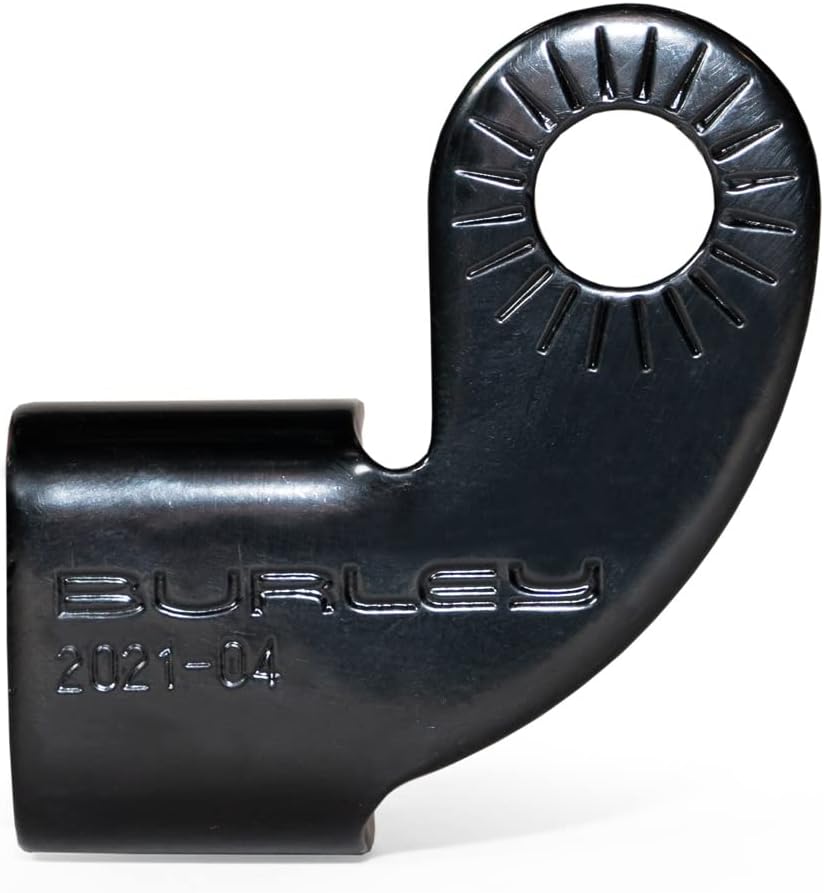
If you’ve just bought a Burley bike trailer — the kind that attaches to the rear of a bicycle and carries a child, gear, or a dog — you probably set it up, clicked the hitch into place, and went for a ride. The hitch is a small metal coupler, roughly the size of a large keychain fob, that bolts to the rear axle of your bike and accepts a ball-socket arm from the trailer. It’s the single connection point between your bike and everything being towed. Most buyers don’t think about it twice — until they’re standing in the driveway at 8 a.m. trying to swap the trailer from one parent’s bike to the other’s without a wrench, or until they find out their new e-bike’s axle bolt is too thick for the standard hitch hole. Once that happens, the hitch stops being a footnote and becomes the most discussed accessory in Burley’s entire lineup.
This guide is for readers who already own or are close to buying a Burley trailer — the Bee, d’Lite X, Coho XC, or similar — and want to understand the full hitch ecosystem before committing to a setup that works across multiple bikes and multiple riders.
Why Families End Up Buying Two or Three Hitches
The core problem is mechanical but the experience is domestic: you bought one trailer, one hitch, and two adults who both want to ride with the kids this weekend. The standard Burley hitch installs at the rear axle with a small hex nut — it takes maybe three minutes with the right tool, less if you’ve done it before. But “less if you’ve done it before” is not how Saturday mornings work.
Across aggregated owner reviews on retailer product pages, the pattern is consistent. Owners repeatedly describe buying a second hitch — one per bike — as a transformative upgrade for family rides. The logic is simple: leave one hitch permanently installed on each bike. The trailer arm clicks in or out of the hitch socket in seconds, no tools required. The limiting factor shifts from mechanical friction to who’s free to ride.
By the numbers:
- Standard Burley hitch: fits 12.2mm axle diameter (most adult bikes with quick-release skewers)
- Angled e-bike hitch: fits 15mm thru-axle bolts, angled geometry for dropout clearance
- Two-pack hitch sets: include two hitches per package, allowing one per bike or one as a ready spare
- Approximate time to swap trailer arm between pre-installed hitches: under 30 seconds
The two-pack hitch option draws consistent praise specifically for the spare-in-the-box approach. Verified purchaser reviews note that having a backup hitch on hand prevents the trailer from sitting unused after the original hitch is lost or damaged — a scenario multiple owners describe after household moves or multi-bike households outgrow a single hitch. Cross-model compatibility is also confirmed across multiple Burley trailer lines in owner-reported accounts.
The 12.2mm vs. 15mm Hitch: A Real Specification Gap
Here’s where the practitioner-level detail matters. Burley’s standard hitch is drilled for a 12.2mm axle bolt — the diameter common on traditional quick-release rear wheels, which use a 5mm threaded skewer through a hollow axle. That covers the majority of non-motorized adult bikes and most entry-level e-bikes with a conventional dropout (the notch in the frame where the wheel axle sits).
The problem emerges with thru-axles. Modern gravel bikes, mountain bikes, and a growing share of e-bikes use thru-axles — a bolt that passes completely through the dropout and axle, threading in on the far side for a much more rigid connection. Thru-axle diameters vary, but 12mm (technically 12×142mm or 12×148mm, describing diameter × spacing) is common, and 15mm is standard on many front-suspension forks and certain e-bike rear ends. The 15mm bolt won’t pass through a 12.2mm hole.
Owner reviews on retailer pages document buyers specifically researching the angled hitch after learning the standard hitch hole is too small for certain e-bike axle configurations. That kind of upstream research saves a wasted shipment. The angled design isn’t just about hole diameter — the geometry is shifted to clear the larger hardware and disc brake calipers that often accompany thru-axle setups. Reviewers report using the angled hitch across multiple bikes and multiple trailer types (dog trailer and child trailer), confirming the coupler interface remains standardized even when the axle fitting changes.
Bicycling.com’s staff review roundup titled “Best Bike Trailers for Kids” notes that hitch compatibility is one of the most commonly overlooked purchase considerations, particularly for buyers upgrading from a traditional road bike to a newer gravel or e-bike platform. BikeRadar’s “Bike Trailer Buying Guide” similarly flags thru-axle clearance as a friction point for shoppers who don’t verify axle spec before ordering. Both sources recommend confirming axle diameter before any hitch purchase.
E-Bike Compatibility: The RadRover 6 Plus Data Point
For e-bike owners, the compatibility question carries more weight because the stakes — a $1,500 to $4,000 vehicle — are higher. Electric Bike Review’s aggregated owner feedback section for the RadRover 6 Plus includes owner-reported confirmation that the official Burley 12.2mm standard hitch installs without issue and tows smoothly on that platform. The RadRover 6 Plus uses a 14mm bolt-on rear axle rather than a traditional quick-release skewer, and owner reports confirm the 12.2mm Burley hitch fits over the axle hardware with adequate clearance when properly seated.
This matters because the RadRover 6 Plus is one of the most common fat-tire e-bikes in North American cycling families, and the confirmation covers a real purchase decision. If you’re on a RadRover 6 Plus or a similar bolt-on fat-tire e-bike, the standard hitch is your starting point. If you’re on a bike with a true 15mm thru-axle or disc brakes that crowd the dropout area, begin with the angled hitch instead.
Outside Online’s gear guide “Best Kid Carrier Trailers” and Bicycling.com’s trailer roundup both recommend verifying the axle spec on your specific bike model before ordering any hitch — a step that takes about two minutes with a digital caliper or a manufacturer spec sheet.
When Flat Couplers Fail: A DIY Repair Case Study
Not every family is running a Burley-to-Burley setup. Some riders attach a Burley trailer — or a compatible brand like InStep or Schwinn, which share a similar coupler interface — using a flat-plate coupler, a simpler and less articulated hitch design typically included with lower-cost trailers. The flat coupler performs adequately under light loads, but owner reports reveal a structural limit under sustained heavy use.
One verified retailer reviewer documents a detailed DIY repair: after an InStep/Schwinn flat coupler began bending under approximately 100 pounds of regular load (child plus gear), they fabricated a steel gusset to reinforce the plate and restore rigidity. This is not a fringe case — it illustrates what flat coupler designs were and weren’t engineered to handle. The flat geometry distributes towing stress less effectively than a ball-socket or articulated design, and sustained heavy loads accelerate metal fatigue at the bend point.
If your current coupler is showing any deformation — a visible bend, play in the connection, or a socket that no longer seats cleanly — stop using it before attempting any field repair. Consult the trailer manufacturer’s replacement parts list first. The DIY gusset account is instructive as evidence of the failure mode, not as a repair blueprint. Field-fabricated fixes introduce their own unknowns under dynamic towing loads and road vibration.
For families regularly loading 80-plus pounds (two children, heavy cargo, or both), the Burley hitch ecosystem’s articulated ball-socket design is meaningfully more robust than flat couplers under sustained load, per Burley Design LLC’s published hitch compatibility documentation and long-term owner sentiment aggregated across retailer review platforms.
Frequently Asked Questions
Can I use the same Burley trailer on two different bikes without removing and reinstalling the hitch each time?
Yes — this is precisely what the multi-hitch setup is designed for. Buy one hitch per bike and leave each installed permanently. The trailer arm disconnects from the hitch socket in seconds with no tools. Owners consistently describe this as the most practical upgrade in the Burley system, especially for households with two riders sharing one trailer.
Does the Burley hitch fit a RadRover 6 Plus or other e-bikes?
Owner reports aggregated by Electric Bike Review in their RadRover 6 Plus coverage confirm the official 12.2mm Burley hitch installs cleanly on that platform. For e-bikes with true 15mm thru-axles — common on certain cargo bikes and full-suspension platforms — the angled 15mm hitch is the correct choice. Verify your bike’s rear axle diameter before ordering.
What is the difference between the 12.2mm hitch and the angled 15mm e-bike hitch?
The 12.2mm hitch fits standard quick-release and most bolt-on axle configurations. The 15mm angled hitch is drilled larger for thicker thru-axle bolts and uses an angled geometry to clear disc brake hardware and tight dropout spacing. Both accept the same Burley trailer arm coupler — the bike-side fitting changes, the trailer-side interface does not.
Will the standard hitch work on a gravel bike with disc brakes and limited rear dropout clearance?
It depends on your specific dropout geometry. Gravel bikes with 12mm thru-axles typically require the angled hitch rather than the standard 12.2mm version. The disc caliper often occupies space in the dropout zone that the flat standard hitch cannot clear. Owner accounts of switching to the angled hitch for exactly this reason are among the clearest real-world confirmations available. Measure your axle diameter and check clearance around the caliper before deciding.
What should I do if my flat InStep or Schwinn coupler starts bending under load?
Discontinue use and inspect for metal fatigue or cracking before your next ride. A bent coupler is a structural signal, not just a cosmetic issue. Consult the trailer manufacturer for a replacement coupler — InStep and Schwinn both publish replacement parts documentation. The DIY gusset repair documented in owner reviews illustrates the failure mode, but field-fabricated fixes carry real unknowns under dynamic towing loads.
Do hitch two-packs come with a spare?
Per manufacturer product listing details for Burley’s two-pack hitch configuration, yes — the package contains two hitches. Owner reviews confirm this is the primary appeal: one for each bike, or one installed and one held as a spare against loss or damage. Multiple verified buyers confirm cross-model compatibility across Burley trailer lines including the Bee.
The Decision Rule
If your household has two riders and one Burley trailer: buy two hitches now, not later. The tool-free swap is the whole point.
If your rear axle is 15mm or your dropout has disc hardware crowding the bolt area: start with the angled hitch, not the standard one.
If you’re on a RadRover 6 Plus or a similar bolt-on fat-tire e-bike: the standard 12.2mm hitch is confirmed compatible per owner reports aggregated by Electric Bike Review; the angled hitch is not required unless your specific build differs.
If your flat coupler is showing any bend or play under load: replace the coupler before adding more weight, not after.
The hitch is a $15–$30 decision that determines how much friction exists between your family and every ride. Spending $30 to permanently eliminate a tool-swap problem is, across aggregated owner sentiment on retailer platforms and editorial coverage from sources including Bicycling.com and Outside Online, one of the better-reviewed small purchases in the Burley ecosystem — and the one most likely to change how often the trailer actually gets used.