July 15, 2026 • Neil Hayes • 10 min reading time • Prices verified June 25, 2026
Hard Shell Rear Bike Bag vs. Soft Pannier vs. Wire Basket: Fit, Wobble, and Weather Tested
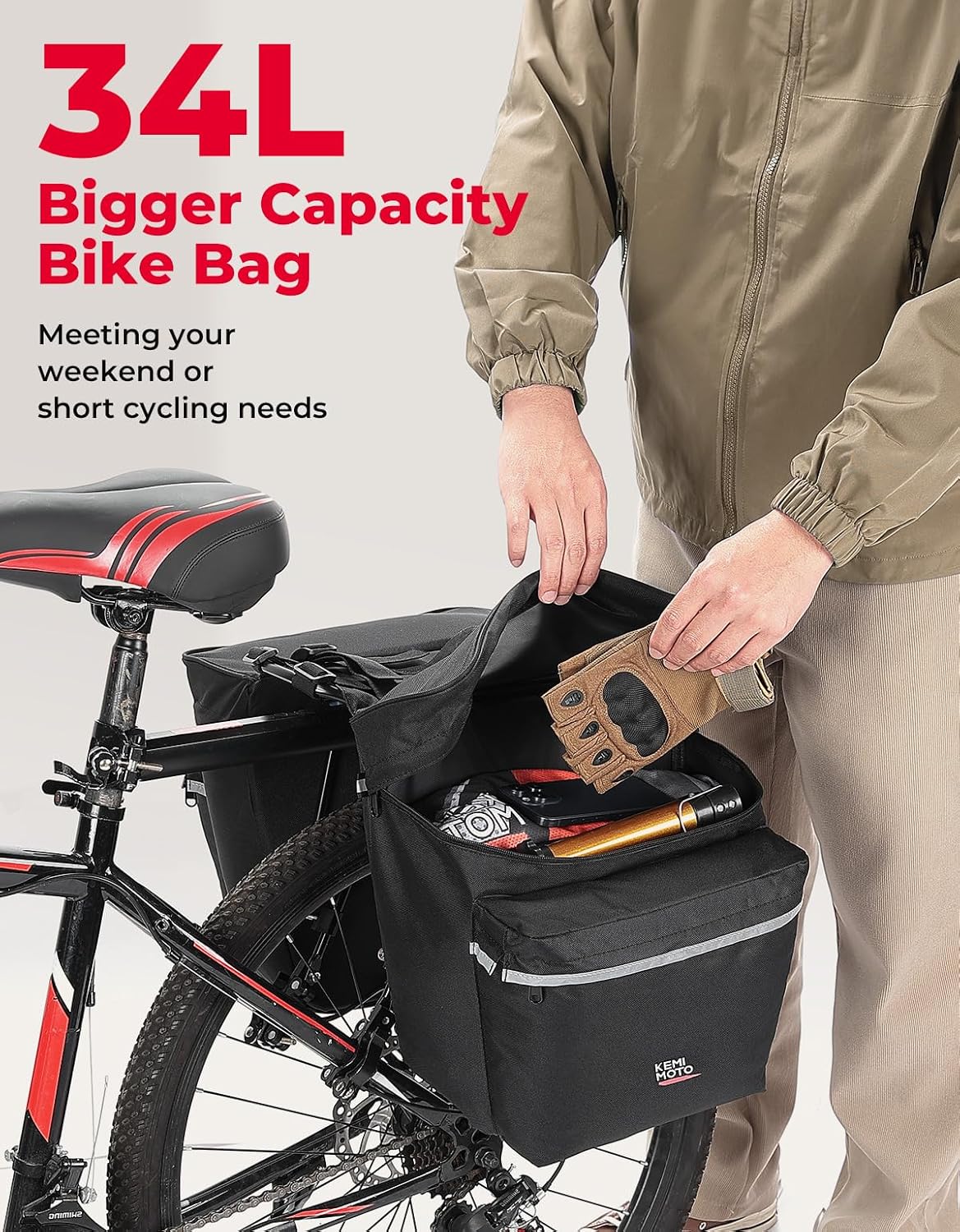
If you’ve ever watched a rear bag swing back and forth like a pendulum on a fast turn and thought, this is going to be the ride where I finally go down — you already understand what this comparison is actually about. A rear bike bag (any bag or container that mounts to the rack bolted above your rear wheel) comes in three main forms: a hard-shell bag (a rigid plastic or composite box that clicks or cinches onto the rack), a soft pannier (a fabric bag that hooks over the side of the rack), and a wire basket (an open metal frame that sits on top of the rack). Every buyer’s first question is capacity or waterproofing. The question that drives switching behavior — meaning people who buy one type and then replace it with another — is almost always wobble: how much the bag moves under load, through corners, and on rough pavement. This guide organizes the comparison around that axis, with a secondary look at weather performance and rack compatibility, because once you settle the stability question, everything else gets easier.
Why Wobble Is the Real Decision Driver
Wobble isn’t just annoying — it’s a handling problem. A rear bag that shifts laterally during a turn changes your bike’s center of gravity mid-corner, which forces micro-corrections you shouldn’t have to make. On a cargo bike carrying 30–50 lbs, or on a gravel bike at speed, that effect is amplified.
Across aggregated owner reviews, the pattern is clear: riders who switched bags cited wobble as the primary reason more often than waterproofing failure, capacity limits, or price dissatisfaction. One hard-shell bag owner, representative of a common review pattern, described switching from a competing budget soft bag specifically because it wobbled in turns, characterizing the hard-shell unit as “cinching tight with no movement” after the changeover. That language — cinching, no movement — shows up repeatedly in hard-shell reviews and almost never in soft pannier reviews at the budget end of the market.
Hard-Shell Bags: Low Wobble Risk
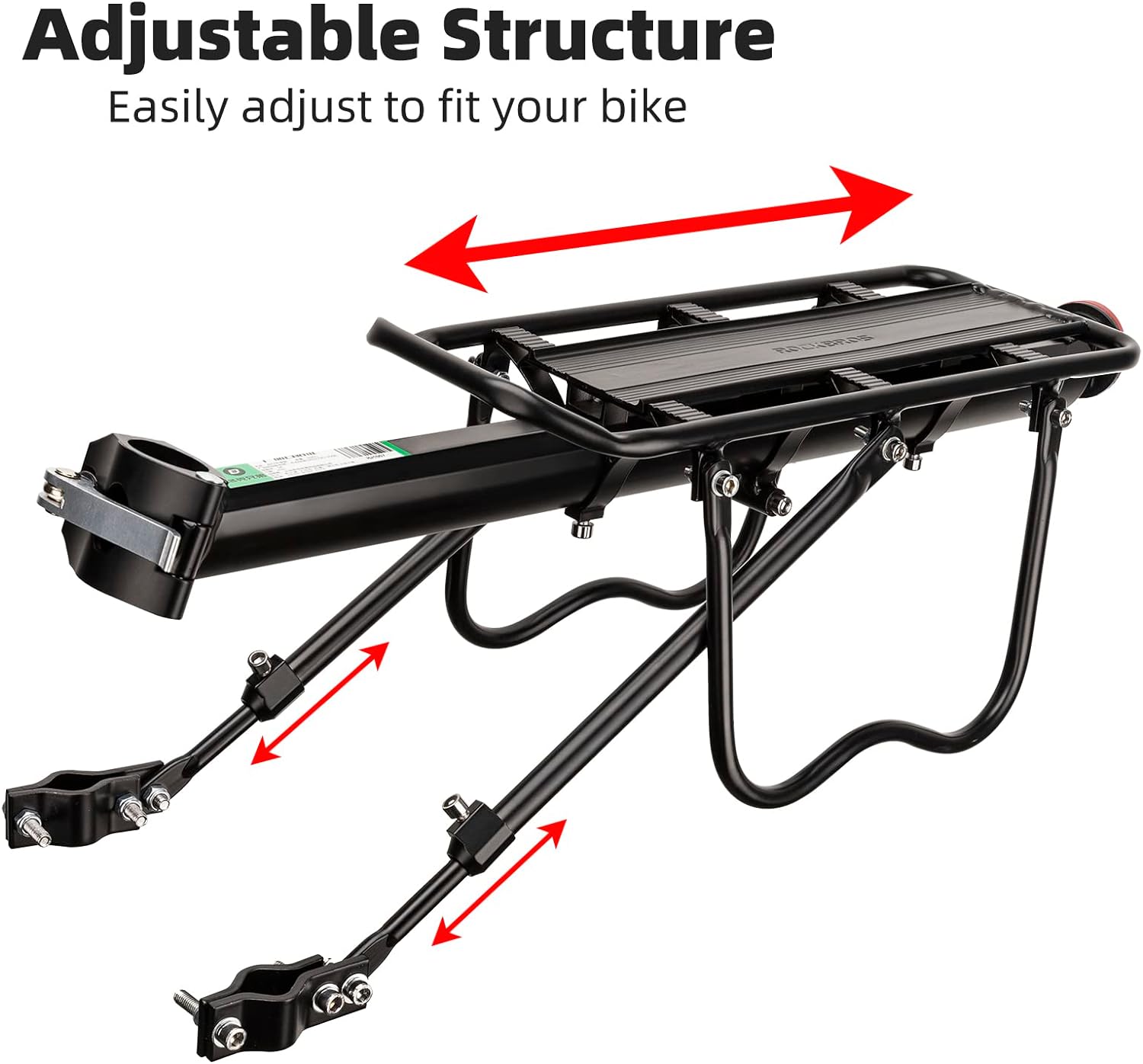
A rigid outer shell, combined with a mounting system that locks onto the rack rail rather than draping over it with hooks, eliminates the pivot point that causes soft bags to swing. Hard-shell mounting designs that use a dual-cinch or clamp mechanism — rather than hook-and-bungee — are why owners consistently describe their hard-shell bags as “locked” rather than “attached.” BikeRadar’s coverage of rear bag categories notes that cinch-lock systems represent the most stable mounting architecture available for rack-top and rack-side luggage. The tradeoff is a narrower compatibility window: verify your rack’s rail diameter before ordering.
ROCKBROS
$31.58
In stock on Amazon
Check price on AmazonSoft Panniers: Medium-Low Wobble Risk with the Right Build
Premium soft panniers — designs with integrated anti-sway straps and stiffened backing plates — close the wobble gap considerably. A backing plate creates a rigid standoff between the bag and the wheel, addressing both spoke-clearance concerns and lateral flex. The tradeoff is that the backing plate adds weight and bulk compared to pure fabric construction. Bicycling.com’s buyer’s guide to bike bags and panniers identifies backing-plate construction as the primary differentiator between budget soft panniers (which swing) and touring-grade soft panniers (which don’t).
ROCKBROS
$33.91
In stock on Amazon
Check price on AmazonWire Baskets: No Wobble from the Basket — Watch the Load
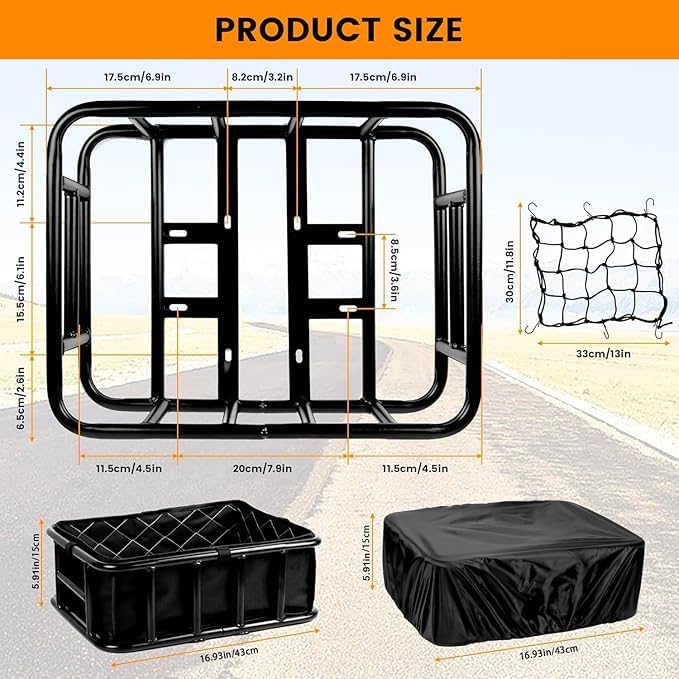
Wire baskets, mounted rigidly to the rack’s top deck, are inherently stable because there’s nothing to swing — the basket is fixed. The wobble problem with baskets isn’t the basket itself; it’s the load inside the basket. An unsecured bag of groceries will shift, which creates the same handling disturbance as a swinging pannier. Owners who skip the included cargo net almost universally report this problem. Treat the cargo net as part of the product, not an optional extra.
Bike
$39.99
In stock on Amazon
Check price on AmazonWeather Performance: The Honest Story
Weather protection is the second axis most buyers evaluate, and the honest answer is more nuanced than “rigid shell = waterproof.”
Hard-Shell Bags
A closed rigid shell is the closest thing to genuinely waterproof in this category — with the critical caveat that “waterproof” depends entirely on gasket quality and zipper design. Manufacturer specs on hard-shell bags typically reference IP ratings or “splash-proof” construction, but sustained rain eventually finds seams on units where the lid seal is not routinely inspected and maintained. For commutes and day rides, hard shells perform confidently. For overnight camping in a downpour, inspect the lid seal before committing.
ROCKBROS
$31.58
In stock on Amazon
Check price on AmazonSoft Panniers
Field reports from panniers using welded TPU or coated 600D polyester with sealed seams consistently outperform cheaper single-layer fabric bags in sustained rain — including snowstorms and muddy backcountry conditions. That directly contradicts the assumption some new buyers make — that soft fabric bags must be less weather-resistant than rigid shells. The key variable is material spec. Always check whether the manufacturer specifies sealed seams or just “water-resistant coating.” The coating degrades; sealed seams don’t. ElectricBikeReview’s cargo accessory coverage identifies sealed-seam construction as the single most predictive spec for long-term weather resistance in soft panniers.
ROCKBROS
$33.91
In stock on Amazon
Check price on AmazonWire Baskets
Wire baskets are, by definition, open containers. They require the waterproof cover that most kits include, and that cover needs to be deployed before rain starts, not after your groceries are already wet. Owners who treat the cover as an afterthought report frustrating experiences; owners who make cover deployment part of their routine report no issues. The cargo net, meanwhile, is non-negotiable for load security — see the wobble section above.
Bike
$39.99
In stock on Amazon
Check price on AmazonSummary by mount type:
| Mount Type | Wobble Risk | Waterproof (as-shipped) | Typical Capacity |
|---|---|---|---|
| Hard-shell bag | Low (cinch-lock) | High (gasket dependent) | 10–20L |
| Soft pannier (premium) | Medium-Low (backing plate) | High (sealed seams) | 28–40L |
| Wire basket | None (fixed) | None without cover | 15–30L (load-limited) |
Rack Compatibility: Will This Fit Without Modification?
Compatibility questions — will this fit my Aventon, my RadWagon, my gravel bike? — are among the most common pre-purchase concerns, and the answer varies by bag type.
Hard-shell bags typically fit any rack that meets the MIK (Mounting Interface Kit) or standard Racktime rail spec, which covers most name-brand racks on Aventon, Rad Power Bikes, and Tern platforms. Gravel bikes with aftermarket racks present more variation; check the rail spacing (most are 8mm or 10mm diameter) against the bag’s mounting clamps before ordering.
Soft panniers use hook systems that fit most rack tube diameters in the 10–16mm range, which covers nearly all production cargo bike and commuter bike racks. A backing-plate pannier sized to clear standard 700c rear wheels addresses spoke proximity — a concern that comes up frequently in technical forums but appears to be substantially mitigated by correct plate geometry. Always verify hanging depth against your wheel clearance before your first loaded ride, especially on bikes with smaller wheel formats like 20-inch cargo wheels.
Wire baskets mount to the rack’s top deck via four bolts or zip-tie points, making them the most universally compatible option. Adjustment is minimal. The tradeoff: a basket sits on top of the rack, raising your load’s center of gravity compared to panniers that hang at rack level.
BikeRadar’s overview of rear bag categories notes that rack compatibility has improved significantly as MIK and KLICKfix standards have spread — but gravel bikes with non-standard rack geometry remain the most common fit problem across all three bag types.
Capacity vs. Usable Capacity: The Number That Actually Matters
A 34L soft pannier sounds generous until you try to load it for a commute. Pannier volume is measured as total interior space, not usable organized space. A 34L bag that’s one large compartment with no dividers will fit bulky soft goods (jacket, lunch bag, gym clothes) efficiently and rigid items (laptop, lock, tools) awkwardly. Owners in commuter-focused reviews consistently describe usable daily capacity as 20–25L for the kinds of loads a 34L bag actually organizes well.
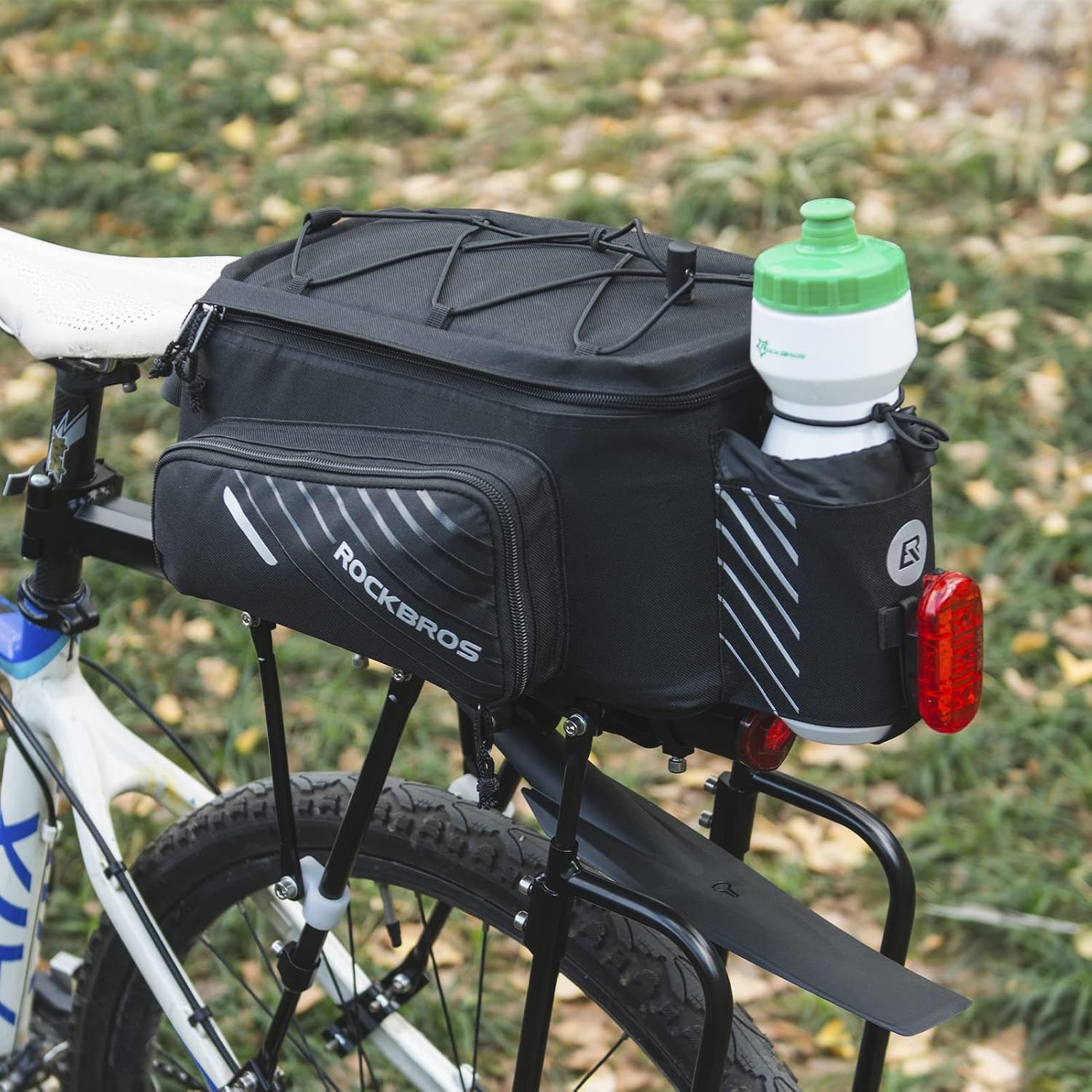
Trunk bags — a fourth format worth knowing, defined as bags that mount on top of the rack rather than hanging at the sides — generate consistent patterns of high post-purchase satisfaction in owner reviews at capacities around 10–15L. That’s a meaningful signal: owners describe this size as the right fit for a daily essentials load without overhang or imbalance. A trunk bag’s lower center of gravity relative to a wire basket and its rigid top-deck mounting produce handling characteristics owners describe as “unobtrusive” — the bag disappears into the ride feel. PeopleForBikes.org’s urban cycling cargo trends reporting identifies the trunk bag format as one of the fastest-growing categories among commuter cyclists, driven precisely by its handling neutrality.
One practical note that appears consistently across hard-shell bag owner reviews: integrated water bottle holders on certain configurations can fail to retain large-format bottles (27oz or larger) on rough roads. Owners explicitly recommend either using a smaller bottle or securing it with a strap. This is the kind of fitment detail — interior clearance for a specific bottle diameter — that manufacturers don’t prominently disclose and that matters on a gravel commute.
Frequently Asked Questions
Will a soft pannier bag get caught in my rear spokes? Spoke entanglement is a real concern with low-hanging panniers on bikes with narrow frame clearance. A backing-plate design addresses this by creating a rigid standoff from the wheel. That said, always check hanging depth against your wheel clearance before your first loaded ride — especially on bikes with smaller wheel formats like 20-inch cargo wheels.
How much can I actually fit in a 34L pannier for a daily commute? Based on owner reports: a laptop in a sleeve, a change of clothes, lunch, a U-lock, and a small toolkit — with room to spare for a light jacket. Rigid items like a laptop need a padded sleeve because a soft pannier won’t protect them structurally the way a hard shell does.
Does a soft trunk bag stay dry in rain, or do I need the rain cover? Base fabric typically handles light rain well on quality units, but the included rain cover is the right call for sustained precipitation. Most reviewers describe it as a quick-deploy addition rather than a hassle.
Will these bags fit my Aventon, RadWagon, or gravel bike rack without modification? Aventon and RadWagon racks are MIK-compatible or close to it, making hard-shell and trunk bag fitment generally straightforward. Gravel bikes with aftermarket racks are the most variable — verify rail diameter and spacing before ordering. ElectricBikeReview’s cargo accessory coverage notes that most production e-bike racks have standardized enough that cross-brand fitment has improved notably in recent model years.
Is a hard-shell bag worth the extra cost over a soft trunk bag? If wobble drives you to distraction and your loads include rigid or fragile items, yes. If your commute is mostly smooth pavement and your load is soft goods, a quality soft trunk bag at lower cost does the job. The hard-shell premium buys you the cinch-lock mounting system and structural protection — not meaningfully better waterproofing in most real-world conditions.
Can I use a rear wire basket for grocery runs without cargo falling out? Yes — if you use the cargo net every time. Owners who skip the net report shifting loads on anything rougher than smooth pavement. The waterproof cover is essential for groceries in variable weather. With both accessories deployed consistently, wire basket owners report strong satisfaction for grocery-run use cases.
The Decision Rule
If your primary concern is handling stability and rigid-item protection, the hard-shell bag’s cinch-lock mounting is the right architecture — wobble complaints essentially disappear from the review record. Bicycling.com’s pannier buyer’s guide reinforces this: cinch-lock systems are consistently rated highest for stability across load types and road surfaces.
If you need volume for mixed loads across all weather and are willing to invest in a premium soft pannier with a backing plate and sealed seams, that construction is the field-validated choice, with owner weather reports that hold up against hard-shell claims.
If your use case is grocery runs and light daily loads where organizational flexibility matters more than protection, a wire basket with its net and cover deployed is the most universally compatible and easiest-to-clean option.
And if you want something that disappears into the ride feel with strong post-purchase satisfaction and a modest footprint, the trunk bag format’s growing owner satisfaction data — documented in PeopleForBikes.org’s cargo trends reporting — is about as reliable a signal as the category produces.
The wobble question should be your first filter. Everything else is solvable with the right accessories.