August 21, 2026 • Neil Hayes • 10 min reading time • Prices verified June 25, 2026
Hard Shell vs. Soft Pannier vs. Wire Basket: Which Rear Bike Bag Actually Survives Daily Use
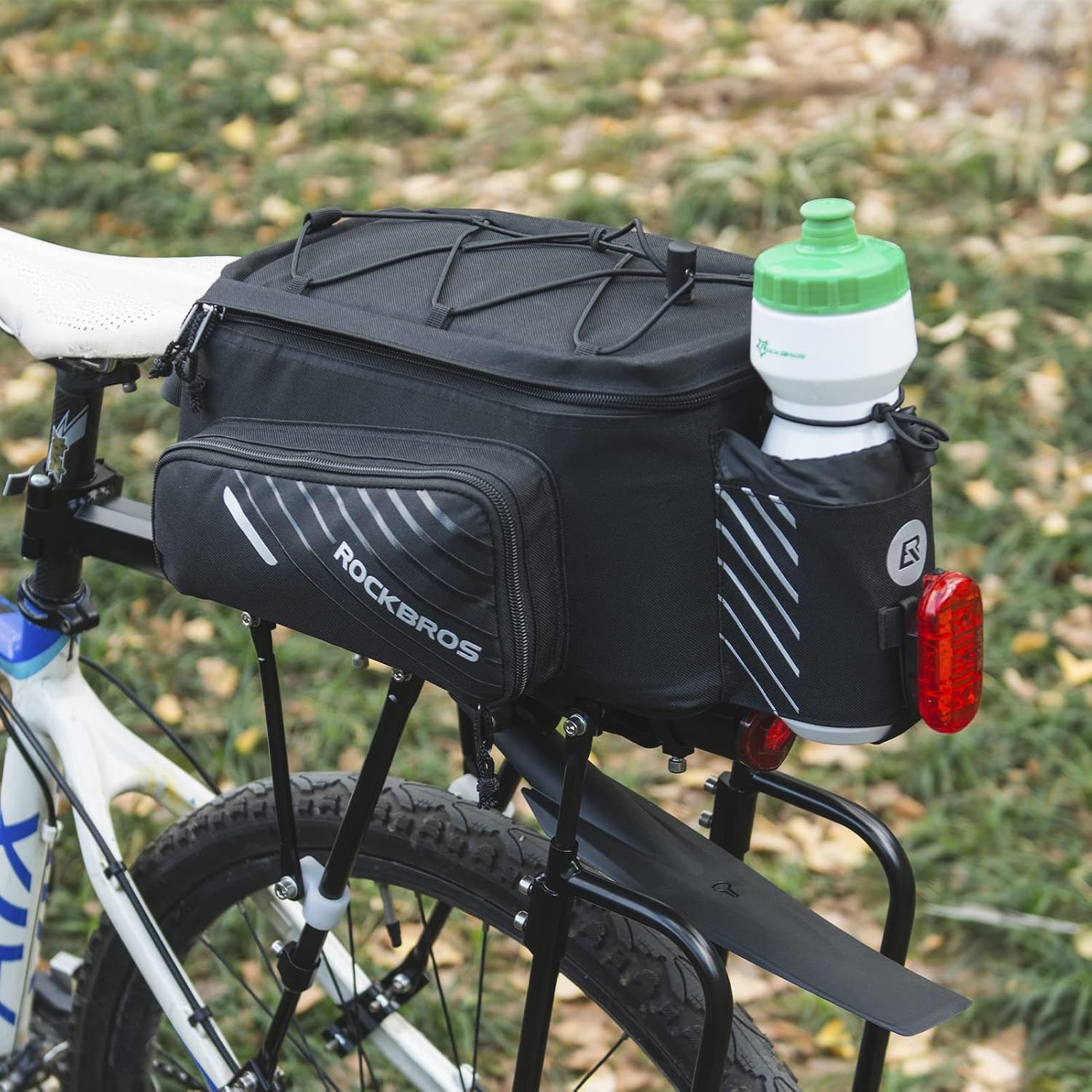
If you’ve ever watched a soft bag flop sideways mid-turn and nearly take out a car door, you already understand what this article is about. A rear bike bag is any carrying system that mounts behind your seat, either clipped to a metal rack bolted over your rear wheel or hung directly from a rack’s sides. There are three main types: hard shell cases (rigid plastic or polycarbonate boxes that click or strap onto the rack), soft panniers (fabric bags that hang from the rack’s rails via hooks or a mounting system), and wire baskets (open metal frames bolted or clamped to the top of the rack). Each category has a real use case and a real failure mode. This guide breaks down which type makes sense for which rider — and names the specific tradeoffs you’ll hit within the first three months of daily use.
| EDITOR'S PICKBike Basket Rear | Mid-tierROCKBROS Bike Rack Bag Bicycle… | Budget pickROCKBROS Rear Bike Rack Quick R… | |
|---|---|---|---|
| Type | Wire basket | Soft pannier | — |
| Capacity | Large | 13L | — |
| Weather cover | ✓ | ✓ | — |
| Mounting | — | — | Quick release |
| Use | E-bike | E-bike | — |
| Price | $39.99 | $33.91 | $31.58 |
| See on Amazon → | See on Amazon → | See on Amazon → |
Why the Mounting System Matters More Than Capacity
Capacity numbers — 20L, 34L, 40L — get a lot of attention on product pages, but experienced daily commuters will tell you that how a bag attaches to your rack determines whether it’s still functional six months from now. Bicycling magazine’s 2025 pannier buyer’s guide identifies mounting stability as the single most common source of long-term dissatisfaction in soft panniers specifically.
Soft panniers typically use one of two systems: simple J-hooks that loop over the rack’s horizontal rails, or a proprietary quick-release cradle (common on brands like Ortlieb). J-hook systems are inexpensive and universal, but owners consistently report that cheap hook designs develop slop over time — the bag starts to rattle and swing on corners or under braking. The phenomenon reviewers describe as a bag that “cinches loose” mid-ride is almost always a J-hook problem or a secondary strap that wasn’t tightened before departure.
Hard shell bags typically use a fixed-position mounting bracket or a clamping rail system. The rigidity of that mounting interface is the core value proposition: the bag stays put because there is nothing in the connection that flexes meaningfully under load.
Wire baskets are bolted directly to the rack platform, which makes their mounting the most permanent and, arguably, the most stable of the three — but it also means you’re not detaching and carrying the basket into a store. The basket goes where the bike goes.
Mounting failure modes at a glance:
- Soft pannier with J-hooks: wobble reported in a significant portion of long-term owner reviews when hooks wear loose
- Hard shell with clamping rail: near-zero wobble complaints in aggregated reviews; fit-to-rack compatibility is the more common friction point
- Wire basket (bolted): effectively zero wobble; portability drops to zero
Comparing the Three Formats Side by Side
The sections below evaluate each format across the dimensions that matter most for daily use: weather resistance, mounting security, portability, and load flexibility. Each section closes with a tier marker identifying the rider profile it best fits.
Hard Shell: The Case for Rigidity
The appeal of a hard shell rear bag is straightforward: it holds its shape, it doesn’t sag under load, and it provides meaningful weather protection without a separate cover. Products in this category — typically polycarbonate or ABS shells with a clamping rail or bracket mount — accommodate a laptop, a change of clothes, and a day’s worth of groceries in a 34L footprint, and the shape stays consistent whether the bag is full or half-empty.
The weather-resistance picture deserves nuance. Hard shell bags in this category are weather-resistant at the seams and lid interface. That is meaningfully better than most fabric panniers in road spray and sustained rain, but it is not the same as submersion-proof. Riders who have used hard shell bags through extended camping trips in wet conditions — documented in owner discussions across commuter cycling forums — describe reliable performance in rain and mud without noting water intrusion at normal riding speeds.
The tradeoff for rigidity is weight and a fixed internal volume. A hard shell adds more rotational mass to the rear wheel area than a comparably sized soft bag, though for cargo and commuter bikes already carrying meaningful loads, this is rarely a performance concern. The more practical issue is heel clearance.
The heel strike problem, explained: Several hard shell bags have a mounting position that places the bag’s front face too close to the rider’s heel at the bottom of the pedal stroke. The fix — documented across owner forums — is to position the bag forward on the rack rather than centered or rearward. BikeRadar’s buyer’s advice feature, “How to choose bike panniers,” recommends a minimum 2–3cm clearance between the bag’s leading edge and the heel path. If your rack has multiple mounting positions, check the manufacturer’s stated bag depth against your bike’s chainstay-to-rack distance before purchasing.
Bike
$39.99
In stock on Amazon
Check price on AmazonSoft Pannier: High Capacity, Lower Commitment
A soft pannier’s primary advantages are packability (it collapses when empty), lower purchase price at a given capacity, and the wide variety of mounting systems available. For riders hauling irregular loads — a mix of groceries one day and gym gear the next — the flexible structure of a soft bag accommodates awkward shapes better than a rigid case.
The failure mode, as noted above, is mounting stability under load. But there is a secondary issue that Outside Online’s gear roundup “The Best Bike Commuter Bags” (2025) flags explicitly: weather resistance in soft panniers is highly variable and frequently overstated. Most fabric panniers marketed as “waterproof” are more accurately described as water-resistant — they’ll handle a moderate rain shower but not a sustained downpour or road spray from a truck passing at speed. Riders who commute in genuinely wet climates consistently add a pack cover (a separate rain shell that slips over the entire bag) as a non-negotiable accessory.
For riders who want a soft pannier that genuinely resists the mounting wobble problem, the solution is almost always paying for a quality proprietary mounting system rather than J-hooks. This does push the price up significantly — quality quick-release systems can add $50–$100 to the total cost — but the long-run satisfaction difference is substantial. Bicycling magazine’s 2025 pannier buyer’s guide consistently awards top marks to panniers with dedicated mounting cradles over those relying on universal J-hook hardware.
ROCKBROS
$33.91
In stock on Amazon
Check price on AmazonWire Basket: The Honest Choice for Short, Frequent Trips
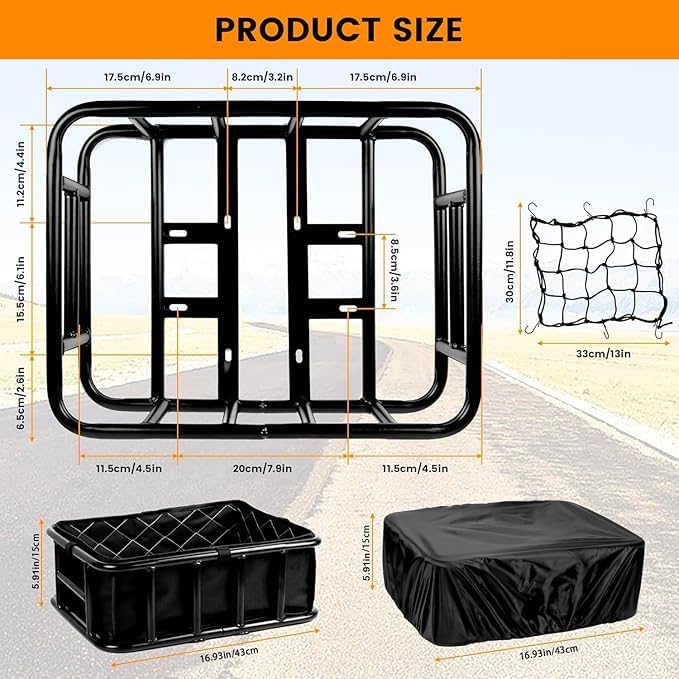
Wire baskets are underrated in the cargo cycling conversation, largely because their open top looks like an obvious flaw. Riders who commit to using one, however, consistently find that the included cargo net — a bungee-cord mesh that stretches over the basket’s opening — resolves the containment problem effectively for most loads. Several wire basket products also bundle a waterproof cover, which addresses weather exposure for lighter rain conditions.
Where wire baskets genuinely shine is in use cases involving frequent, fast loading and unloading: a quick grocery run, a trip to the hardware store with items that don’t fit neatly in a bag, hauling a helmet or jacket when you lock up. The open-top design means zero fumbling with zippers or latches. People for Bikes’ 2024 “Urban Cargo Cycling Infrastructure and Equipment Report” notes that urban errand riders disproportionately favor open-top carrying solutions for exactly this reason — speed of access at the destination outweighs weather protection concerns for short trips.
The honest limitations: a wire basket is a near-permanent fixture, it offers no meaningful weather protection on its own, and it has a defined volume ceiling. You can heap items above the rim, but they rely entirely on the cargo net to stay put. For riders who need to carry the bag into a building, protect electronics daily, or detach the carrying system and use it separately, a wire basket is not the right primary solution.
ROCKBROS
$31.58
In stock on Amazon
Check price on AmazonMatching the Format to Your Actual Riding Pattern
The aggregated evidence from owner experience and editorial sources supports this decision framework:
If you ride daily in mixed weather and need to carry a laptop or valuables → hard shell. Verify rack compatibility and heel clearance before purchasing. The weather-resistance advantage over soft bags is real and meaningful in sustained rain.
If you have access to a high-quality quick-release mounting system and carry irregular loads → soft pannier. Skip J-hook systems at the budget tier unless you add a secondary stabilizer strap. Budget for a pack cover as part of the total system cost, not an optional add-on.
If you do short, frequent urban errands and value loading speed over weather protection → wire basket. Treat the cargo net as mandatory, not optional. The waterproof cover bundle, where included, extends utility meaningfully.
Frequently Asked Questions
Will a soft pannier bag rub my heel while pedaling? It depends on the bag’s depth and your rack’s mounting position. This issue is most commonly reported with hard shell bags, but deep soft panniers can cause the same problem. Mount the bag as far forward on the rack as the system allows, and verify that the front face of the bag clears your heel by at least 2–3cm at the bottom of the pedal stroke. BikeRadar’s pannier fitting guidance covers this measurement in detail.
Is a hard shell bag actually waterproof or just water-resistant? Based on owner reports across commuting and camping use — including trips through rain, snow, and muddy terrain — hard shell bags in the mid-to-upper tier perform well above typical water-resistant fabric bags. However, no format reviewed here is rated as submersion-proof. The accurate framing is: a quality hard shell handles sustained rain and road spray reliably; it is not a dry bag.
Can I lock a hard shell bag to my bike rack? Most hard shell bags do not include an integrated lock. Their clamping or bracket mounting system is typically more secure than J-hook panniers, which can be lifted off a rack by hand. For meaningful security, a cable lock threaded through the bag’s handle and around the rack adds a deterrent layer. This is an owner-documented workaround, not a manufacturer-rated security feature.
Do wire baskets need a cargo net to be practical? For anything other than large, stable items, the cargo net is effectively mandatory. Riders who describe wire baskets positively almost universally mention using the net on every ride. The waterproof cover becomes valuable as soon as rain enters the picture.
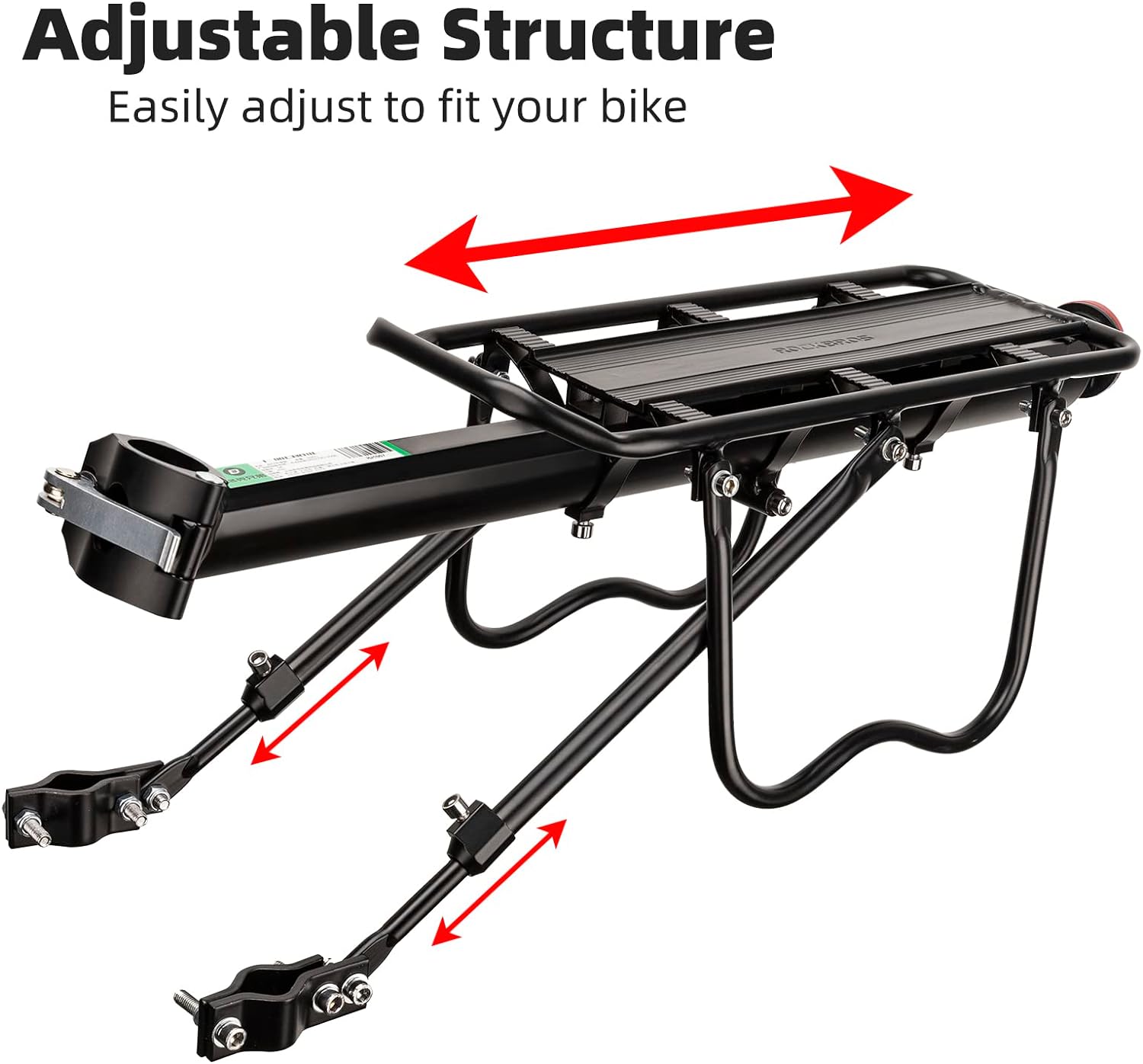
How do I know if a rear bag will fit my specific rack? Check three dimensions: rack width (most standard racks are 120–140mm between rails), rack platform depth (front-to-back), and the distance from your heel path to the front of the mounting zone. Electric Bike Review’s technical explainer “Rear Rack Weight Limits Explained” recommends confirming all three against the manufacturer’s mounting spec before ordering — returns on rack bags are common when riders skip this step.
What is the practical weight limit for a rear rack bag setup? The rack itself is the binding constraint, not the bag. Most standard rear racks are rated to 25kg (55 lbs), but Electric Bike Review’s rack explainer notes that sustained loads above 15–18kg on lower-tier racks accelerate frame fatigue at the mounting eyelets. As a practical guideline: keep loaded bag weight under 15kg for daily use, and verify your specific rack’s rating before carrying heavy groceries or tools regularly.