June 21, 2026 • Neil Hayes • 9 min reading time • Prices verified June 25, 2026
The Trailer Owner's Essential Accessory Kit: Hitches, Pumps, Locks, and Load-Securing Gear
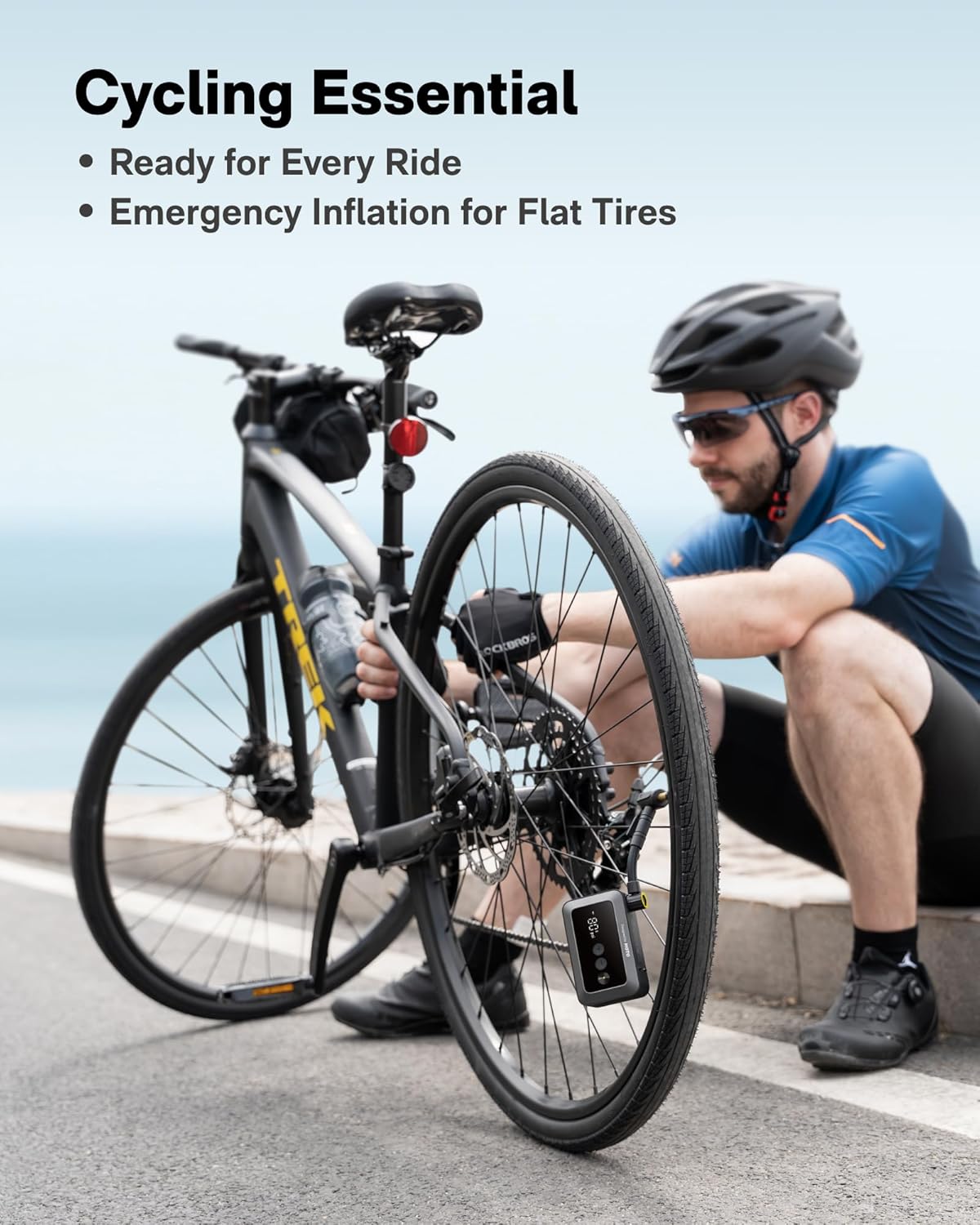
You’ve got a bike trailer — whether it’s a $120 Burley D’Lite or a $2,500 Thule Chariot Cross — and the first ride went fine. But somewhere around ride three, you start noticing the gaps: the hitch wobbles on your new gravel bike’s dropout (the metal tab at the rear wheel where the frame meets the axle), the cargo net that came in the box barely holds two grocery bags from shifting, and you’ve got nowhere to park the rig safely outside the farmers market. A bike trailer is the main investment; the accessory kit is what makes it function like you imagined when you bought it. This guide covers the four categories that matter most — hitches and coupling hardware, inflation and tire maintenance, locks, and load-securing gear — with enough specification detail to help you spend wisely and skip what you don’t actually need.
Hitches and Coupling Hardware: The Connection You Cannot Compromise
The hitch is the single mechanical link between your bike and everything in the trailer — kids, cargo, or a dog that won’t sit still. Most trailers ship with one hitch type designed for quick-release axles (the small lever mechanism most modern bikes use to attach the rear wheel). If your bike has a thru-axle (a solid bolt that runs completely through the hub, increasingly common on gravel and mountain bikes since roughly 2018), or a bolt-on axle on older city bikes, you need an adapter or an entirely different coupling.
Know your axle standard before you order anything. The three common configurations in 2026:
- Quick-release (QR), 5mm skewer — still the default on most entry and mid-range bikes; most trailer hitches work here out of the box.
- Thru-axle, 12×142mm or 12×148mm — the dominant rear standard on modern gravel and MTB. Burley’s Universal Hitch and Thule’s Thru-Axle Adapter both address this; published fitment charts from both manufacturers list compatible axle diameters explicitly.
- Bolt-on axle — common on internal-gear hub city bikes (Shimano Nexus, Alfine). Requires a bolt-on specific arm or a frame-mount coupler.
Burley’s published documentation for the D’Lite X notes that the included hitch arm covers 5mm QR and most 10mm solid axles, but explicitly flags that thru-axle riders need their separately sold adapter kit. Thule’s Chariot product pages list five hitch variants with specific axle compatibility tables — a level of documentation that makes fitment verification straightforward if you read it before purchasing.
The coupler itself deserves attention. Most modern trailers use a ball-socket coupler — a plastic or composite ball on the trailer arm that clips onto a receiving socket attached to your axle. The play (small amount of intentional movement) in that joint is by design; it allows the trailer to lean independently when the bike corners. What you want to check, per aggregated owner reports on platforms like bikeradar.com’s forum archives, is that the coupler retention clip seats audibly and that there’s no lateral slop beyond the intended range. A worn or mismatched coupler is the most common cause of trailer wander on descents.
By the Numbers
| Axle Type | Adapter Needed? | Typical Adapter Cost (2026 MSRP) |
|---|---|---|
| QR 5mm skewer | Usually no | $0–$15 |
| Thru-axle 12×142mm | Yes | $20–$35 |
| Bolt-on solid axle | Often yes | $15–$30 |
| Seat-tube / frame mount | Yes (full kit) | $40–$65 |
Inflation and Tire Maintenance: Small Tools, Non-Negotiable Impact
Trailer tires are under-inflated more often than any other component in the system, according to PeopleForBikes’ urban trailer safety overview. The math is simple: a 16-inch trailer tire rated for 40–60 psi loses air at the same rate as any other pneumatic tire, but it gets checked far less often because it’s not on the bike you’re riding. An underinflated trailer tire increases rolling resistance, degrades handling on corners, and can cause pinch flats (where the tube gets pinched between tire and rim when it hits a bump) on road debris.
What you actually need:
- A floor pump with a pressure gauge rated to at least 100 psi. Most trailer tires run 40–60 psi; a gauge accurate in that range matters. Owners consistently report that shock-pump style mini-pumps are frustrating on trailer tires because the small barrel requires dozens of strokes and often seats poorly on Schrader valves (the wider, car-style valve stems most trailer tires use). A floor pump with a dual-head that handles both Presta (narrow, found on most road bikes) and Schrader (wider, found on most trailers and car tires) covers every tire in your household.
- A patch kit and a spare tube in the correct size. Trailer tire sizes are not always stocked at local shops. The Burley D’Lite uses a 16×1.75 tube; the Thule Chariot uses a 20×1.75. Neither is the same as a standard road bike tube. Carry one spare and know the size before you’re on a path two miles from the car.
- Tire levers. Trailer tires tend to have stiffer sidewalls than road bike tires. Two plastic levers prevent knuckle damage during a trailside swap.
BikeRadar’s accessory guides consistently note that a trailer-specific spare tube is the single most overlooked item in new trailer owner kits — a finding echoed across owner forum discussions on the major trailer brands’ support communities.
Locks: Protecting an Asset You Can’t Easily Wheel Inside
A quality cargo bike trailer represents a $300–$2,500 investment and is considerably harder to secure than a bicycle. You cannot lean it against a post and run a standard U-lock through it the way you would a bike frame. The structural reality is that most trailers have a hitch arm and a fabric body — there’s no rigid tube loop that a U-lock naturally fits around the way a bike downtube works.
The practical layered approach:
Layer 1 — Secure the hitch. When you park, disconnect the trailer from your bike and run a cable lock through the hitch arm and around a fixed object. A 6mm braided steel cable lock (not a primary security device on its own, but meaningful as a deterrence layer) is enough to prevent opportunistic grab-and-go theft. Bicycling.com’s trailer security feature notes that most trailer theft is opportunistic — someone sees an unlocked, disconnected trailer next to a bike and walks off with it in 15 seconds. A cable that requires any tool defeats that scenario.
Layer 2 — Lock the trailer to the bike. If you’re leaving the rig assembled, a dedicated trailer hitch lock — a small hardened pin that replaces the standard retention clip and requires a key to remove — prevents the trailer from being unclipped. Burley sells a proprietary coupler lock; third-party universal versions work with most ball-socket couplers.
Layer 3 — For high-value trailers, a secondary chain or heavy cable. The Thule Chariot Cross 2 at $2,500 MSRP warrants the same security calculus as a quality bicycle. A 10mm hardened steel chain through the frame of a fixed object and around the trailer’s rear axle tube is the highest practical level of fixed-location security for a parked trailer.
The tradeoff is weight: a 10mm chain long enough to reach a bike rack adds meaningful carry weight. For most urban errand contexts — a 30-minute grocery run — a hitch lock plus cable is proportionate. For overnight or multi-hour parking, chain up.
Load-Securing Gear: What Keeps Cargo Where You Put It
If you’re using your trailer for cargo rather than child transport, the internal securing system matters as much as the hitch. Most cargo trailers ship with either a basic cargo net or nothing. Here’s what experienced operators consistently reach for:
Cargo nets and bungees rated for the trailer’s interior dimensions. Generic bungee kits from hardware stores often have hooks that scratch or catch on trailer interiors. Trailer-specific nets sized for your model’s interior dimensions (Burley’s published spec sheets list interior cargo bay dimensions for each model) sit flat and don’t shift under load. Owners report that a net slightly smaller than the interior opening stays taut better than an oversized one.
Compression straps with ratchet mechanisms for dense or irregular loads. A 1-inch ratchet strap run across the top of stacked items prevents the load from shifting into the hitch arm or bulging the sides of a soft-shell trailer. Published max payload specs for common cargo trailers — the Burley Cargo rates at 100 lbs, for example — assume loads that are properly contained; an unsecured load that shifts changes the weight distribution and affects towing stability.
Non-slip liner material. A sheet of rubberized shelf liner cut to the trailer floor prevents boxes and bags from sliding forward under braking. It weighs almost nothing and costs under $10 at any hardware store. Owners who haul grocery bags report this as a disproportionately useful addition.
Weather cover compatibility. Many trailers offer an optional rain cover or cargo cover sold separately. If you’re hauling anything moisture-sensitive — electronics, paper goods, food — verify that your trailer’s model-year rain cover is in stock before you need it. Thule’s accessory compatibility pages list cover fitment by model and year; Burley’s support documentation does the same.
The Decision Framework
If you’re evaluating what to buy first, run through this sequence:
- If your bike has a thru-axle: buy the correct adapter before anything else. Every other accessory is irrelevant if the hitch doesn’t fit.
- If you’re using the trailer for cargo and not child transport: prioritize load-securing gear over locks, because an unsecured shifting load is a more immediate safety issue than theft risk on most routes.
- If you park outside regularly or in an urban environment: add a hitch lock and a cable lock as your minimum security layer.
- If you’re on pneumatic tires (nearly every trailer): carry a spare tube in the correct size on every ride from day one.
The accessory kit for a well-equipped trailer doesn’t need to be expensive — sourcing the right thru-axle adapter, a floor pump with a Schrader head, a basic cable lock, and a cargo net sized to your trailer’s interior can run $60–$120 total and will meaningfully close the gap between a trailer that works on good days and one that works reliably every day.
Published specifications and owner sentiment cited from: Burley Design D’Lite X Owner’s Manual (2024); Thule Chariot Cross 2 product documentation; PeopleForBikes urban trailer safety overview; Bicycling.com trailer security feature; BikeRadar cargo trailer accessory guide.