May 2, 2026 • Neil Hayes • 8 min reading time • Prices verified June 25, 2026
The Bike Trailer Hitch Compatibility Problem (and How to Solve It for Under $25)
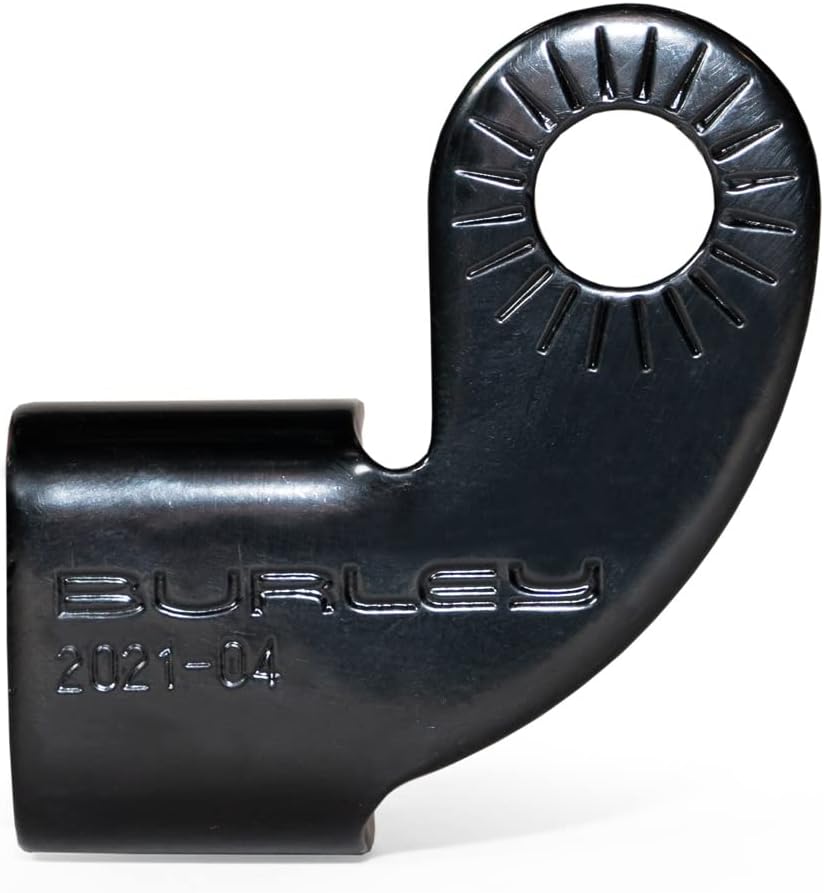
You’ve picked a bike trailer — maybe it’s a Burley D’Lite, maybe a Thule Chariot Cross, maybe a no-name cargo trailer from a sporting goods store. It arrives, you pull it out of the box, and then you stare at the back of your bike. The trailer has some kind of hook or arm. Your bike has an axle. These two things do not obviously connect. Welcome to the hitch compatibility problem — the single most common source of frustration for new trailer owners, and an issue that almost every experienced rider has navigated at least once.
A hitch is simply the mechanical connection point between your trailer and your bike. The trailer’s side has a coupler (the socket or arm that attaches), and your bike provides the anchor point — almost always the rear axle (the rod that runs through the center of your rear wheel) or, on some modern bikes, the chainstay (the frame tube running from the bottom bracket to the rear wheel). The great news: in the overwhelming majority of cases, an incompatibility between a trailer and a bike is a $5–$25 adapter problem, not a deal-breaker. This guide maps the problem, names the adapter you need, and gives you a clear decision rule so you don’t spend an afternoon ordering the wrong part twice.
| EDITOR'S PICK[Burley Design 12.2MM Steel Hitch](https://www.amazon.com/dp/B011TLU5J4?tag=greenflower20-20) | Mid-tier[Coupler Attachments for Instep](https://www.amazon.com/dp/B07BBNWJ3J?tag=greenflower20-20)… | Budget pick[Titanker Upgraded Bike Trailer](https://www.amazon.com/dp/B07BBNWJ3J?tag=greenflower20-20)… | |
|---|---|---|---|
| Hitch Type | Steel Hitch | Flat Coupler | — |
| Compatibility | Burley | Instep, Schwinn | Schwinn, Instep, Burley |
| Material | Steel | — | — |
| Axle Size | 12.2mm | — | — |
| Included Items | — | — | 1 PC |
| Upgraded | — | — | ✓ |
| Price | $24.99 | $11.26 | $9.49 |
| See on Amazon → | See on Amazon → | See on Amazon → |
Why the Hitch Compatibility Problem Exists in the First Place
The trailer industry has never settled on a single universal standard, and that’s the root of everything. According to Burley Design’s trailer compatibility documentation, the brand has shipped multiple coupler generations across its product history — and competitors like Thule, Instep, InStep, and Croozer have each developed proprietary attachment systems that suit their own trailer geometry. On top of that, bicycle axle standards have proliferated: a road bike from five years ago, an e-cargo bike from this year, and a kids’ mountain bike can all have meaningfully different rear axle configurations.
BikeRadar’s technical explainer on trailer fitting breaks the anchor-point side of the equation into four categories you’re likely to encounter:
1. Quick-release (QR) skewer axles. Still common on entry-level and mid-range bikes. The axle is a 5mm skewer that passes through hollow dropouts (the slots where the wheel mounts). Most trailer couplers are designed around this configuration — it’s the default assumption.
2. Thru-axles. Increasingly standard on higher-end bikes, e-bikes, and anything with disc brakes. A thru-axle is a bolt that passes all the way through the fork/dropout and the wheel hub, with diameters of 12mm (most common rear), 15mm, or 20mm. A QR-designed coupler physically cannot thread onto a thru-axle. This is the compatibility gap responsible for most returned trailers.
3. Solid axles. Found on many entry-level bikes, kids’ bikes, and internal-gear hub bikes. These are non-quick-release, often nutted. Most coupler kits include a nutted-axle washer already, so this is rarely the hard case.
4. Cargo bike and e-bike cargo-specific configurations. Bikes like the Tern GSD S10 and Rad Power Bikes RadWagon 4 are often running 12mm thru-axles and may have rear rack geometry that makes a standard coupler awkward regardless. Thule’s Chariot Connector System FAQ addresses this explicitly, noting that cargo bikes with integrated rear racks may require a seatpost-mount coupler instead of an axle coupler.
The Four Adapters That Solve 95% of Problems
Once you know which axle type you have and which coupler type your trailer ships with, the fix is usually one of four inexpensive components. Bicycling.com’s buyer’s guide roundup on bike trailers consistently flags the adapter question as a pre-purchase homework item — and for good reason, since discovering the gap after delivery adds a few days of waiting.
1. Thru-Axle Adapter (~$8–$18)
This is the most common fix in 2026. If your bike has disc brakes and was purchased in the last four or five years, assume a thru-axle until confirmed otherwise. A thru-axle adapter threads onto the axle end stub and presents a standard 5mm post that your trailer coupler can attach to as if it were a QR skewer. Burley sells a branded version; third-party adapters rated for the same job are widely available and consistently reported by owners as functionally equivalent for this application.
Match your diameter: 12mm rear thru-axle is by far the most common, but check your bike’s spec sheet. Using a 12mm adapter on a 15mm axle won’t work and creates a safety gap.
2. Axle Extender / Spacer Washer Kit (~$5–$12)
If your QR skewer doesn’t extend far enough past the dropout for the coupler arm to seat flat, a stack of spacer washers (typically sold in a kit with M5 hardware) resolves the gap. This is common on bikes with very narrow dropouts or on cargo bikes where a pannier rack bracket is already occupying the axle post. Owners in long-run forum reviews on cargo-bike communities note this as a “five-minute fix that should come in every trailer box.”
3. Seatpost Coupler Mount (~$15–$25)
Some trailer manufacturers — Thule and Croozer being the most prominent — offer a seatpost-mount coupler as an alternative attachment point. Instead of anchoring at the rear axle, the coupler clamps around the seatpost (the tube that holds your saddle) and the trailer arm connects there. This bypasses axle compatibility entirely. It’s the go-to solution for:
- Bikes with integrated rear racks where axle access is blocked
- E-cargo bikes with unusual dropout geometry
- Situations where attaching to the axle would interfere with an existing rack or fender
PeopleForBikes’ overview of cargo bike and trailer safety standards notes that seatpost mounts should only be used with seatposts rated for lateral load — carbon seatposts are generally not suitable. Aluminum and steel seatposts in standard diameters (27.2mm and 31.6mm are most common) handle trailer lateral loads without issue per published compatibility documentation from both Burley and Thule.
4. Hitch Ball Coupler Adapter (~$10–$20)
A small number of trailers — particularly older InStep and Bell-branded models — use a 1/2-inch hitch ball setup rather than a post-and-coupler design. If you’ve acquired a used trailer of this type and want to run it on a modern bike, a ball-mount adapter that presents a hitch ball on a QR skewer post makes the connection. Less common in 2026 than it was a decade ago, but worth knowing if you’re sourcing secondhand.
By the Numbers
| Axle Type | Adapter Needed | Typical Cost | Availability |
|---|---|---|---|
| Quick-release (5mm skewer) | None — standard fit | $0 | — |
| 12mm rear thru-axle | Thru-axle adapter, 12mm | $8–$18 | Widely stocked |
| 15mm / 20mm thru-axle | Thru-axle adapter, 15mm or 20mm | $10–$20 | Less common, order ahead |
| Solid / nutted axle | Washer kit (usually included) | $0–$8 | Included in most kits |
| Blocked axle / cargo bike | Seatpost coupler mount | $15–$25 | Brand-specific |
The Pre-Purchase Compatibility Check (Do This Before You Buy)
If you haven’t purchased a trailer yet, a five-minute check saves you a return shipping headache. Here’s the decision sequence:
Step 1: Identify your rear axle type. Look at where your rear wheel meets the frame. If there’s a lever-operated skewer with a quick-release cam, you have a QR axle. If there’s a bolt or cap on each side with no lever, you likely have a thru-axle or solid axle. Check your bike’s manual or the manufacturer’s spec sheet — thru-axle diameter is always listed.
Step 2: Identify what coupler your target trailer ships with. Almost all major brands (Burley, Thule Chariot, Croozer, Hamax) document their included coupler type on the product page. “Universal coupler” in a product listing typically means it includes QR and nutted-axle hardware but may not include a thru-axle adapter — confirm this explicitly.
Step 3: Match the gap to one of the four adapters above. If your axle type matches the included coupler: done. If not, price the adapter before you commit. In most cases you’re adding $10–$20 to a purchase in the $120–$2,500 range — a rounding error, but only if you’ve accounted for it.
Step 4: If you’re on an e-cargo bike, check dropout geometry separately. Bikes like the RadWagon 4 and Tern GSD are popular trailer-towing platforms, but their rear end geometry varies enough that Bicycling.com’s guide specifically recommends contacting the trailer brand’s support line with your bike model before purchasing. Thule’s Chariot support documentation includes a model-specific compatibility lookup for exactly this reason.
If X, Then Y: The Decision Rule
If your bike has a standard QR skewer and you’re buying any major-brand trailer made in the last ten years: just buy the trailer. No adapter needed. This is still the majority case.
If your bike has a 12mm rear thru-axle (the most common e-bike and disc-brake configuration): order a 12mm thru-axle adapter at the same time as the trailer. Budget $10–$15. Plan for an extra few days if you’re ordering the adapter separately.
If you’re on an e-cargo bike with a rear rack already mounted or integrated: lean toward a trailer that offers a seatpost coupler option, or verify explicitly with the trailer brand that their axle adapter clears your rack hardware. Thule Chariot and Burley are the most responsive brands on this question, per their published compatibility documentation.
If you’re sourcing a used trailer of unknown vintage: identify the coupler style before assuming it works. A hitch-ball coupler trailer and a post-coupler bike create a problem that’s solvable, but requires the right adapter — not force.
If the adapter cost would push your total over your budget threshold: that’s a signal to re-evaluate the trailer choice itself, not to skip the adapter. A coupler that doesn’t fully engage is the only outcome worse than a return.
The compatibility problem sounds intimidating — “my trailer won’t attach to my bike” is not a fun sentence to read on an assembly afternoon. But the industry has produced a shallow, well-mapped solution set, and almost every gap closes for well under $25. Know your axle, know your coupler, match them before checkout.