May 23, 2026 • Neil Hayes • 11 min reading time • Prices verified June 25, 2026
The Bike Trailer Hitch Ecosystem Explained: Burley, Schwinn, InStep, and Angled E-Bike Hitches
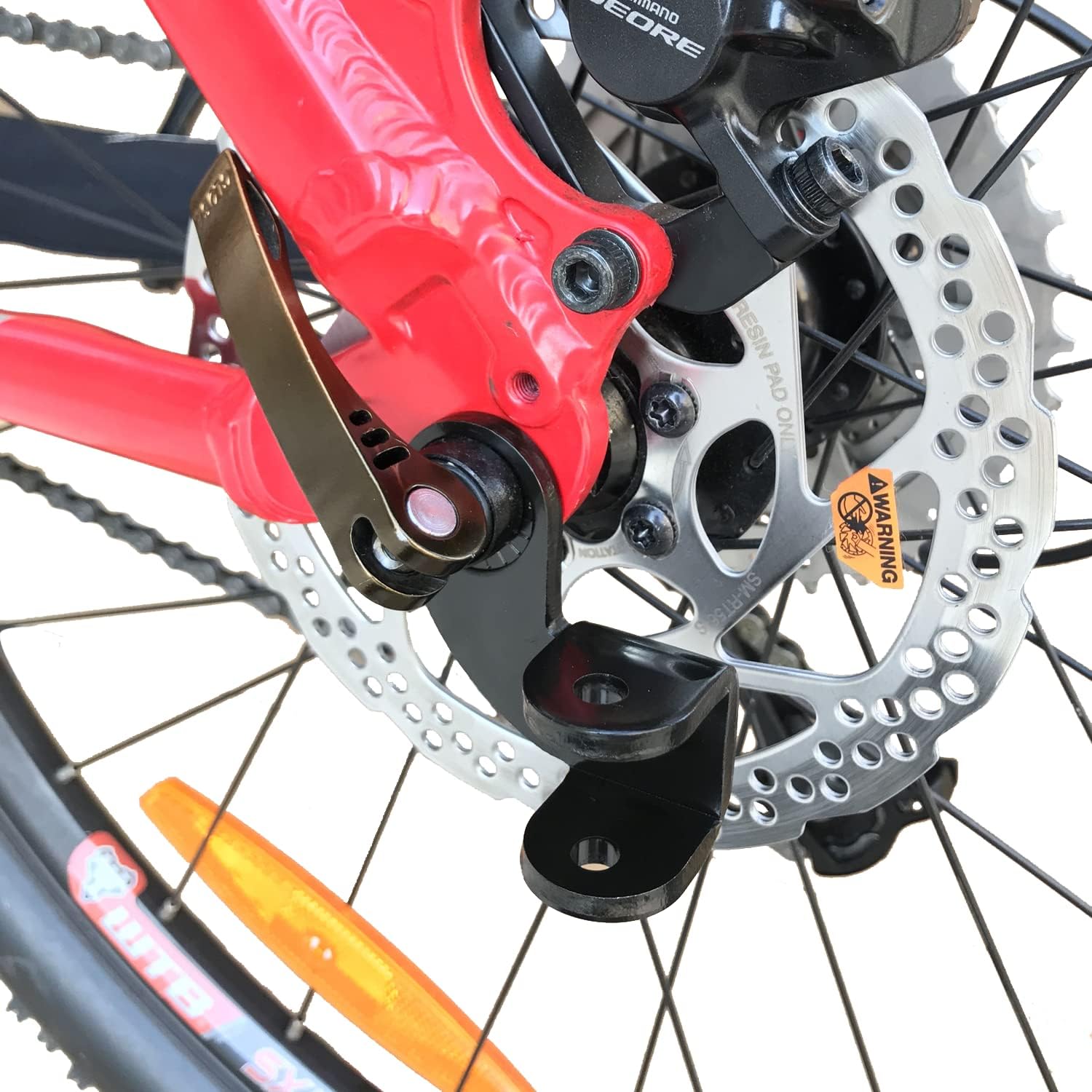
If you’ve ever ordered a bike trailer hitch — a small metal bracket that attaches to your rear wheel axle and lets you clip a trailer to the back of your bike — only to discover it doesn’t fit, you are in excellent company. The hitch is one of the most under-discussed parts of the bike trailer system, and it’s responsible for a disproportionate share of buyer frustration. The core problem is straightforward: bike rear axles are not a single standard size. Traditional road and mountain bikes mostly use a 12mm or 10mm quick-release axle. Many electric bikes (e-bikes) use a thicker 14mm or even 15mm solid axle to handle the additional torque load. Standard hitches are sized for the traditional axle. Put a standard hitch on an e-bike and the hole simply won’t pass over the axle. This guide maps the full hitch ecosystem — Burley, Schwinn, InStep, Titanker, Booyah, and the seat-post alternatives — so you can identify the right answer for your specific setup before you order, not after.
Why Buying the Wrong Hitch First Is Almost a Tradition
One of the most candid moments in the aggregated review record for this product category comes from a Titanker hitch buyer who wrote, in effect: “after purchasing a different product that didn’t work, I didn’t have high hopes” — before going on to report that the Titanker solved their fitment problem. That sentence is a compressed version of a journey that hundreds of buyers take every year.
The failure pattern follows a predictable sequence. Someone buys a trailer — a Burley D’Lite, a Schwinn Turbo, an InStep Take 2 — and assumes the included hitch will work on their bike. It does, or it did, on a traditional quick-release axle. Then they upgrade to an e-bike, or they try to share the trailer between two bikes in the household, or they inherit a bike with a non-standard axle spacing. The original hitch fails the fitment test, often discovered only after the trailer arrives and the ride is already planned.
The good news is that the hitch ecosystem, while fragmented, is actually well-mapped once you know what to look for. There are four decision variables: axle diameter, axle type (quick-release vs. solid thru-axle), brake type (disc vs. rim), and whether you want an axle-mount or seat-post mount. Get those four pieces of information about your bike and the right hitch becomes a straightforward lookup.
The Brand-by-Brand Hitch Landscape
Burley: The Default Standard and Its 12.2mm Exception
Burley hitches are the reference point for the category. Burley’s standard hitch is sized for a 12mm quick-release skewer and uses the brand’s distinctive ball-and-socket coupler system — the orange plastic cup at the trailer tongue clicks onto a steel ball on the hitch arm. It’s a clean, quick-release interface that also lets the trailer articulate laterally if the bike tips or leans.
Burley publishes a separate 12.2mm hitch variant for bikes whose axle hardware measures slightly wider than the standard 12mm — this comes up most often on certain European-spec bikes and some older steel-frame commuters. Per Burley’s own hitch and coupler compatibility documentation, the dimensional difference is small but the fitment tolerance is tight enough that the wrong variant simply won’t seat correctly.
The second-Burley-hitch purchase is a real and underserved use case: two parents, one trailer, two bikes. Because the Burley hitch mounts permanently to the axle hardware rather than to a seat post, it travels with the bike, not the trailer. If both parents want to tow the same trailer independently, each bike needs its own hitch. This is not a design flaw — it’s intentional; the ball stays on the bike so the trailer’s coupler arm can transfer between bikes without tools. But it’s not documented prominently enough, and multiple reviewers mention discovering it only after the first frustrating hand-off attempt.
Schwinn and InStep: Compatible Systems, Known Coupler Weakness
Schwinn and InStep trailers use a fundamentally similar hitch architecture — a flat steel arm with a loop end that drops over the axle and is secured by the quick-release skewer or axle nut. They are cross-compatible: an InStep coupler fits a Schwinn trailer connection and vice versa.
The documented failure mode in this system is coupler bending under sustained load. One reviewer’s account in the aggregated feedback record is specific enough to be genuinely instructive: the flat stamped-steel coupler arm began deforming after approximately 100 lbs of monthly use — not a single overload event, but cumulative fatigue from a load that was within the trailer’s stated capacity but above what the hitch arm was engineered to handle over time.
That same reviewer documented a two-stage DIY response: a first-generation gusset fabricated from heavy strapping material to resist lateral flex, then a second-generation solution using a flat metal bar to brace the arm against the frame. The strapping gusset bought time; the metal bar solved it. This is the kind of field-derived fix that doesn’t appear in any manufacturer documentation and is worth knowing before you’re in the same situation. If you’re regularly hauling loads above 60–70 lbs on an InStep or Schwinn hitch, the coupler arm is the component to inspect and potentially pre-emptively replace with a heavier aftermarket option.
Titanker and Universal Adapters: The Second-Attempt Success Story
Universal trailer hitch adapters — Titanker being the most commonly reviewed — exist to solve the brand-mismatch problem. If you have a Burley trailer but someone gave you a Schwinn-style hitch, or if your trailer’s ball coupler doesn’t match the arm style on your bike, a universal adapter bridges the gap.
Across aggregated reviews, the pattern with Titanker specifically is: skepticism going in (because of a prior failed purchase), then genuine satisfaction once installed. The key spec to verify before ordering any universal adapter is the axle hole diameter — Titanker lists their hole dimensions in product specifications, and matching that to your measured axle diameter is the only step that actually matters.
Booyah 15mm Angled Hitch: The E-Bike-Specific Answer
This is where the dimensional mismatch problem becomes a category unto itself. Per Electric Bike Review’s overview of e-bike axle standards, many e-bike rear hubs — including common configurations on RadRover, RadWagon, and similar hub-motor platforms — use a 14mm or 15mm solid axle rather than the 12mm quick-release standard. Standard hitches physically cannot be installed on these bikes: the hole is too small.
Booyah’s 15mm angled hitch exists specifically to address this. The angled geometry also matters: e-bike rear axles often have the dropout (the slot the axle sits in) oriented differently than a traditional bike, and a straight hitch arm can conflict with the motor housing or dropout width. The angled design routes the arm clear of those obstructions.
Per Booyah’s published product specifications, the 15mm variant is rated for the same trailer loads as standard hitches — the dimensional change is purely about fitment, not load capacity. If you’re on an e-bike and your axle measures 14–15mm, this is the lookup result, not a compromise.
By the numbers — common rear axle diameters:
| Bike type | Typical axle diameter | Standard hitch fits? |
|---|---|---|
| Traditional QR road/hybrid | 10–12mm | Yes |
| Traditional QR mountain | 12mm | Yes |
| E-bike hub motor (most common) | 14–15mm | No — use 15mm e-bike hitch |
| Thru-axle MTB/gravel | 12mm × 142/148mm | No — verify dropout width |
Seat-Post Hitches: Convenient, With a Real Caveat
Seat-post hitches — which clamp to the bike’s seat tube rather than the axle — have genuine appeal: no axle compatibility problem, no disc-brake clearance issue, easy transfer between bikes. But the safety-relevant limitation documented in the review record is specific and worth stating plainly.
Multiple reviewers who used seat-post hitches with single-axle trailers (trailers with one wheel centered under the load rather than two wheels flanking it) report significant flex and downward drop at the hitch point. A single-axle trailer’s tongue exerts a downward vertical force on the hitch under load; an axle-mount hitch has the bike’s frame and wheel bearing the load directly. A seat-post clamp is cantilevered off the post, which has measurably more flex in the vertical axis. Per BikeRadar’s quick-release vs. thru-axle compatibility guide’s notes on trailer attachment geometry, this flex is not just a comfort issue — it changes the effective tongue weight distribution and can create oscillation at speed.
The practical decision rule: seat-post hitches are a reasonable choice for two-wheeled trailers where the tongue weight is shared laterally and the downward load is modest. For single-axle trailers, particularly loaded ones, the axle-mount architecture is the more stable choice. This isn’t a blanket condemnation of seat-post hitches — it’s a specific caution about a specific trailer geometry.
Disc Brake vs. Rim Brake: Does It Change Your Hitch Choice?
Mostly, no — with one exception. Axle-mount hitches that use a loop-style arm dropped over the axle nut don’t interact with the brake system at all. The hitch sits outboard of the dropout, and whether you have a disc caliper on the chainstay or a rim brake is irrelevant to hitch fitment.
The exception is clearance. Some disc brake rear setups — particularly flat-mount calipers on gravel and road bikes — have the caliper positioned very close to where a hitch arm would route. In those configurations, a straight hitch arm may foul the caliper body. This is bike-specific rather than a category rule; the fix is typically an angled or offset hitch arm. If you’re running disc brakes on a road or gravel platform, measure the clearance between your caliper body and the dropout face before ordering a straight hitch arm.
Frequently Asked Questions
Can I use a Burley trailer hitch on a RadRover or other e-bike with a thicker rear axle? No. The standard Burley hitch is sized for a 12mm quick-release axle. RadRover and similar hub-motor e-bikes typically use a 14–15mm solid axle. The hitch hole won’t pass over the axle. You need an e-bike-specific hitch such as the Booyah 15mm angled model.
What is the difference between the Burley 12.2mm hitch and the standard Burley hitch? The 12.2mm variant is dimensioned for axle hardware that measures slightly wider than the 12mm standard — common on some European-spec bikes and certain older commuters. Per Burley’s own compatibility documentation, the tolerance is tight; using the wrong variant results in a hitch that won’t seat correctly. Measure your axle hardware with a caliper if you’re on the edge.
Why did my InStep/Schwinn coupler bend, and what is the strongest replacement? The flat stamped-steel coupler arm used on InStep and Schwinn hitches can fatigue under sustained loads in the 70–100+ lb range. The failure is cumulative, not sudden. Documented DIY solutions include a metal bar brace across the arm. The longer-term fix is replacing the original coupler with a heavier aftermarket arm — Titanker’s universal adapters are one documented path, and owners report them as substantially more rigid than the stock InStep/Schwinn stamp.
Do I need a different hitch for a disc brake bike vs. a rim brake bike? Usually no, but check caliper clearance. On most bikes the hitch arm routes clear of the caliper. On some flat-mount disc setups on road or gravel bikes, a straight arm may foul the caliper; an angled hitch arm resolves this.
Can a seat-post hitch handle a loaded single-axle cargo trailer safely? Based on the documented reviewer record, seat-post hitches on single-axle trailers produce measurable flex and downward drop under load. This is a real safety consideration, not just a comfort issue, and multiple reviewers have flagged it explicitly. For single-axle trailer configurations — especially loaded ones — an axle-mount hitch is the better-engineered choice.
How do I find out what axle diameter my e-bike has before ordering a hitch? The most reliable method is a digital caliper on the axle itself — measure the exposed threaded section or the shoulder where the dropout seats. Manufacturer spec sheets are a second option; per Electric Bike Review’s e-bike axle standards documentation, hub-motor e-bikes commonly spec 14mm or 15mm solid axles, but specific models vary. If you can’t measure directly, contact the bike manufacturer with your model and year — they will confirm the rear axle spec.
The Decision Rule
If X, then Y:
- Traditional bike, 12mm QR, two-wheeled trailer → Standard Burley hitch (or brand-matched hitch). Simplest path, best ecosystem support.
- E-bike with 14–15mm solid axle → Booyah 15mm angled hitch or equivalent e-bike-specific model. Standard hitches will not fit.
- Mismatched brand (Burley trailer, non-Burley hitch) → Universal adapter (Titanker is the most reviewed). Verify hole diameter against your measured axle.
- High-frequency heavy loads on InStep/Schwinn → Inspect coupler arm now; consider replacing with a heavier aftermarket arm before the arm bends.
- Two adults sharing one trailer → Buy two hitches, one per bike. The hitch stays on the bike; the coupler stays on the trailer.
- Single-axle trailer, any bike → Axle-mount hitch preferred over seat-post for load stability.
- Disc brake bike, road or gravel geometry → Verify caliper clearance before ordering a straight hitch arm; angled may be required.
The hitch is a $15–$40 component in a system that may have cost you $500–$2,500. It deserves twenty minutes of measurement and verification before the order is placed.