September 8, 2026 • Neil Hayes • 11 min reading time • Prices verified June 25, 2026
Loading Heavy E-Bikes onto Hitch Racks: The Ramp, Weight, and Tilt Trade-Off
If you’ve been shopping for a way to haul one or two electric bikes (e-bikes — bicycles with a battery-powered motor) on the back of your car or truck, you’ve probably landed on the hitch rack as the most practical option. A hitch rack slides into the tow-hitch receiver (the square metal tube welded to your vehicle’s rear frame), holds one to four bikes, and keeps them off your roof. The problem: a modern cargo e-bike or fat-tire commuter can weigh 60–80 lbs, and a two-bike load of 130–160 lbs has to get up onto that rack somehow — usually by you, alone, in a parking lot. This article maps the three-way trade-off between ramp access (a loading ramp that lets you roll bikes up instead of lift them), weight capacity (how many pounds the rack is rated to carry), and tilt function (whether the rack swings away from your vehicle so you can open the trunk). Each of those features works against the others in ways the product listings don’t always make obvious. By the end, you’ll have a clear decision rule for your specific weight and vehicle situation.
Why E-Bike Weight Changes Every Rack Assumption
The standard hitch rack was engineered around road bikes and hybrids — a market where 25–30 lbs per bike was a reasonable design target. PeopleForBikes’ 2024 annual e-bike report puts the average Class 1–2 e-bike at 52–65 lbs, and purpose-built cargo e-bikes like the Tern GSD or RadWagon 4 push 70–77 lbs fully equipped. That weight gap is not cosmetic. A rack rated for 60 lbs total — still common among platform and cradle designs sold alongside lightweight bikes — simply cannot carry two e-bikes legally or safely.
Two practical consequences follow:
-
You need a rack rated for at least 120 lbs for two average e-bikes, and 140–160 lbs if you’re hauling cargo-class machines. Racks in the 200–300 lb range exist specifically for this use case. Aggregated owner reviews tracked by Electric Bike Review consistently flag the 120 lb ceiling as a failure point for buyers who didn’t read weight limits carefully before purchasing.
-
Even if the rack is rated for the weight, getting the bikes onto it without help is a separate problem entirely. A 70-lb e-bike lifted at an awkward angle over a rack cradle arm is a real injury risk for anyone operating solo. This is where the ramp category earns its place.
Comparing the Three Rack Approaches for E-Bike Loads
Not all hitch racks solve the weight-and-access problem the same way. The market has settled into three meaningfully different configurations: budget tray racks that handle lighter e-bikes, mid-tier ramp-equipped platforms for regular solo loading, and premium systems engineered specifically for cargo-class bikes. Understanding what each tier actually delivers — and where each one cuts corners — is the fastest way to match a rack to your situation.
Budget Platform Racks (Up to ~120 lb Capacity)
Bike
$8.99
In stock on Amazon
Check price on AmazonBudget-tier hitch racks in the $150–$300 range are typically aluminum tray or cradle designs rated for 60–120 lbs total. For a single lighter e-bike in the 45–55 lb range, these can work. For two e-bikes, they almost universally fall short on weight capacity.
Tilt functions in this tier are present on many models and are consistently the source of post-purchase frustration. BikeRadar’s guide to choosing a bike rack notes that tilt-with-load is a premium feature requiring reinforced pivot hardware — it is not standard across the category at this price point. Buyers who purchase a budget rack expecting to swing it away from the liftgate with two e-bikes loaded will almost always find the mechanism cannot handle the combined weight.
Front wheel retention in this tier defaults to bungee cords. As noted by owner reviewers tracked across Electric Bike Review’s platform, bungee cords go slack in cold weather, UV-degrade faster than cam-buckle straps, and allow the stretch-induced oscillation that causes cosmetic damage to frames and forks at highway speed.
Best for: Single e-bikes under 55 lbs, or buyers who can load with a partner and don’t need trunk access under load.
Bike
$8.99
In stock on Amazon
Check price on AmazonMid-Tier Ramp-Equipped Platform Racks (120–200 lb Capacity)
Trailer
$19.99
In stock on Amazon
Check price on AmazonThis is the tier where solo loading of two standard e-bikes becomes genuinely viable. Ramp-equipped platform racks — typically rated 150–200 lbs with a foldable aluminum channel ramp included or sold as a compatible accessory — solve the primary physical constraint: the overhead lift.
The CRAVOT ramp system is the product most cited in owner accounts in this category. One account that circulates widely in e-bike transport forums involves a 70-year-old rider loading two 75-lb e-bikes using a CRAVOT-compatible ramp system, repeatedly, without assistance. Rolling a bike up an inclined ramp requires a fraction of the effort of lifting the same bike overhead, and it eliminates the awkward angle that causes most loading injuries. Aggregated reviews tracked by Electric Bike Review consistently validate the ramp’s functional value for solo operators.
Two friction points come up repeatedly in owner reviews of mid-tier ramp racks:
- Ramp storage once bikes are loaded. The Young Electric 300-lb capacity rack — which pairs with a compatible ramp — has a documented owner complaint: there is no integrated storage for the ramp once the bikes are on the platform. Buyers end up placing the ramp in their cargo area (reducing interior space), strapping it to the rack awkwardly, or leaving it at home, which defeats the purpose during away-from-garage loading.
- Ramp angle on low-hitch vehicles. The incline steepens on sedans with low receiver heights. Trucks and SUVs are more forgiving. Check your measured hitch height before assuming a ramp will deliver the same ease of loading shown in product videos.
The tilt function on mid-tier racks with two e-bikes loaded is unreliable. The CRAVOT rack has at least one verified owner account of purchasing specifically for tilt-with-load trunk access, then discovering post-assembly that the tilt mechanism does not perform as implied under full e-bike weight. If trunk access with bikes loaded is a genuine daily requirement, this is not the tier to rely on without explicit manufacturer confirmation of tilt-under-load capacity.
Best for: Solo operators loading two standard e-bikes (combined 100–140 lbs) who prioritize loading ease over trunk access and can plan for ramp storage.
Trailer
$19.99
In stock on Amazon
Check price on AmazonPremium High-Capacity Racks (200–300 lb Capacity, Class III Receiver)
Young
$299.99
In stock on Amazon
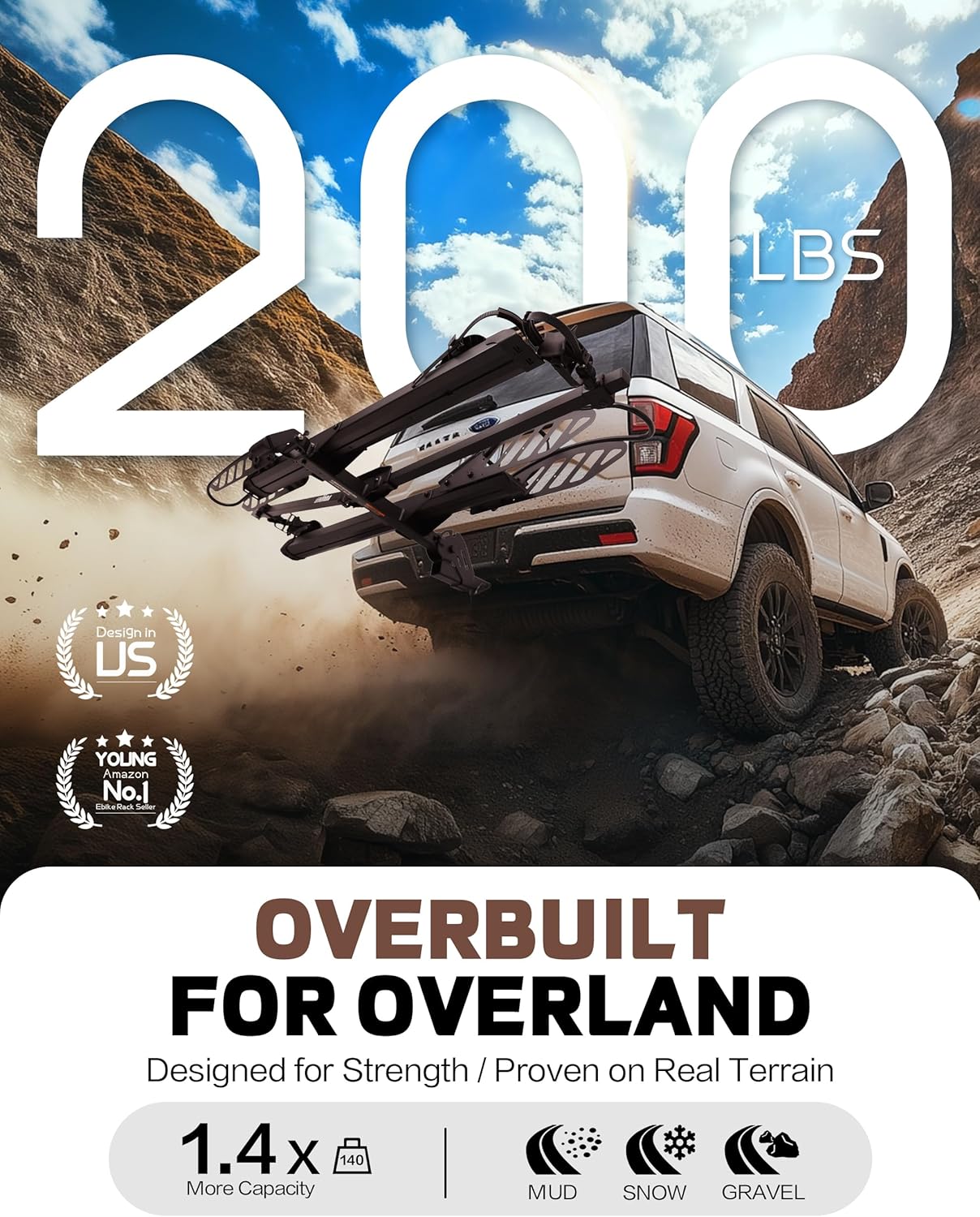
Check price on AmazonRacks in the 200–300 lb capacity range are built for cargo-class e-bikes and multi-bike loads that exceed what the standard rack market was designed to handle. Bicycling Magazine’s 2025 rack buyer’s guide confirms that 2-inch Class III receivers are the standard for any rack rated above 150 lbs — the 1.25-inch receiver common on smaller sedans is a capacity ceiling, not merely a fitting preference.
At this tier, the rack hardware itself becomes a meaningful lift: platform racks rated at 250–300 lbs typically weigh 35–55 lbs unloaded. That’s a real solo installation challenge. Some designs include a hitch-pin locking lever or integrated roller to ease receiver insertion, but the rack still has to be carried to the vehicle. Factor that lift into your total-day loading math alongside bike weight.
Outside Online’s 2025 rack overview recommends building in a 20–25% capacity buffer for e-bike loads — meaning a 200-lb rated rack is appropriately matched to a 130–160 lb combined bike load when you account for added accessories, bags, and receiver stress at sustained capacity. For two cargo e-bikes at 70–77 lbs each, a 250–300 lb rated rack is the defensible floor.
Tilt-with-load at this tier is where it exists in the market — but it requires explicit verification. Ask the manufacturer directly what combined bike weight the tilt mechanism supports, and get that answer in writing or from a published spec sheet, not from reading the product listing copy or inferring from photos showing open hatches.
Best for: Two cargo-class e-bikes (combined 140–160+ lbs), Class III receiver vehicles, and buyers whose combination of bike weight and frequency of use justifies the investment in a purpose-built heavy-capacity system.
Young
$299.99
In stock on Amazon
Check price on AmazonThe Hybrid Carrier Caveat
The Wildroad hybrid carrier appears in searches for “cargo and bike hitch rack” and reviewers are consistently clear about something the listing does not make obvious: bike mode and cargo mode on this carrier are mutually exclusive.
You can configure the Wildroad to carry bikes, or you can configure it to carry gear and boxes. You cannot do both simultaneously on the same rack. Reviewers who bought expecting to carry bikes and a gear platform on the same trip report disappointment. Reviewers who bought knowing they’d switch configurations by trip type are generally satisfied. If your use case is combined — bikes and gear bags on the same outing — confirm in writing that any hybrid carrier you consider supports simultaneous dual loading before purchasing.
Straps: The One Accessory Every E-Bike Rack Owner Should Add
At highway speed, a front wheel with nothing constraining it will oscillate, swing, and eventually contact whatever is adjacent. The bungee cord approach that ships with many budget racks addresses this in principle but fails in practice at e-bike weights.
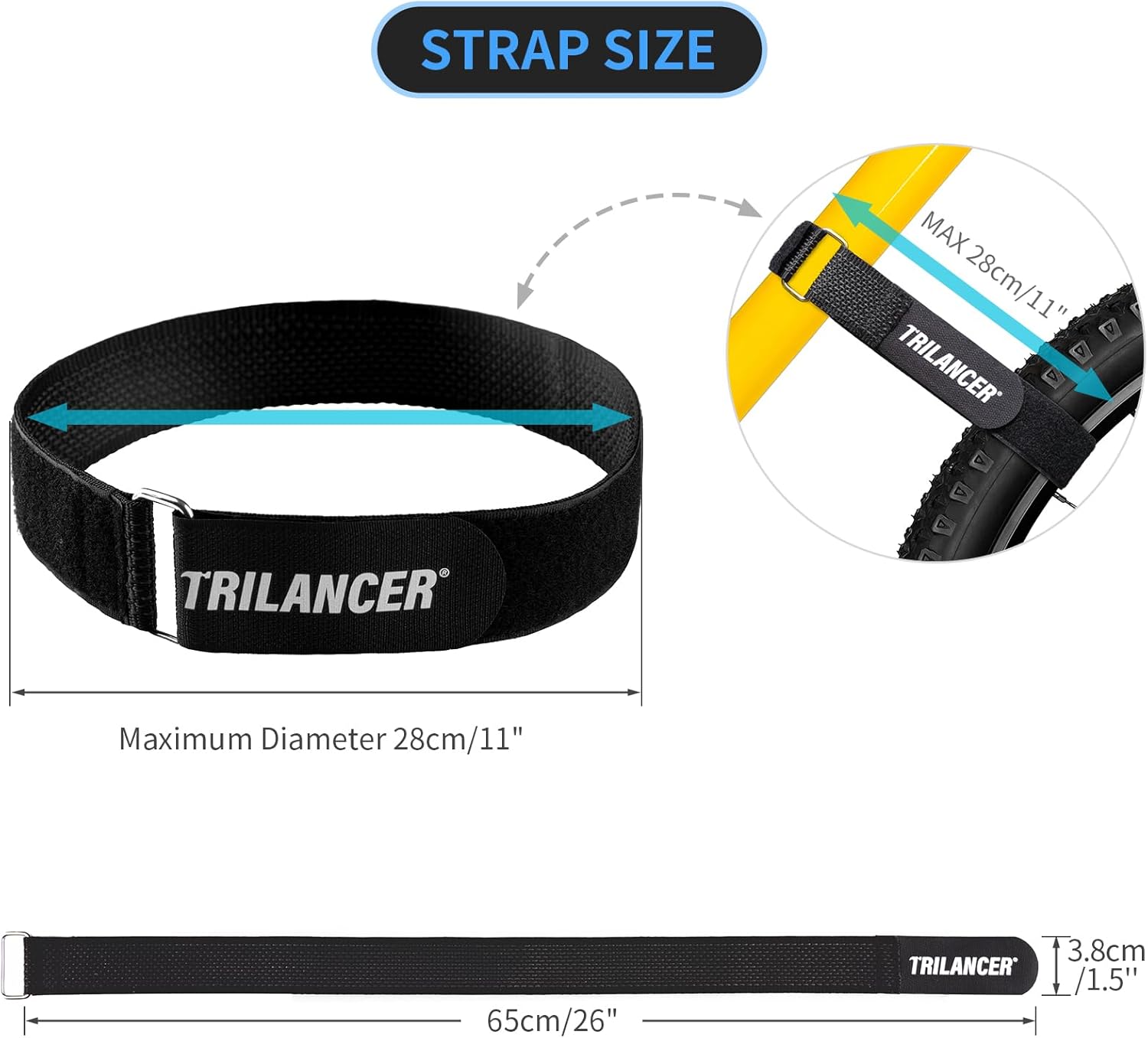
Cam-buckle or ratcheting wheel straps — the Trilancer wheel strap is the product most cited by owners making this upgrade — offer positive retention without elastic slop. They hold consistent tension across temperature ranges (bungee cords go slack in cold), degrade more slowly under UV exposure, and don’t allow the stretch-induced oscillation that causes frame rubs, fork dings, and dropout contact. Owner phrasing across reviewed accounts is consistent: if you have been using bungee cords and are tired of babying your bike’s finish, positive-retention wheel straps are the fix. This is a $20–$35 accessory purchase with a clear cost-per-incident value case.
By the Numbers
| Combined e-bike weight | Minimum rack rating | Hitch receiver needed | Ramp recommended? |
|---|---|---|---|
| Under 100 lbs | 120 lb | 1.25″ or 2″ | Optional |
| 100–140 lbs | 175–200 lb | 2″ | Yes, solo loading |
| 140–160+ lbs | 250–300 lb | 2″ (Class III+) | Strongly recommended |
Frequently Asked Questions
Can one person load a 70-lb e-bike onto a hitch rack without help? Yes — with a ramp. Without a ramp, a 70-lb lift at shoulder height is a genuine injury risk for most adults operating solo. Ramp-equipped platform racks exist specifically for this use case, and owner accounts including that of a 70-year-old rider loading two 75-lb e-bikes confirm the ramp approach is viable for a wide range of users.
Does the rack actually tilt with e-bikes loaded so I can open my trunk? Usually not at e-bike weights. Most racks in the standard price range support unloaded or lightly loaded tilt only. BikeRadar’s rack selection guide identifies tilt-under-load as a premium hardware feature, not a baseline category capability. Verify this explicitly with the manufacturer — not the listing photo — before purchasing if it is a genuine daily requirement.
What hitch receiver size do I need for a 200- or 300-lb capacity rack? A 2-inch Class III receiver is the standard for racks above 150 lbs, as confirmed in Bicycling Magazine’s 2025 rack buyer’s guide. Confirm your vehicle’s factory hitch class and receiver size before purchase — the rack’s capacity rating is meaningless if your receiver isn’t rated to match.
How do I stop my e-bike’s front wheel from swinging at highway speed? A positive-retention wheel strap, not a bungee cord. Cam-buckle or ratcheting straps hold consistent tension and don’t degrade the way elastic does under cold or UV exposure. This is a small accessory purchase that prevents real cosmetic damage over time.
Will a 200-lb capacity rack hold two e-bikes that each weigh 65 lbs? 130 lbs is under a 200-lb rated limit on paper, but Outside Online’s 2025 rack overview recommends a 20–25% capacity buffer for e-bike loads. Operating near rated capacity also affects tilt function and receiver stress. If both bikes total 130 lbs and you might add bags or accessories, a 200-lb rating is tight. A 250-lb rated rack is the more defensible choice.
Decision Rule
If you are loading 60+ lb e-bikes solo: prioritize a ramp-equipped mid-tier or premium rack over any tilt or folding feature. The ramp solves a real physical constraint; the tilt function at e-bike weights is marketing on most racks in the standard price range.
If trunk access is non-negotiable with bikes loaded: contact the manufacturer directly and ask whether the tilt mechanism supports your actual combined bike weight. Do not rely on listing photos or the word “tilt” in the product name.
If front wheel movement bothers you: add cam-buckle wheel straps regardless of which rack you choose. This is a $20–$35 fix for a persistent problem that every bungee cord owner eventually encounters.
If you need cargo and bike transport on one rack simultaneously: confirm in writing that the carrier supports both at the same time. Hybrid carriers requiring mode-switching between trips are useful for some buyers and frustrating for others — the distinction is whether your trips are single-purpose or combined-use.
The weight, ramp, and tilt variables don’t resolve into one universal answer, but they do resolve cleanly once you identify which constraint is actually binding for your situation.