May 2, 2026 • Neil Hayes • 11 min reading time • Prices verified June 25, 2026
Rear Rack Bags for E-Bikes: Hard Shell vs. Soft Pannier vs. Wire Basket Compared
If you’ve just bought an e-bike — an electric-assist bicycle — and you’re staring at the metal rack bolted over the rear wheel wondering what to put on it, you’re in good company. That rack (called a rear rack or pannier rack) is one of the most underrated parts of any cargo-capable bike. It can carry groceries, a laptop, gym gear, or a week’s worth of commuter supplies — but only if the bag or basket you mount on it actually fits, actually holds your stuff, and doesn’t fall apart when it rains. This article compares three distinct mounting approaches: hard-shell trunk bags (rigid, weather-sealed cases), soft panniers (flexible fabric bags that hang from the rack sides), and wire baskets (open metal frames with optional liners). By the end, you’ll have a clear decision rule for your specific situation, not just a list of specs.
The Rack Compatibility Problem Nobody Warns You About
Before any bag-versus-basket debate, there’s a more foundational issue that comes up in aggregated owner reviews more consistently than almost any other complaint: the rack on your specific e-bike may not match the mounting system on the bag you’re eyeing.
Rear racks are not standardized across brands. The dominant reference standard is the MIK (Mounting Is Key) system from Racktime, adopted by several OEM rack makers, alongside the older but still common Klickfix interface. Tern, Thule, and several cargo-bike manufacturers use MIK-compatible racks. But many entry-level and mid-range e-bikes — particularly those from direct-to-consumer brands — ship with proprietary or generic racks that accept only bags with universal straps or bungee hooks.
This rack-to-bag mismatch is a category-wide problem that BikeRadar (Bikepacking and Commuter Bag Guide, 2025) and Bicycling.com (Best Bike Bags and Panniers, 2025) have both flagged when covering commuter bags. The “fits most racks” marketing language common among budget brands frequently does not account for racks with wider or narrower tubing than the assumed 10–16mm rail width standard, and bags can shift dangerously under load when the fit is poor.
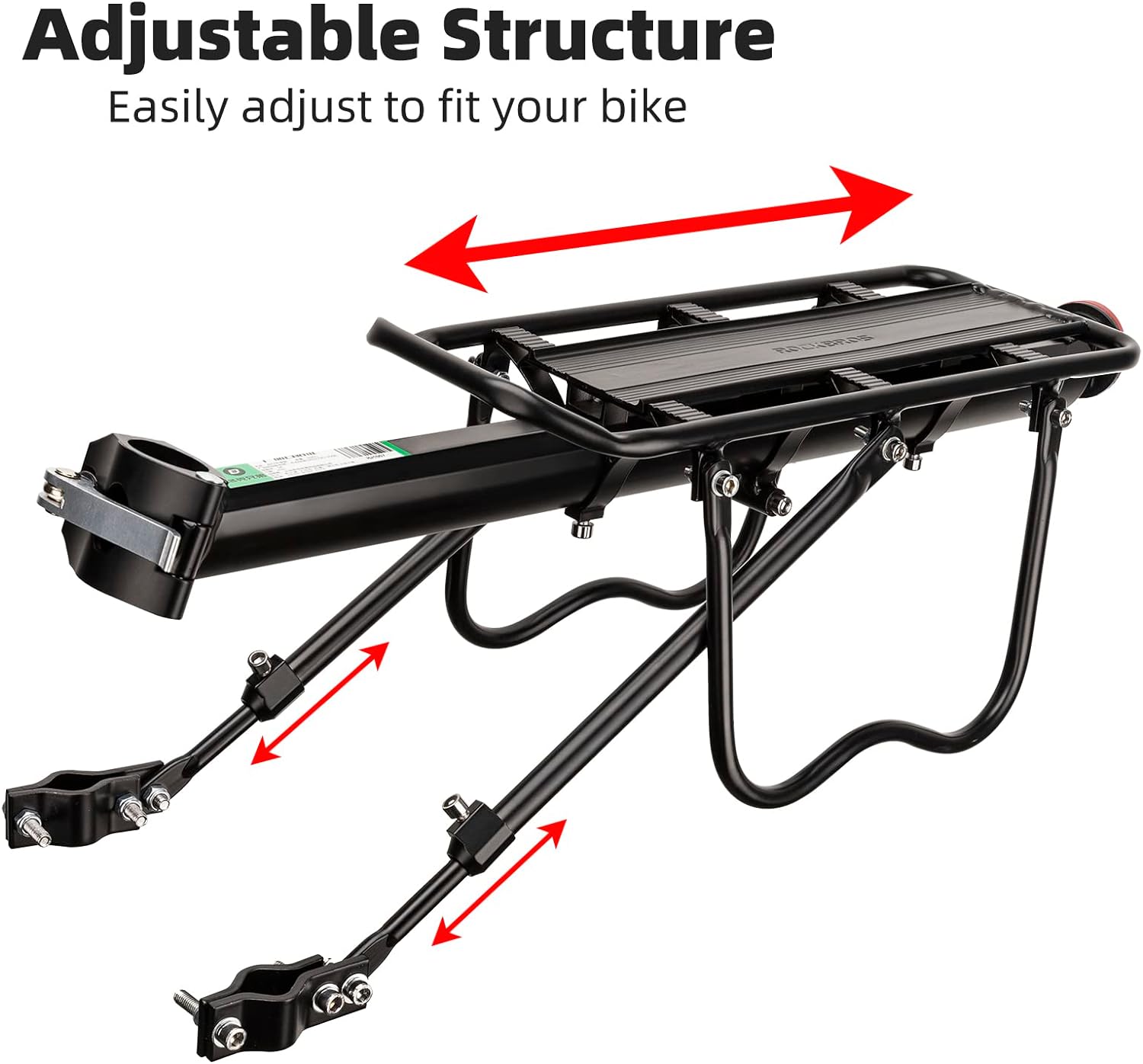
Practical rule before you buy anything: Measure your rack’s rail width and note whether your bike’s rack has a top plate (a flat mounting surface) or only tubular rails. Hard-shell trunk bags typically require a flat top plate for their snap-fit mounts. Soft panniers are more forgiving — most attach via hooks over the rail — but rail diameter still matters. Wire baskets almost universally mount via U-bolts and are the least rack-specific option of the three.
Comparing the Three Formats: Hard Shell, Soft Pannier, Wire Basket
Hard-Shell Trunk Bags
A hard-shell trunk bag is a rigid plastic or ABS case that mounts to the top of the rear rack and opens like a clamshell or top-access lid. Think of it as a small locking suitcase for your bike.
Owner reviews of hard-shell formats reveal a consistent pattern: these are almost never first-time bag purchases. Buyers describe a prior experience with a soft bag — typically a floppy fabric trunk bag that sagged, let water seep in, or shifted during hard braking — and a deliberate decision to replace it with something rigid. The purchase is frustration-driven. That context matters because it means the hard-shell format is solving specific problems, not offering universal advantages.
What hard-shell bags genuinely solve:
- Shape retention under load (a soft bag stuffed with oddly shaped items can press against your rear light or derailleur)
- Better waterproofing in sustained rain (rigid seams don’t wick moisture the way fabric does)
- Theft deterrence via integrated locks (most hard shells include a barrel or keyed lock)
- Aesthetics — buyers on mountain bikes mention appearance unprompted in reviews, a signal that how the bike looks matters to this buyer even when the product review ostensibly focuses on function
What hard-shell bags don’t solve:
- Capacity is fixed. You can’t expand a rigid case for a larger load the way you can overstuff a soft pannier
- Weight: a rigid case adds 600–900g before you put anything inside
- Cost: hard-shell options run notably higher than comparable-volume soft bags
Typical specs — hard-shell trunk bag:
- Volume: 10–18L (most single-case formats)
- Weight: 650–950g empty
- Waterproofing: IP54 equivalent or higher (manufacturer-rated)
- Lock type: keyed barrel or TSA-compatible on premium models
Bike
$39.99
In stock on Amazon
Check price on AmazonSoft Panniers
A pannier (pronounced “pan-yer”) is a bag that hangs from the side of a rear rack rather than sitting on top of it. A trunk bag sits on top. Both are soft formats, but they load and access differently. This distinction matters for e-bike buyers because a dual-pannier setup (one bag per side) can carry 30–50L total — enough to replace a car trip to the grocery store — while a trunk bag typically maxes at 18–20L.
Soft panniers dominate the commuter and cargo e-bike space for a reason: they scale. ElectricBikeReview.com (Cargo Carrying Accessories Roundup, 2025) consistently points to panniers as the default recommendation for owners of long-tail cargo e-bikes who want to use their bike as a genuine car replacement. The volume math simply doesn’t work any other way for weekly grocery runs.
Large-format soft trunk bags with pannier-adjacent volume — bags marketed at 34L and above — occupy an interesting middle position. Owners report using them in snow and mud conditions, citing waterproofing claims that budget soft competitors at similar price points don’t match in the review record. Whether this holds in prolonged submersion is a separate question; most manufacturers rate such bags for heavy rain and splash, not immersion.
The soft bag tradeoff is straightforward: more capacity and weather adaptability in exchange for less structure. If you’re carrying anything rigid — a laptop, camera gear, a lunch container — the bag’s interior shifts around unless you pack it deliberately or use internal dividers.
Rack compatibility note: Soft panniers with hook-over-rail attachment are the most forgiving format, but hooks sized for 8–10mm diameter rails (common on road bike racks) can be too tight or too loose on the heavier-gauge 12–16mm rails common on cargo e-bikes. Ortlieb and Vaude both publish rail diameter compatibility tables for their hook systems — a practice that budget brands often skip, as noted by BikeRadar in their Bikepacking and Commuter Bag Guide, 2025.
Typical specs — large soft pannier or pannier-volume trunk bag:
- Volume: 20–50L (dual pannier sets at the high end)
- Weight: 300–700g per bag empty
- Waterproofing: varies widely; look for welded seams or roll-top closures for genuine rain protection
- Mounting: hook-over-rail (most common), strap wrap, or proprietary clip systems
ROCKBROS
$31.58
In stock on Amazon
Check price on AmazonWire Baskets
Wire baskets get dismissed as “not serious” in enthusiast circles, but owner sentiment tells a different story for urban and family riders. The appeal is transparency — literally. You can see everything in the basket without opening a zipper, and loading is instant. For grocery runs, farmers market stops, or carrying oddly shaped items, no bag format beats a basket for pure convenience.
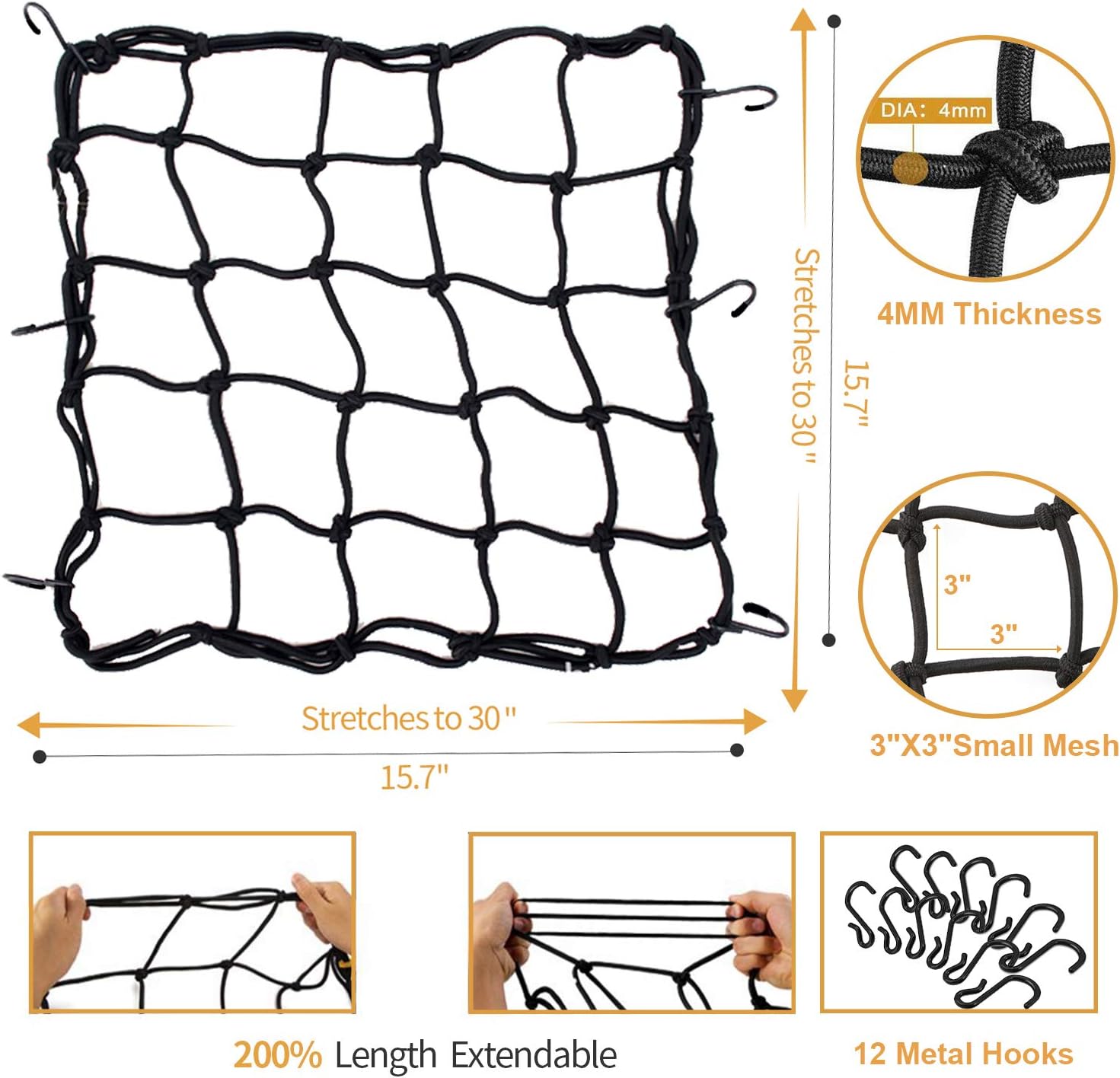
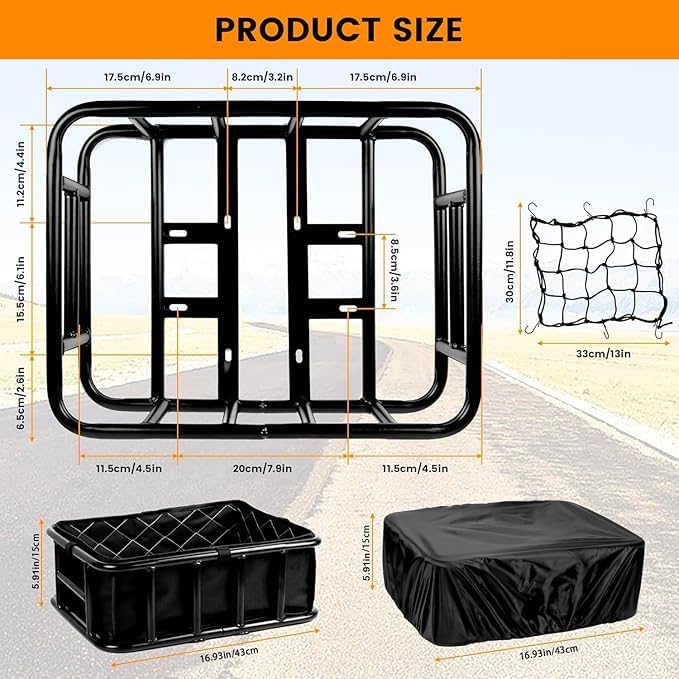
The key variable is what’s included with the basket. Owners consistently report that baskets sold with both a fabric liner (an inner bag that prevents small items from falling through the wire grid) and a cargo net (an elastic net that keeps items from bouncing out over bumps) feel like a complete system, while baskets sold without them feel like a half-product. This perceived completeness is a genuine purchase driver in wire basket reviews — it’s not just the basket, it’s the bundled kit.
Wire baskets also address the rack compatibility problem more cleanly than bags do. Most mount via U-bolt clamps that tighten around the rack rails regardless of diameter, making them broadly compatible with the generic racks common on mid-range e-bikes. The tradeoffs: they’re semi-permanent once mounted, they add fixed weight even when empty, and they offer zero weather protection for cargo.
If you’re commuting in rain: a basket with a liner does not waterproof your cargo. You need a waterproof inner bag or a waterproof cover. This is the point where wire basket owners most often add soft bag components back in — which rather argues for starting with a pannier if rain is your primary concern.
Typical specs — wire basket:
- Volume: 10–20L usable (open format, volume is approximate)
- Weight: 400–800g empty (steel is heavier than aluminum)
- Waterproofing: none inherent; liner-dependent
- Mounting: U-bolt clamps (broadly compatible)
2
$7.88
In stock on Amazon
Check price on AmazonLaptops, Rear Lights, and Fender Clearance
Three practical questions come up consistently in buyer research that merit direct answers rather than generic hedging.
Laptops: A 15-inch laptop in a padded sleeve fits in most 16L+ hard-shell bags and in large soft panniers, but the vibration environment on an e-bike is meaningfully different from walking. The motor’s torque pulses and road irregularities transmit through the frame to the rack. Owners who carry laptops regularly recommend a padded sleeve inside any bag format — not because any specific bag is defective, but because bare laptop corners contacting a rigid bag wall repeatedly is a risk that a padded sleeve eliminates entirely.
Rear lights: Most modern e-bikes integrate the rear light into the fender or seatpost, not the rack. But if your light mounts to the rack’s rear rail, a trunk bag or oversized soft bag mounted flat across the top deck will cover it. Verify your light position before buying any top-mount format. Panniers that hang to the side of the rack generally don’t create this conflict. Bicycling.com (Best Bike Bags and Panniers, 2025) lists rear light obstruction as one of the top installation errors first-time rack bag buyers make.
Fender clearance: Rear fenders on e-bikes extend rearward, and deep baskets or low-hanging panniers can contact the fender on suspension travel or over road dips. Check the spec sheet for your specific fender length before mounting any low-profile basket or extended-depth pannier.
Frequently Asked Questions
How do I know if a pannier or trunk bag will fit my specific e-bike rack? Measure your rack’s top rail width (typically 8–16mm on most e-bikes) and confirm whether the rack has a flat top plate or only tubular rails. Trunk bags need a flat plate for their snap mounts; panniers need hook clearance around the rail diameter. Contact the bag manufacturer with those two measurements before purchasing.
Are large soft trunk bags actually waterproof or just water-resistant? Most are rated for heavy-rain resistance — well above casual water resistance but not rated for submersion. Owners in genuinely wet climates report satisfactory protection for commuting; riders in extreme conditions should use additional waterproof covers for critical contents or switch to a welded-seam pannier from a brand that publishes IP ratings explicitly.
Can I fit a laptop in a rear rack bag safely on an e-bike? Yes, with a padded sleeve. Most 16L+ hard-shell bags and large soft panniers have the interior dimensions to fit a 15-inch laptop. The padded sleeve addresses road vibration transmitted through the rack and should be considered non-optional.
What is the difference between a hard-shell bike bag and a soft pannier for daily commuting? A hard shell offers more weather protection, theft deterrence, and shape retention; a soft pannier offers more capacity, lower weight, and easier packing of irregular items. Daily commuters who carry the same kit every day often prefer hard shells; those with variable loads tend toward panniers.
Do wire baskets need a liner to be practical? Yes, for anything smaller than a large produce bag. Without a liner, small items fall through the wire grid. Baskets bundled with a fabric liner and cargo net are the practical choice; bare baskets without accessories are largely decorative for real-world use.
Will a trunk bag interfere with my e-bike’s rear light or fender? It depends on where your light mounts. Rack-mounted rear lights are frequently obscured by top-deck trunk bags. Seatpost or fender-mounted lights are unaffected. Check your specific light mounting point before buying any top-deck format, as noted in Bicycling.com’s commuter setup guidance.
The Decision Rule
- If your primary need is weather protection and you carry a fixed daily kit: Hard-shell trunk bag. The rigid format addresses the exact frustrations that drive repeat buyers — floppy bags, water ingress, shifting loads. Bike — $39.99
- If you’re using your e-bike to replace car trips with variable, high-volume loads: Soft panniers. Volume and adaptability win at this use case; add a waterproof cover or choose welded-seam construction for rain. ROCKBROS — $31.58
- If you need instant-access, low-friction loading for urban errands: Wire basket with liner and cargo net included. Prioritize bundles that include both accessories. 2 — $7.88
- If you ride in genuinely extreme conditions — snow, sustained mud, multi-day touring: Seek out large-format soft bags that explicitly publish waterproofing ratings and have verifiable owner feedback in adverse weather. Hard shells are the alternative, but capacity constraints may force the decision anyway.
The one universal step regardless of format: measure your rack rails and confirm your rear light position before purchasing. Those two checks eliminate the most common post-purchase regrets in this category, and no amount of good bag design compensates for a mounting system that doesn’t fit your specific bike.