October 5, 2026 • Neil Hayes • 9 min reading time • Prices verified June 25, 2026
Hitch Racks vs. Hitch Cargo Carriers with Bike Mounts: The Hybrid Option Nobody Talks About
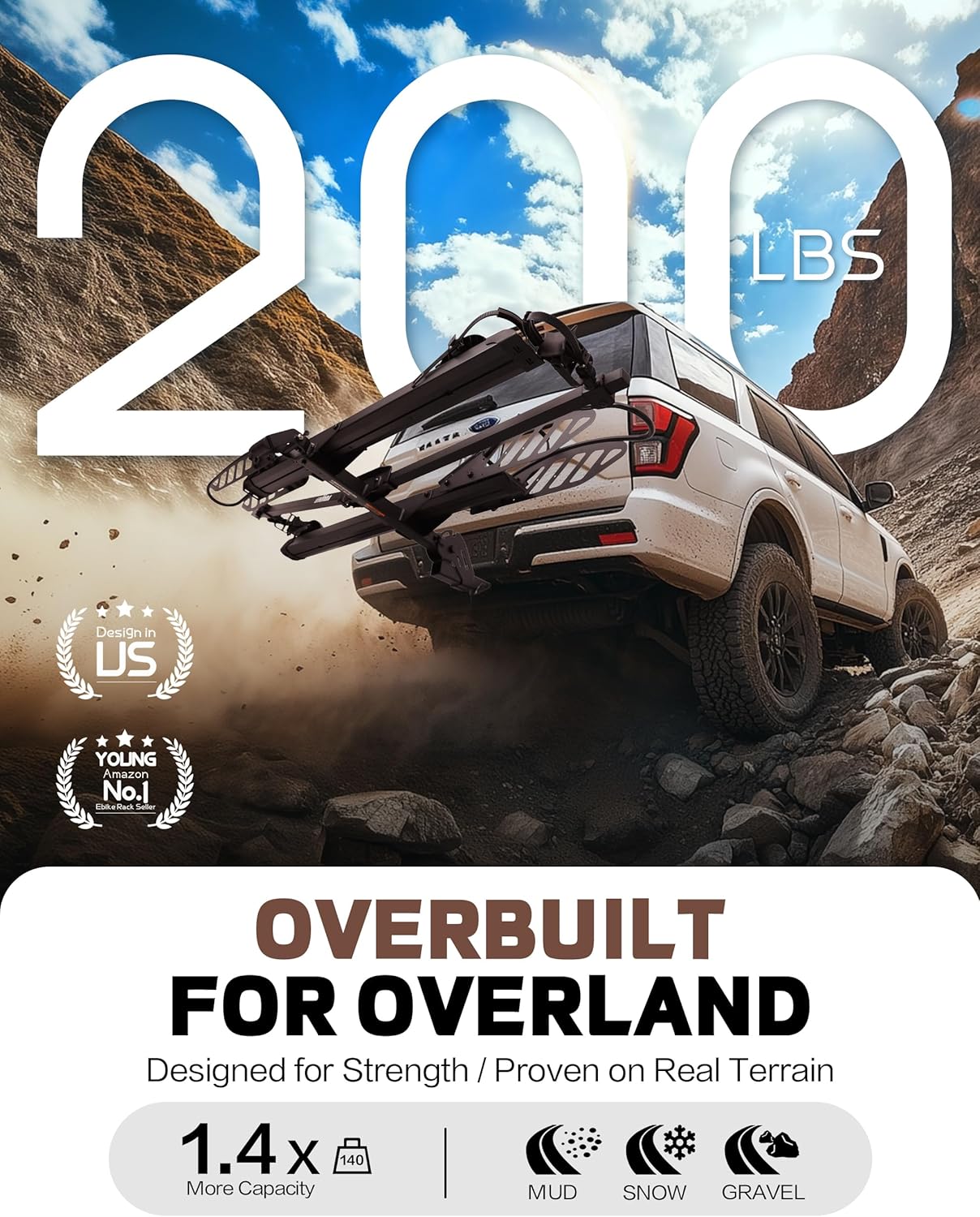
If you’ve ever tried to load a 70-pound e-bike — an electric bicycle that adds a motor and battery to a standard frame — onto a traditional hitch rack designed for 35-pound road bikes, you already know the problem. Standard hitch bike racks (the platform or hanging carrier that bolts into the square receiver tube on the back of your vehicle) were engineered for a world where bikes weighed under 35 pounds. The e-bike wave changed that math permanently. Meanwhile, hitch cargo carriers — those flat, basket-style platforms that ride in the same hitch receiver slot — have always been good at hauling gear but terrible at holding bikes upright. The hybrid category, products that mount into your hitch receiver and credibly handle both tasks, has been quietly growing. This guide breaks down how the hybrid option actually works, where it wins, where it lies, and how to decide whether it belongs on your vehicle.
Why the Hybrid Category Exists at All
The standard market split is clean on paper: bike rack for bikes, cargo carrier for boxes and bags. But real trips don’t respect that division. A family heading to a trailhead wants bikes and a cooler and a gear bin. An urban commuter who just bought a RadWagon wants to haul it to a service shop without renting a truck. A retiree couple doing a week-long national park circuit needs cargo flexibility for days they’re not riding.
Per peopleforbikes.org’s e-bike market data, average e-bike weights have climbed steadily — mid-drive cargo bikes and step-through commuters commonly land between 55 and 80 pounds with accessories. That weight range broke the assumption underlying most traditional hitch racks (typically rated 120–175 lbs total, assuming two or four lightweight bikes). The response from manufacturers has been a wave of higher-capacity hitch platforms — some marketed as bike racks, some as cargo carriers, and a few as genuine hybrids that toggle between modes.
The editorial honesty here: “hybrid” can mean two very different things. Some products are true dual-purpose platforms where you swap configurations. Others are bike racks that happen to have a small cargo tray bolted on. Knowing which you’re looking at before you buy is the entire game.
The Real-World Weight Math You Need to Run First
Before any product discussion, do this math. It’s non-negotiable.
By the numbers:
| Scenario | Bike weight (each) | Accessories | Total per bike | Two bikes |
|---|---|---|---|---|
| Two mid-weight e-bikes | 55 lb | 5 lb | 60 lb | 120 lb |
| Two heavy e-bikes + locks | 70 lb | 8 lb | 78 lb | 156 lb |
| Two cargo e-bikes, loaded | 75 lb | 15 lb | 90 lb | 180 lb |
Two things this table forces you to confront. First, a 200-lb-rated rack running two 70-lb e-bikes with accessories is operating at or near 78% of its rated capacity before you add the rack’s own weight (which counts against your hitch receiver’s tongue weight limit, not the rack’s load rating — a distinction most buyers miss). Second, electricbikereview.com’s weight survey data consistently shows buyers underestimate their bike’s actual weight by 8–15 pounds when accessories, locks, and bags are factored in.
Your vehicle’s hitch receiver has a tongue weight limit — the maximum downward force it can handle at the hitch point. This is separate from towing capacity. Most Class III receivers (2-inch square opening, the standard on SUVs and trucks) allow 300–500 lbs of tongue weight, but check your owner’s manual. The rack weight itself — which on heavy-duty e-bike carriers runs 35–52 lbs — counts toward that limit before you load a single bike.
What the Best-Reviewed Products Actually Tell Us
CRAVOT CyberRack: The Ramp Changes Everything
The CRAVOT CyberRack is, based on aggregated owner sentiment, one of the most enthusiastically reviewed products in this entire category. The pattern across multiple senior owners — people who have transported 65–75 lb e-bikes repeatedly — is striking and consistent: they specifically credit the built-in loading ramp for making solo loading physically possible.
Loading a 70-lb e-bike onto a platform that sits 20–30 inches off the ground is a genuine strength-and-coordination challenge. Without a ramp, you’re essentially deadlifting most of the bike’s weight while balancing it. With a ramp, you’re walking it up a controlled incline. One couple in the review pool reported a flawless 400-mile round trip with both bikes loaded — that’s the kind of operational confidence that matters for a product in this price tier.
The honest counterweight: multiple reviewers independently flag the rack’s own weight as a serious challenge, specifically for older users mounting the carrier to the hitch receiver by themselves. The rack itself is heavy — by design, because it has to be structurally capable of what it promises. If you’re regularly loading and unloading the rack (not just the bikes), factor in whether you can manage that solo.
Young Electric 200lb Rack: A Listing Claim That Doesn’t Hold Up
This product earned a pointed four-star review from a buyer who specifically chose it over a competing rack based on a marketing claim that the rack could tilt away from the vehicle with bikes still loaded. In practice, that claim proved inaccurate. The tilt mechanism, designed to let you access the rear of your vehicle without unloading bikes, did not function as advertised under load.
This matters editorially because tilt-with-load is a high-value feature for anyone who regularly accesses a rear hatch or tailgate. If that’s your use case — and it’s a very common one — the Young Electric’s listing language should be read skeptically. The four-star reviewer was clear: the rack itself is competent, but the deceptive listing claim is a real problem for informed buyers. When a product’s marketing language doesn’t match its behavior under the specific load conditions you need, that’s a specification mismatch, not a user error.
The rack is otherwise a capable 200-lb-rated platform. It’s worth considering for buyers whose bikes stay under 85 lbs each and who do not need tilt-with-load access. For buyers who do, look elsewhere.
Wildroad Hybrid Carrier: Cargo Space Without a Larger Vehicle
The Wildroad hybrid (designed around a genuinely different use case) fills a need that neither a pure bike rack nor a pure cargo carrier addresses: a buyer who needs to haul cargo on some trips and bikes on others, without the expense and fuel penalty of a larger vehicle.
A reviewer with a 2020 Yukon chose it for exactly that reason — they needed cargo capacity without upsizing their vehicle. The operationally important detail confirmed by that owner: bike-rack mode and cargo-carrier mode are mutually exclusive configurations. You set it up one way or the other. This is not a simultaneous dual-mode product. If your mental model is “bikes on top, gear in a basket below,” the Wildroad is not that product. If your mental model is “sometimes I need a bike carrier, sometimes I need a cargo platform, and I want one hitch-mounted solution for both,” the Wildroad fits that framing well.
Wheel Stabilizer Straps: Not Optional at Highway Speeds
Trilancer wheel stabilizer straps — and the category generally — earn blunt, unambiguous endorsements from reviewers who describe testing them at highway speeds. The pattern in aggregated reviews is consistent: bungee cords and improvised tie-down solutions are genuinely inferior to purpose-built wheel stabilizer straps, and multiple owners describe the difference becoming apparent at 65+ mph when lateral oscillation (side-to-side movement of an unsecured wheel) begins.
If your rack has built-in wheel cradles or trays, you still need wheel stabilizer straps. The cradles hold the wheel in a fixed plane; the straps prevent the wheel from lifting or rocking within that plane under highway vibration and wind buffeting. They are complementary systems, not redundant ones. Reviewers across this product set who skipped straps and used bungees report meaningful anxiety on highway stretches. Reviewers who used purpose-built straps report confidence. That’s a clear, low-cost decision.
Frequently Asked Questions
Can I use a 200lb-capacity rack for two e-bikes that each weigh 65–75 lbs with accessories?
Technically, two bikes at 65 lbs each hits 130 lbs — within the 200-lb rating. But accessories, locks, and bags push real-world weight toward 75–85 lbs per bike. Two bikes at 80 lbs is 160 lbs, which is 80% of the rated capacity. Most mechanical engineers recommend staying under 75–80% of any rated load limit for regular use. Two heavy e-bikes with accessories on a 200-lb rack is marginal. A 300-lb-rated rack is the right call for that scenario.
Does the CRAVOT or Young Electric rack actually tilt with bikes still mounted?
Based on owner reporting: the CRAVOT’s tilt mechanism is well-regarded for solo access. The Young Electric’s tilt-with-load claim is specifically flagged as inaccurate by at least one detailed reviewer who tested it under the conditions described in the listing. Take any tilt-with-load marketing claim seriously as a research question, not a given.
How heavy are these hitch racks themselves, and how do I mount one solo?
Heavy-duty e-bike hitch racks typically weigh 35–52 lbs. Solo mounting is physically demanding. The CRAVOT’s own weight is flagged by multiple reviewers as a challenge for older users. Practical approaches: a hitch-mounted jack stand or lift assist device, a second person for insertion, or a rolling hitch carrier dolly for garage storage and transport to the receiver.
Can the Wildroad hybrid carrier hold bikes and cargo at the same time?
No. Per owner confirmation, bike-rack mode and cargo-carrier mode are separate configurations. The platform handles both tasks, but not simultaneously. Plan your trip mode accordingly.
Do I need wheel stabilizer straps if the rack already has built-in wheel holders?
Yes. Wheel holders and wheel stabilizer straps are complementary. Holders fix the lateral position; straps prevent vertical and rotational movement under highway load. Reviewers who skipped straps report bike movement at highway speeds. Use both.
What hitch receiver class do I need for a 300lb-capacity e-bike rack?
A Class III receiver (2-inch square opening) is the standard minimum for racks rated at 300 lbs or more. Verify your vehicle’s tongue weight limit in the owner’s manual — the rack’s own weight (35–52 lbs) counts toward that limit before you load a single bike. Some Class III receivers are rated as low as 300 lbs tongue weight, which leaves limited margin for a heavy rack plus two loaded e-bikes.
The Decision Rule
If your bikes weigh over 60 lbs each: don’t negotiate on a 300-lb-rated rack minimum, and factor in whether the rack’s own weight fits your tongue weight budget.
If you need rear-hatch access without unloading: verify tilt-with-load capability from owner reviews, not listing copy, before purchasing.
If you need cargo flexibility on some trips and bike transport on others: the Wildroad hybrid configuration is worth evaluating — but go in knowing it’s a mode-switch product, not a simultaneous solution.
If you’re loading heavy e-bikes solo: the CRAVOT’s ramp is not a marketing gimmick. Owner sentiment on this feature is among the most consistent in the category. For older riders or anyone with back or shoulder limitations, it’s a meaningful physical accommodation.
Add wheel stabilizer straps to any configuration. That decision costs very little and the owner consensus on highway performance is unambiguous.