May 4, 2026 • Neil Hayes • 9 min reading time • Prices verified June 25, 2026
Burley vs. Schwinn vs. Budget: Picking the Right Kids Bike Trailer for Your Family
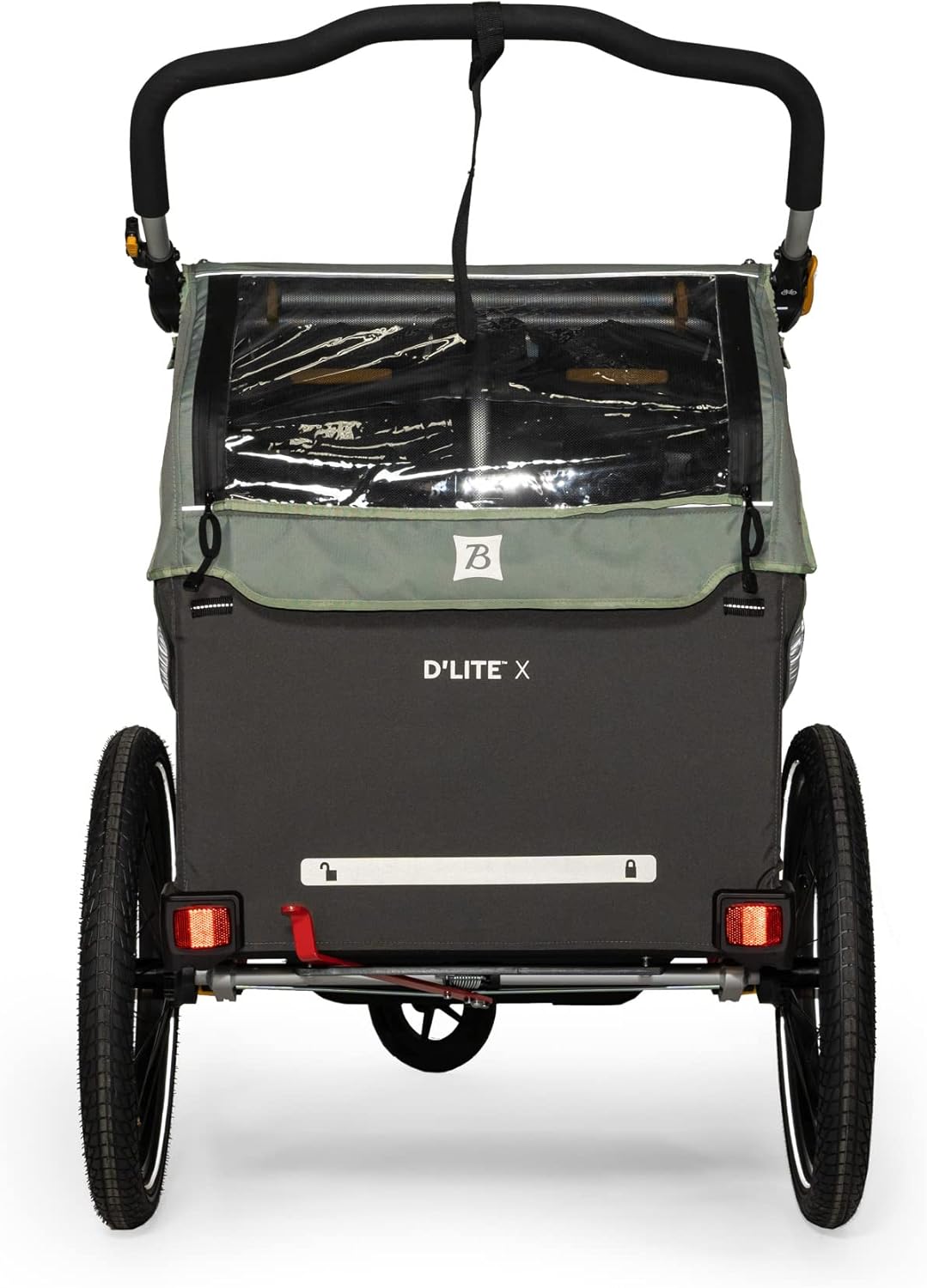
A kids bike trailer is exactly what it sounds like: a small two-wheeled carriage that hitches to the rear axle of an adult bicycle and carries one or two children in a protected cabin while the parent pedals. If you’ve never shopped for one before, the market breaks roughly into three tiers — budget (under $200), mid-range ($200–$400), and premium ($400–$600+) — and the differences between them are more consequential than price alone suggests. The goal of this guide is to lay out the real tradeoffs across those tiers, using the Burley D’Lite X and Burley Bee as mid-to-premium benchmarks and Schwinn’s Joyrider as the most widely sold mid-market option, with an honest look at where sub-$150 imports fit and where they fall short. By the end, you’ll have a decision framework that holds up whether you’re buying your first trailer or replacing one you’ve already outgrown.
| EDITOR'S PICKBurley D’Lite X | Mid-tier[Schwinn Echo Child Bike Trailer](https://www.amazon.com/dp/B00E3IGR7U?tag=greenflower20-20) | Budget pick[InStep Take 2 Kids Bike Trailer](https://www.amazon.com/dp/B01H4UID3Y?tag=greenflower20-20) | |
|---|---|---|---|
| Capacity | — | 80 lbs | — |
| Seats | 1 and 2 | 2 | 2 |
| Tire Size | — | 20-inch | — |
| Stroller Mode | ✓ | — | — |
| Weather Shield | — | — | ✓ |
| Price | $797.95 | $199.99 | $154.95 |
| See on Amazon → | See on Amazon → | See on Amazon → |
What You’re Actually Comparing: The Spec Variables That Matter
Before naming winners and losers, it helps to know which specifications actually affect the experience of pulling two children through a neighborhood or onto a multi-use trail. Reviewers at Bicycling Magazine and Wirecutter consistently surface the same five variables in their bike trailer evaluations.
Cargo capacity and weight rating. Most two-child trailers are rated for 100 lbs total child weight; some budget models drop to 85–88 lbs. That difference is irrelevant for infants but matters if your kids are 5 and 7 years old and you’re planning to use the trailer for three more years.
Hitch system. The hitch connects the trailer to the bike. A universal coupler — used by Burley, Thule, and most quality brands — fits nearly any adult rear axle and stays attached to the bike even when the trailer is detached, meaning reconnection takes seconds. Budget trailers often use proprietary or frame-clamp systems that are slower to use and incompatible across brands.
Rollover protection and frame geometry. A trailer’s aluminum or steel frame needs to maintain a protective cage around passengers if the unit tips onto its side. Consumer Reports’ Bike Trailer Buying Guide flags ASTM F1975 — the North American safety standard for bike trailers, covering stability, hitch retention, and reflectivity minimums — as a baseline to demand from any brand you consider. Budget imports frequently do not publish compliance data for this standard.
Suspension. True suspension — a physical spring or elastomer damper in the wheel assembly — absorbs road vibration before it reaches the passenger seat. Wirecutter’s Best Bike Trailers for Kids evaluation notes that owners of suspended models consistently report better child comfort on cracked pavement and gravel paths compared to owners of rigid-frame trailers, who often upgrade within a year.
Convertibility. Many trailers can switch between bike-tow mode and jogging-stroller mode by swapping a front-wheel accessory. This is a significant usability multiplier if you use it. If you won’t, don’t pay the premium for it.
The Three Tiers, Named and Compared
Burley D’Lite X (~$650): The Benchmark You’re Measuring Against
The D’Lite X is Burley’s flagship two-child trailer and the model that most premium comparisons use as a reference point. Published specs from Burley list cargo capacity at 100 lbs, total trailer weight at 24 lbs, and internal cabin width at 21 inches — wide enough for two children in car seats or winter coats. The frame is aircraft-grade aluminum, and the suspension is Burley’s own side-arm system, which BikeRadar’s How to Choose a Bike Trailer buyer’s guide identifies as one of the more effective passive suspension designs available in this class.
Owners across aggregated reviews on parenting and cycling forums consistently highlight three things: the UV-blocking mesh sunroof that children actually enjoy, the near-flat recline position that lets infants sleep during longer rides, and the one-hand fold that doesn’t require a tutorial to execute. The hitch is Burley’s proprietary quick-release coupler, compatible with virtually any adult 12mm or 15mm through-axle or traditional quick-release rear wheel.
The honest tradeoff: at $650 (street pricing as of mid-2026), you’re paying for the full package — suspension, ASTM compliance, premium hitch, stroller-conversion capability, and a 5-year frame warranty. If any of those features don’t match your actual use case, you’re leaving money on the table. The D’Lite X earns its price for frequent riders doing three to five rides per week, mixed terrain covering pavement and light gravel, and families with children spanning a wide age range.
Burley
$797.95
In stock on Amazon
Check price on AmazonBurley Bee (~$300): The Mid-Range Sweet Spot for Most Families
The Bee is Burley’s entry into the mid-range tier, and it’s meaningfully different from the D’Lite X in ways that matter: no suspension, no stroller conversion in the base package, and a narrower cabin at 18 inches internal width versus 21. What it keeps: the same ASTM-compliant frame construction, the same universal quick-release hitch, and the same 100-lb capacity.
People for Bikes’ Family Biking Guide identifies the Bee as one of the most frequently recommended trailers for families who ride primarily on paved paths and flat terrain — conditions under which the absence of suspension is barely noticeable. Owners report that ride quality on smooth pavement is indistinguishable from suspended trailers; the difference becomes apparent on chip-seal roads and gravel connectors.
The weight of 22 lbs is slightly lighter than the D’Lite X, which helps if you’re regularly loading it into a car or carrying it up apartment stairs. The Bee is the answer if your use case is: paved multi-use path, two children under 40 lbs each, rides under 60 minutes, and a budget that doesn’t justify $650.
Schwinn
$199.99
In stock on Amazon
Check price on AmazonSchwinn Joyrider (~$200–$250): The Honest Entry Point
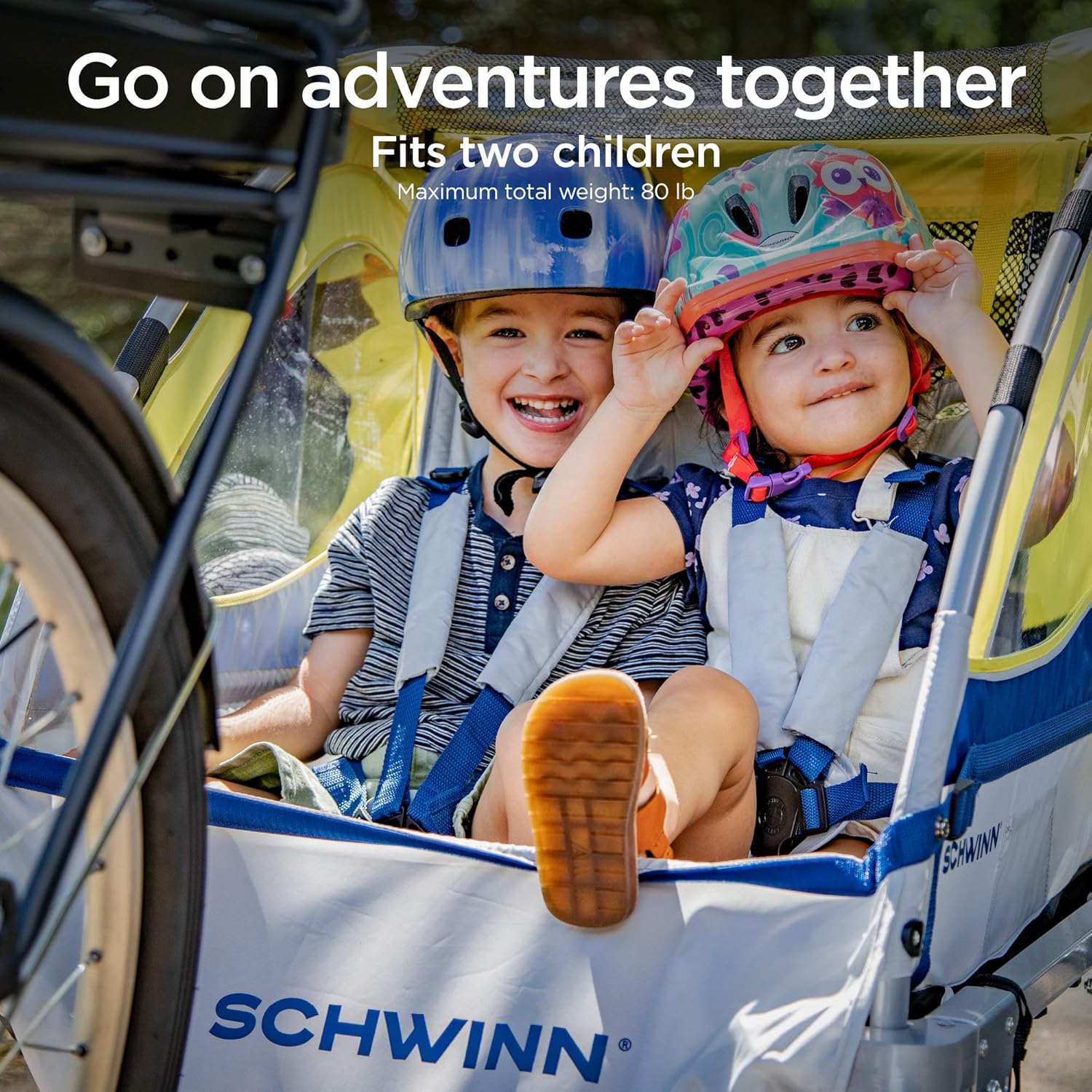
The Schwinn Joyrider is the dominant model in the $200–$250 band and has been for several years. Bicycling Magazine’s Best Kids Bike Trailers roundup notes it regularly because it covers the basics at a price point accessible to families who don’t yet know if they’ll use a trailer consistently enough to justify a $400+ spend.
Published specs from Schwinn list a 100-lb capacity, a steel frame — heavier than aluminum, with the Joyrider coming in around 29–31 lbs depending on configuration — and a universal-coupler hitch compatible with standard quick-release rear axles. There is no suspension. The stroller-mode conversion is sold separately and owners in aggregated reviews describe it as functional but less refined than Burley’s dedicated jogger wheel.
The tradeoffs are real and worth naming directly:
- Weight: 29–31 lbs is meaningfully heavier than the Burley Bee’s 22 lbs. For riders with any grade climbing in their routes, this adds up over a season.
- Frame material: Steel is durable and cheaper to manufacture, but surface coatings compromised by regular outdoor storage in wet climates can lead to rust at weld joints — a pattern noted in long-run owner reports cited in Wirecutter’s Best Bike Trailers for Kids evaluation.
- Suspension: None, and reviewers in both Bicycling Magazine and BikeRadar’s How to Choose a Bike Trailer guide note that steel-frame trailers transmit more vibration to passengers than aluminum-frame alternatives across back-to-back comparison rides.
The Joyrider is the right call if you’re new to bike-trailer riding, unsure of your weekly usage frequency, and riding exclusively on smooth paved paths with no plans for stroller-mode use. It is not the right call if you’re comparing it to the Burley Bee for a family already committed to regular riding — the $50–$80 price delta is worth closing for the weight and materials upgrade.
Schwinn
$199.99
In stock on Amazon
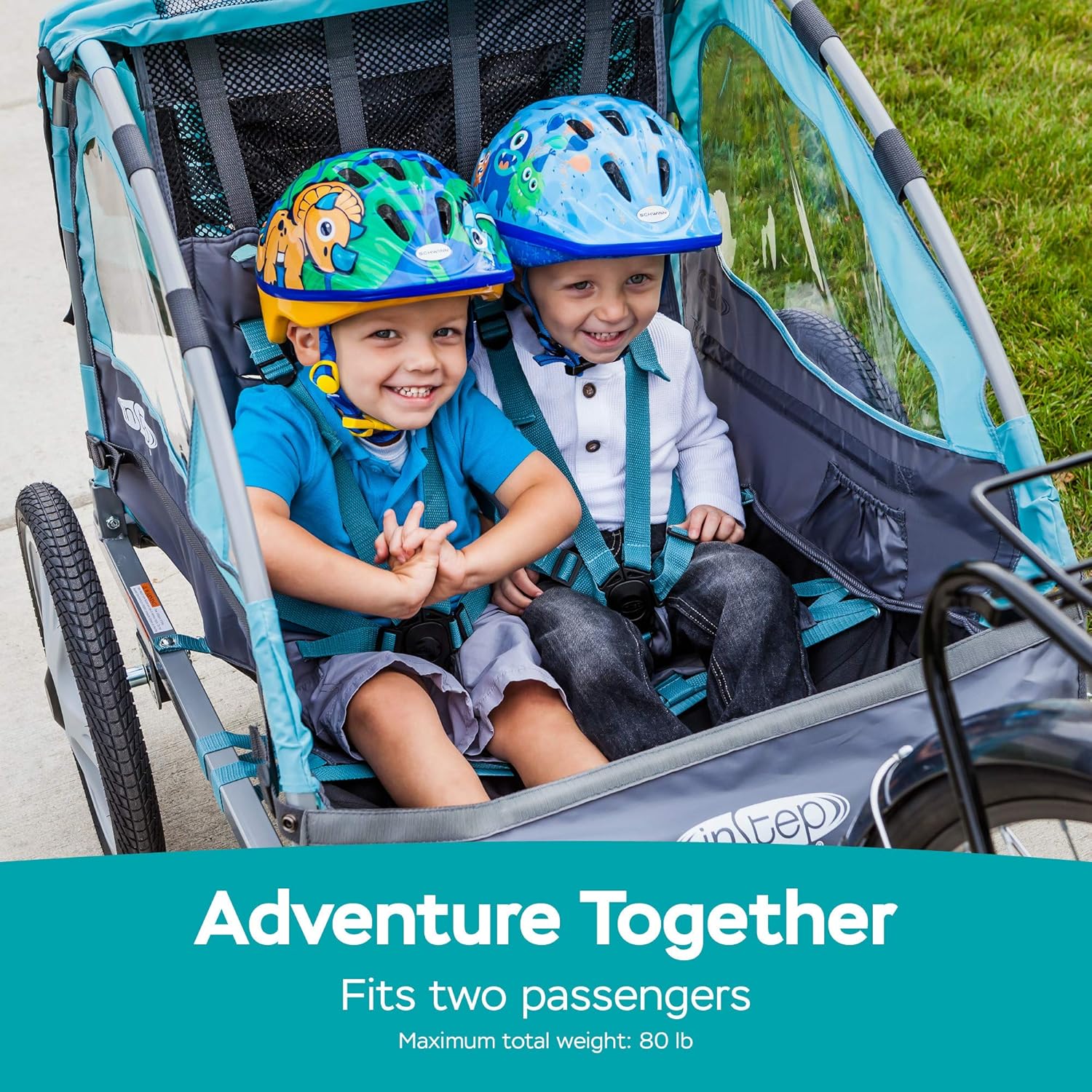
Check price on AmazonBudget / Import Tier (~$80–$150): Where the Savings Actually Come From
The sub-$150 import tier is the segment that draws the most questions and deserves the most direct treatment.
| Feature | Budget Import | Schwinn Joyrider | Burley Bee | Burley D’Lite X |
|---|---|---|---|---|
| Typical price (2026) | $80–$150 | $200–$250 | ~$300 | ~$650 |
| Capacity | 85–100 lbs (verify) | 100 lbs | 100 lbs | 100 lbs |
| Frame material | Steel | Steel | Aluminum | Aluminum |
| ASTM F1975 compliance | Rarely published | Published | Published | Published |
| Hitch type | Proprietary / frame clamp | Universal coupler | Universal coupler | Universal coupler |
| Warranty | 30–90 days typically | 1 year | 5 years (frame) | 5 years (frame) |
InStep
$154.95
In stock on Amazon
Check price on AmazonSchwinn
$199.99
In stock on Amazon
Check price on AmazonBurley
$797.95
In stock on Amazon
Check price on AmazonThe savings in the sub-$150 tier come from three places: thinner-gauge steel, simplified hitch systems that are slower to connect and incompatible with quality replacement parts, and no published safety certification data. Consumer Reports’ Bike Trailer Buying Guide specifically flags ASTM F1975 compliance as non-negotiable and advises consumers to request documentation before purchasing any trailer from a brand that does not publish certification information.
Owners who have used import trailers and later upgraded consistently report the same pattern: the trailer functions adequately on short, smooth rides, but confidence erodes over time — often triggered by a hitch that feels loose, a zipper that fails, or a moment of instability on a turn at moderate speed. That confidence erosion is difficult to assign a dollar value to, but it is the most common reason families end up buying twice.
InStep
$154.95
In stock on Amazon
Check price on AmazonMaking the Decision: A Clear “If X, Then Y” Framework
If you are a first-time buyer who rides fewer than twice a week on paved paths and isn’t sure you’ll maintain the habit, start with the Schwinn Joyrider. You’ll validate the use case without overcommitting, and if the habit sticks, you’ll have a clear trade-in rationale for moving up.
If you are already an established rider — three or more rides per week — or you have terrain that includes any unpaved surface, the Burley Bee is the floor, not the ceiling. The weight savings and ASTM-compliant aluminum frame construction are not marketing language; they represent real-ride differences that owners report noticing within the first month, a pattern consistent with what People for Bikes’ Family Biking Guide documents across family cycling use cases.
If you have two children who will both be using the trailer for the next three or more years, or you live in a mixed-terrain environment and want suspension to pay off over time, the Burley D’Lite X is the mathematically correct choice. The 5-year frame warranty effectively amortizes the premium to approximately $70 per year over the warranty period — less than most cycling accessories you’ll purchase in the same season.
If you are considering a sub-$150 import, ask the retailer for ASTM F1975 compliance documentation before purchasing. If it cannot be produced, that is the answer.
The bike trailer market has consolidated meaningfully around a few trusted frame platforms. Burley and Thule have established the quality benchmark; Schwinn occupies a defensible middle position. The budget import tier remains genuinely buyer-beware territory — not because inexpensive products can’t function, but because the safety certification gap is real and the downside risk on a product that carries children is not recoverable.
Do your miles math before you commit. The right trailer is the one that matches your actual riding frequency, your children’s current and projected ages, and the surface conditions you ride — not the one with the best product photography.