June 20, 2026 • Neil Hayes • 10 min reading time • Prices verified June 25, 2026
Suspension or No Suspension: Which Kids Bike Trailer Actually Matters for Your Roads
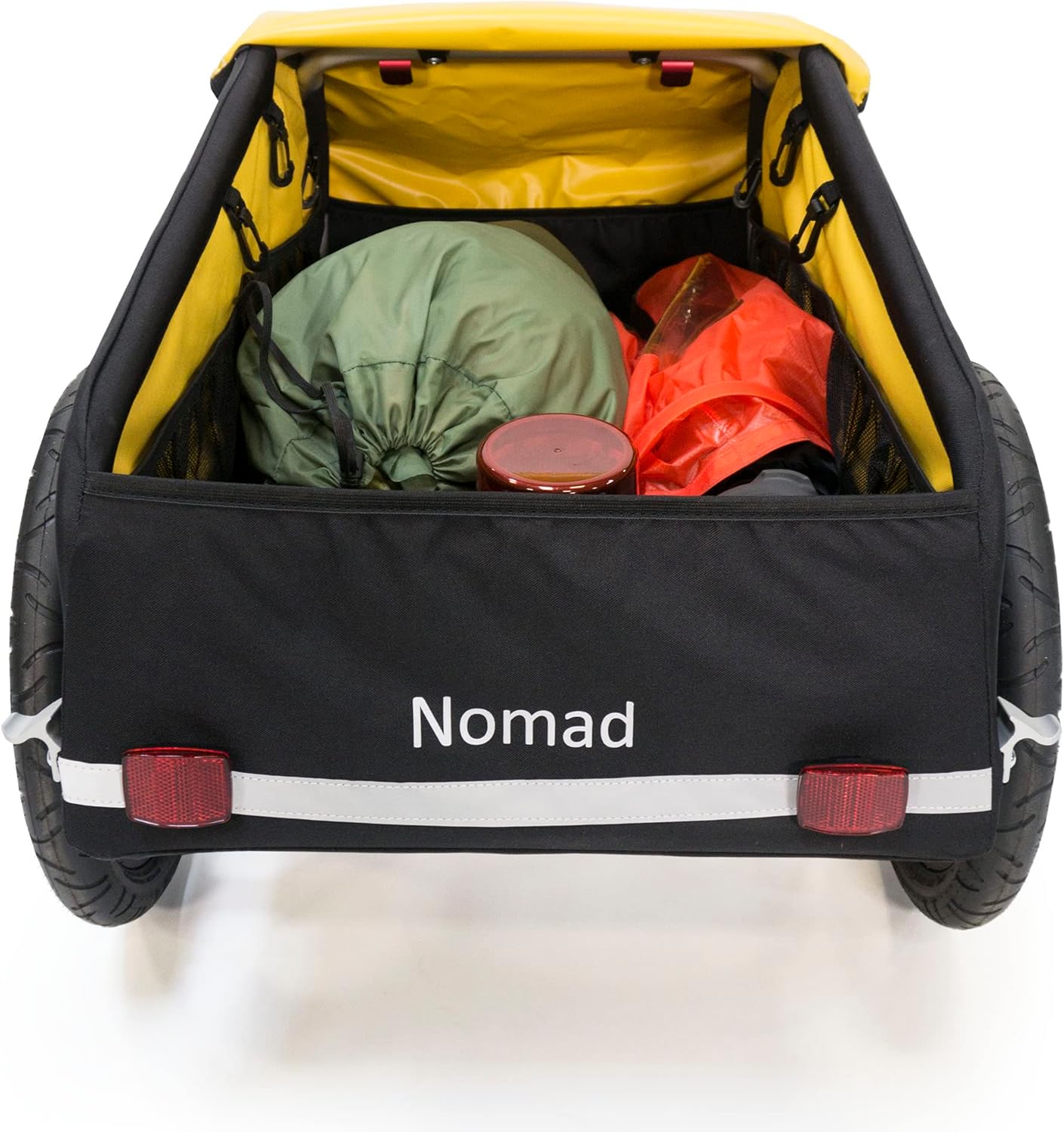
A kids bike trailer is a small two-wheeled carriage that hitches to the back of an adult bicycle and carries one or two children — typically ages 1 through 6 — while you ride. They’re one of the most practical ways to bring young kids along on errands, trails, or commutes without a car. But once you start shopping seriously, one specification divides the market more than any other: whether the trailer has a built-in suspension system (a set of springs or shock absorbers that cushion the ride over bumps) or relies purely on its tires and frame to absorb road vibration. That single feature can shift the price by $150–$250 and, depending on where you actually ride, can mean the difference between a napping child and a miserable one. This guide will help you figure out which side of that line your roads — and your budget — actually put you on.
| EDITOR'S PICKBurley D’Lite X | Mid-tier[Schwinn Echo Child Bike Trailer](https://www.amazon.com/dp/B00E3IGR7U?tag=greenflower20-20) | Budget pick[InStep Take 2 Kids Bike Trailer](https://www.amazon.com/dp/B01H4UID3Y?tag=greenflower20-20) | |
|---|---|---|---|
| Capacity | 2 Seat | 2 Children | Double Seat |
| Weight Limit | — | 80 lbs. | — |
| Tire Type | — | 20-Inch Air-Filled | — |
| Canopy | — | ✓ | ✓ |
| Stroller Mode | ✓ | — | — |
| Price | $797.95 | $199.99 | $154.95 |
| See on Amazon → | See on Amazon → | See on Amazon → |
What Suspension Actually Does (and Doesn’t Do) in a Bike Trailer
Suspension in a bike trailer works on the same principle as suspension in a car: a spring-and-damper mechanism absorbs vertical shock before it reaches the passenger compartment. In the context of a child trailer, that means the chassis flexes over a crack, root, or pothole while the seat platform stays comparatively stable. The Burley Encore X, which is the trailer most reviewers point to when this topic comes up, uses a dual-spring suspension system mounted at the rear axle. Burley Design’s 2025 Encore X specification sheet describes the system as providing up to 2.5 inches of travel — meaningful on rough pavement but less transformative on a smooth bike path.
Here is the key nuance that gets lost in forum debates: suspension addresses high-frequency, low-amplitude vibration — the constant buzz and chatter from chip-seal pavement, gravel shoulders, or cracked urban asphalt — better than it handles dramatic single-hit impacts like a sharp curb drop or a deep pothole. Tires do most of the heavy lifting on those big hits. This is why some owners of budget-tier trailers pursue wider, higher-volume tires as a DIY workaround: they are addressing the same problem through a different mechanical path, trading the frequency-damping of suspension for the compliance of more air volume. It works to a degree, but it does not replicate spring-based suspension, and it requires sourcing and swapping tires yourself.
Suspension vs. no-suspension at a glance:
| Model | Suspension | Cargo Capacity | Approx. Price Tier |
|---|---|---|---|
| Burley Encore X | Yes (dual spring) | 100 lbs | $500–$600 |
| Burley Honey Bee | No | 100 lbs | $350–$400 |
| Schwinn Echo | No | 100 lbs | $200–$250 |
| InStep Sync Single | No | 75 lbs | $120–$150 |
Prices reflect 2026 mid-year market conditions based on aggregated retail listings; specs per manufacturer documentation.
Matching Trailer to Terrain: The Decision That Actually Matters
Road surface is the real variable in the suspension debate, and getting this question right before you open your wallet saves both money and frustration. The following three sections break the market into the tiers that correspond to the terrain and budget situations most buyers actually face.
Budget Pick: Smooth Pavement and Tight Budgets
If you ride primarily on smooth, well-maintained bike paths or freshly paved suburban streets, suspension is a genuinely low-priority feature. Wirecutter’s 2025 guide The Best Bike Trailers for Kids notes that for typical paved-path riding, a no-suspension trailer with quality pneumatic (air-filled) tires performs adequately and the cost savings are meaningful. The Schwinn Echo and InStep Sync Single both land in this category.
The Schwinn Echo draws consistent praise from buyers who did thorough cross-shopping. Multiple owner accounts cite its wider wheelbase as a genuine stability advantage on descents and corners. It folds with the wheels attached — a convenience advantage over trailers that require wheel removal to reach a compact fold — and its double-wall construction at a sub-$250 price point represents strong value for riders whose routes stay on maintained pavement.
The InStep Sync Single is the right call when storage space is a binding constraint. Single-seat trailers fold noticeably smaller than doubles — typically fitting flat in a compact sedan trunk where a double trailer would not — and the Sync’s 75-lb cargo capacity covers the practical range for one child up to approximately age 6.
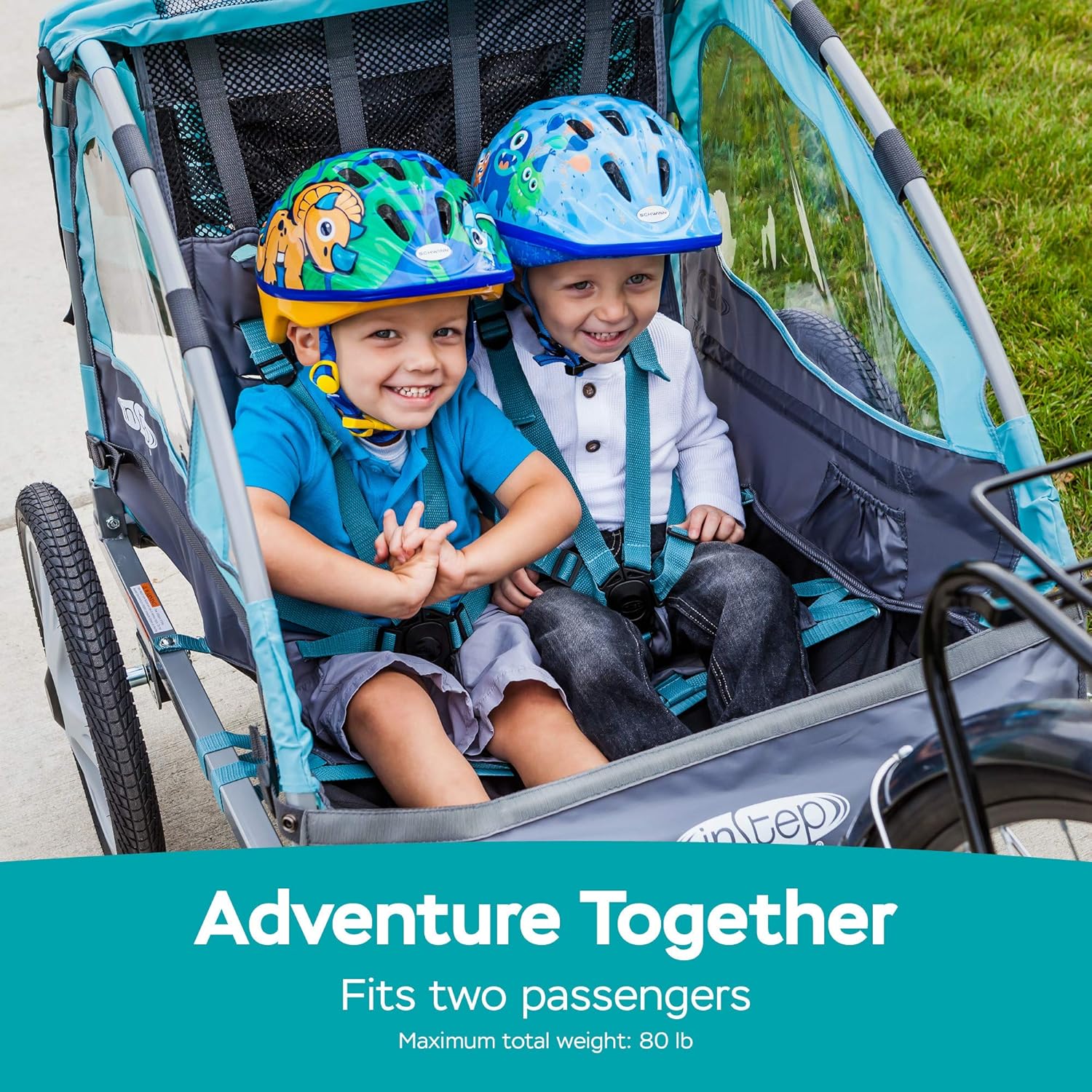
InStep
$154.95
In stock on Amazon
Check price on AmazonMid-Tier Pick: Mixed Terrain and Multi-Mode Use
The Burley Honey Bee occupies a compelling middle position. It lacks suspension, but at $350–$400 it converts from a bike trailer to a push stroller using an included front-wheel kit — a feature that Consumer Reports’ 2025 Kids Bike Trailer Ratings and Reliability report notes drives consistently higher long-term owner satisfaction scores for multi-mode trailers, because buyers find stroller uses they did not originally plan for.
This matters for the suspension decision in a concrete way: if the trailer ends up doing significant daily stroller duty — trips to the park, errands on foot, neighborhood walks — the suspension question largely disappears, because a stroller on a sidewalk experiences far less vibration than a trailer behind a bike at speed. Honey Bee buyers who discover they are spending more hours pushing than towing frequently conclude they made the right trade-off even when their bike routes are moderately rough.
The fat-tire DIY workaround is worth addressing directly for Honey Bee owners on occasionally rough routes. Swapping to a wider tire — typically from a 20x1.75 to a 20x2.0 or 20x2.35 if frame clearance allows — increases the air volume available to absorb vibration and softens the effective ride at lower tire pressure. It costs $30–$60 in parts and requires basic wheel-removal skills. What it does not replicate is the damping effect of a spring: air volume cushions individual impacts better but does not control oscillation the way a spring-and-damper system does. For moderate roughness it is a 40–60% solution; it is not the answer for consistently broken pavement.
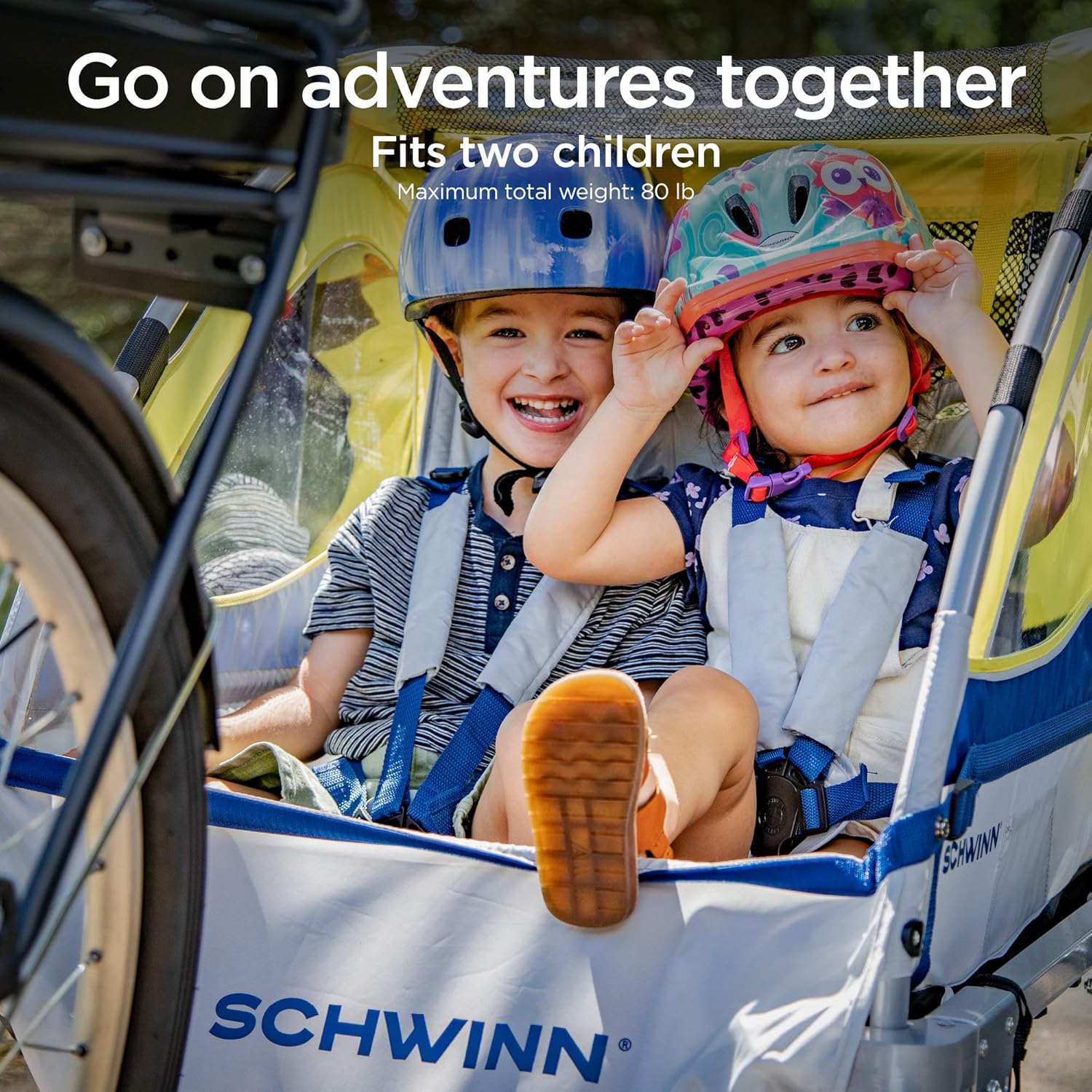
Schwinn
$199.99
In stock on Amazon
Check price on AmazonPremium Pick: Rough Pavement and Demanding Conditions
The Burley Encore X earns its $500–$600 price point specifically on rough terrain. Bicycling.com’s 2025 buyer’s guide Best Bike Trailers for Kids frames the suspension question as primarily a terrain question rather than a quality question — on consistently rough pavement, chip-seal, broken urban asphalt, or frost-heaved surfaces, the Encore X’s dual-spring system addresses exactly that use case. Burley Design’s 2025 Encore X specification sheet confirms up to 2.5 inches of rear axle travel, which meaningfully reduces the mid-frequency vibration that characterizes deteriorated pavement.
For riders in climates with severe freeze-thaw cycles, areas with significant road deferred maintenance, or routes that include sustained gravel connectors between paved sections, the suspension premium is justifiable. On genuinely smooth roads, the same money spent on the Honey Bee leaves $150–$250 available for rain covers, child helmets, or other safety equipment.
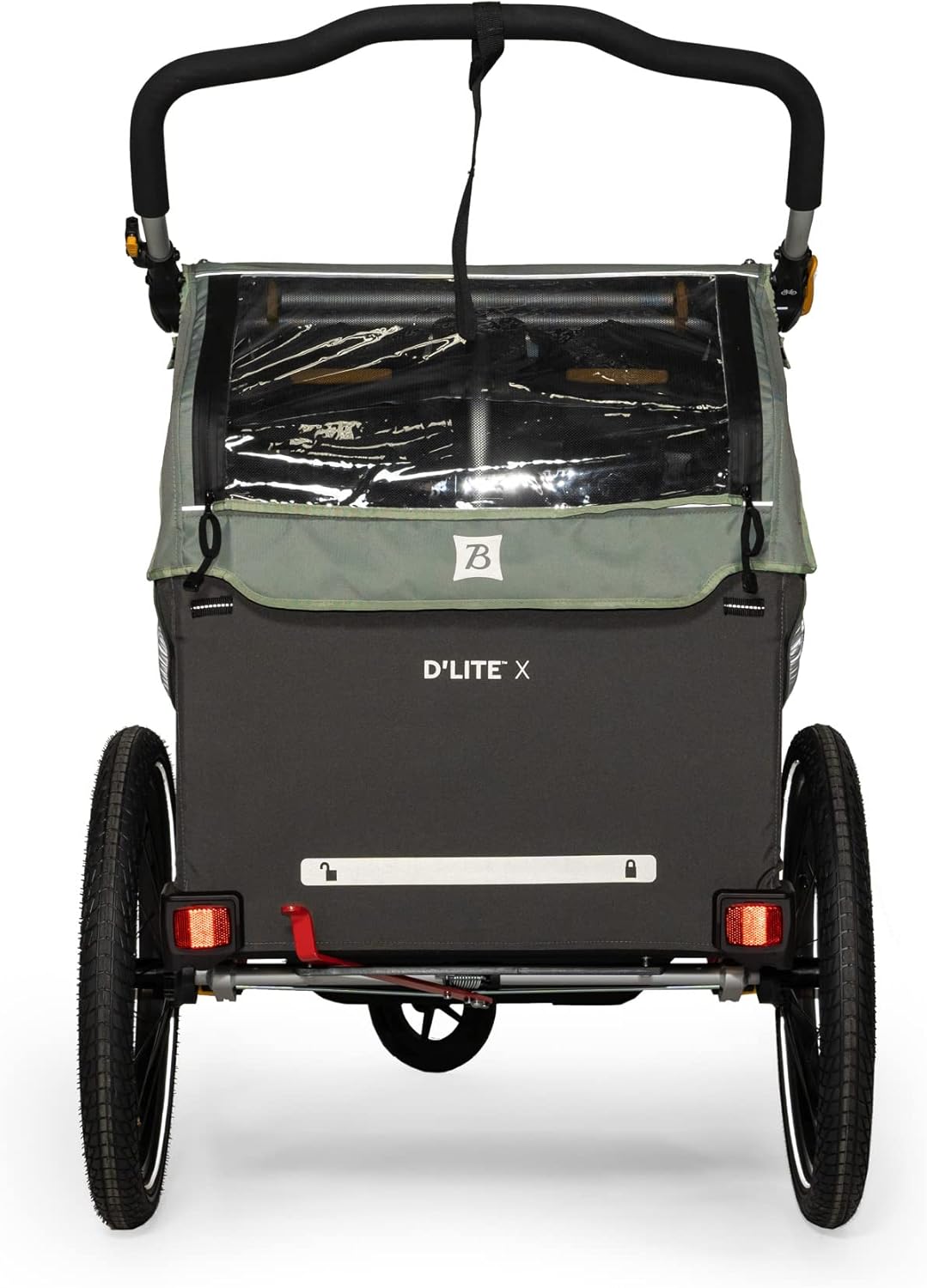
Burley
$797.95
In stock on Amazon
Check price on AmazonE-Bike Towing, Speed Safety, and What Manufacturers Actually Say
This is where editorial responsibility is clearest. Trailer owners frequently report towing two children behind e-bikes — electric bicycles that can assist riders to 20–28 mph depending on class — at speeds well above what most trailer manufacturers sanction. Most trailer documentation, including Burley’s, specifies a maximum towing speed of 15 mph. That is not a suggestion; it is an engineering limit based on hitch geometry, frame stress ratings, and tire dynamic stability at speed.
PeopleForBikes’ 2024 E-Bike Towing Safety Guidelines explicitly flags this mismatch: Class 2 and Class 3 e-bikes can easily sustain speeds that exceed the rated limits of most consumer kids trailers, and riders often do not notice because the ride feels smooth to them on the bike. It does not feel smooth to the trailer. Lateral instability — trailer sway — increases with speed in ways that are not linear. Small speed increases above the rated limit produce disproportionate increases in sway risk. Towing children behind an e-bike at 20-plus mph in a trailer rated for 15 mph is a safety compromise, not a personal-risk calculation to optimize around.
If e-bike towing is your primary use case, verify before purchase that the specific trailer you are evaluating publishes an e-bike-compatible speed rating. That constraint cuts across all price tiers and is independent of the suspension question.
Fold Size, Car Fit, and the Practical Logistics Nobody Talks About Enough
Most current double bike trailers fold to a package roughly 30–32 inches wide, 20–24 inches tall, and 14–18 inches deep when collapsed. That fits flat in most crossovers and small SUVs, but creates real problems in compact sedans or hatchbacks. Single-seat trailers like the InStep Sync fold meaningfully smaller and are the correct call if car-storage space is genuinely constrained.
The Schwinn Echo’s fold-with-wheels-attached design is a genuine convenience advantage for buyers who load and unload frequently. The Encore X and Honey Bee both fold the main frame flat but require more cargo-bay depth than they appear to need on first inspection. If you are regularly loading from a small vehicle, measure your cargo space against the folded dimensions in the manufacturer spec sheet before committing — this is a mismatch that produces real regret.
Frequently Asked Questions
Does the Burley Honey Bee work as a full-time stroller replacement?
For everyday neighborhood and errand use, yes — owner patterns consistently show it used this way. It is heavier and wider than a purpose-built stroller, which matters on narrow sidewalks or tight indoor spaces. For outdoor daily use with a child who still needs wheel-based transport, it functions well. Do not expect the maneuverability of a dedicated jogging stroller in tight quarters.
Can I tow a kids trailer safely behind an e-bike at higher speeds?
Not at speeds above the trailer’s published rating. Most trailers are rated to 15 mph. PeopleForBikes’ 2024 E-Bike Towing Safety Guidelines is clear that speed above the rated limit introduces lateral instability risk that grows non-linearly with speed. If e-bike towing is your primary use, seek trailers that explicitly publish an e-bike-compatible speed rating and hold to it.
Is the Burley Encore X suspension worth the premium over the Honey Bee on paved roads?
On genuinely smooth paved roads, no — the Honey Bee performs adequately and the savings are real. On consistently rough pavement, chip-seal, or broken urban asphalt, the Encore X’s suspension addresses exactly that use case. Per Bicycling.com’s 2025 best bike trailers guide, the suspension question is primarily a terrain question, not a quality question.
Will a fat-tire upgrade on a budget trailer replace suspension?
It provides measurable improvement — more air volume means more compliance on individual impacts — but it does not replicate spring damping on sustained rough surfaces. It is a legitimate upgrade for Honey Bee or Schwinn Echo owners on occasionally rough routes; it is not the answer for severely deteriorated pavement conditions.
How compact do these trailers fold, and will they fit in a small car?
Double trailers typically fold to 30–32 inches wide — manageable in most SUVs and crossovers, tight in compact sedans. The Schwinn Echo folds with wheels attached. Single trailers like the InStep Sync are meaningfully smaller. Measure your cargo space before buying if this is a constraint.
At what age or weight should I stop using a kids bike trailer?
Most manufacturers rate their trailers to 40–50 lbs per child seat, with total cargo limits of 75–100 lbs. The practical upper end is typically around age 6–7. Wirecutter’s 2025 guide The Best Bike Trailers for Kids recommends discontinuing trailer use when a child can no longer sit upright with the provided harness properly fitted, regardless of age.
The Decision Rule
If your roads are smooth and your budget is constrained, the Schwinn Echo or Burley Honey Bee gives you a capable, safe trailer — and the stroller conversion on the Honey Bee opens up daily utility you will likely use more than you expect. If your roads are genuinely rough — broken pavement, gravel connectors, frost-heaved urban streets — the Burley Encore X’s suspension earns its price premium specifically for that condition. If you are on an e-bike, verify the speed rating before any trailer purchase, because that constraint applies across all price tiers. And if storage is your binding constraint, single-seat and fold-with-wheels designs solve a real problem that suspension status does not touch.
The suspension question is a terrain question. Answer the terrain question first, and the right trailer follows.