September 15, 2026 • Neil Hayes • 10 min reading time • Prices verified June 25, 2026
Kids Bike Trailer Suspension Reality Check: When It Matters, When It Doesn't
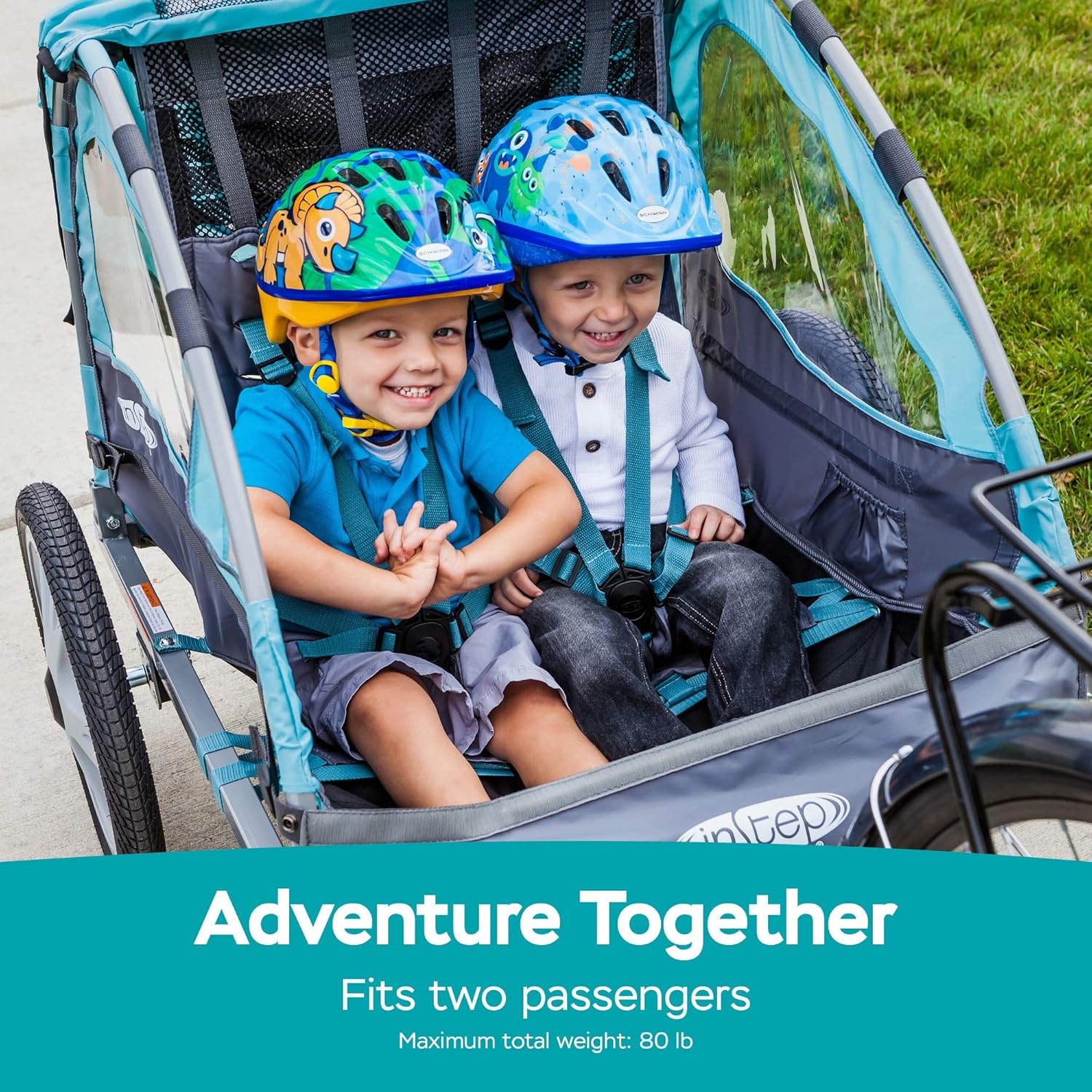
A kids bike trailer is exactly what it sounds like: a two-wheeled, enclosed cart that hitches to the rear of an adult bicycle and carries one or two children while you pedal. Unlike a rear child seat that mounts directly on the frame, a trailer sits low to the ground on its own axle, giving kids a protected, enclosed space — and giving parents the question that fills forums every spring: does my kid’s trailer need suspension?
Suspension, in this context, means a mechanical spring or elastomer system built into the trailer’s frame or hitch that absorbs road vibration before it reaches the passenger compartment. Trailers without it transmit every crack, root, and expansion joint directly to whoever’s sitting inside. That’s fine on a smooth rail trail. On a cracked urban bike lane or a packed-gravel path, it’s the difference between a kid who arrives cheerful and a kid who arrives rattled — sometimes literally. This guide will give you an honest framework for deciding which category your situation falls into, and where the budget breakpoints actually matter.
| EDITOR'S PICKBurley Bee | Mid-tierInStep Take 2 Kids Bike Trailer | Budget pickInstep Sync Single Seat Bike Ch… | |
|---|---|---|---|
| Seats | 1 Seat | Double Seat | Single Seat |
| Folding frame | — | ✓ | ✓ |
| Quick-release wheels | — | ✓ | ✓ |
| Max weight | — | — | 40 lbs. |
| Bug screen | — | ✓ | ✓ |
| Price | $288.69 | $154.95 | $118.98 |
| See on Amazon → | See on Amazon → | See on Amazon → |
The Terrain Equation: Where Suspension Earns Its Price Tag
The single most reliable predictor of whether you need suspension isn’t your trailer’s price — it’s the surface you ride. Reviewers and owners consistently break into two clean camps based on this variable alone.
Smooth-path riders almost never complain. Across aggregated owner reviews of no-suspension budget trailers like the Allen Sports and InStep models, parents who ride primarily on paved greenways, flat neighborhood streets, or smooth multi-use paths report that their children are comfortable, engaged, and enthusiastic. One pattern that surfaces repeatedly in Allen Sports reviews: children start bringing their helmets to the garage unprompted when they want to go for a ride. That’s a strong comfort signal from the most honest reviewer available — a toddler with no incentive to fake it.
Rough-path riders hit the ceiling quickly. Burley Bee owners — people who paid a premium over the budget tier — are notably candid in their reviews: they love the trailer’s build quality and fold mechanism, but they explicitly wish for fatter, more cushioning tires to absorb bumps. That admission from satisfied buyers in the $300–$400 range is telling. They’ve bought a well-made product and still feel the limitation of no suspension the moment pavement gives way to packed gravel or a root-laced trail.
The Sepnine suspension trailer sits in the mid-tier gap — roughly between the no-suspension budget field and the Burley premium tier — and earns specific praise in reviews for bumpy trail performance. For families whose regular route includes anything looser than packed gravel, the Sepnine represents the entry point where suspension becomes a genuine comfort upgrade rather than a marketing feature.
At the top of the range, Burley D’Lite X owners call out the trailer’s small suspension springs as something their children actually notice and comment on. Published specs from Burley describe the system as a leaf-spring suspension integrated into the frame — not a dramatic travel setup like a mountain bike fork, but enough mechanical compliance to meaningfully dampen the high-frequency chatter of rough pavement. Per Bicycling.com’s buyer guide on kids bike trailers, that spring system is one of the D’Lite X’s consistently cited differentiators at its price point.
Tire Width as a Partial Substitute — and Its Limits
Here’s a specification detail that changes the math on budget trailers: pneumatic tires (air-filled rubber, as opposed to foam-filled or hard plastic) act as the first line of vibration absorption even on trailers with no frame suspension. The larger the tire volume, the more air cushion between the road and your child.
Many budget trailers ship with 16-inch pneumatic tires in the 1.75–2.0 inch width range. That’s a meaningful amount of air volume. On smooth to moderately rough pavement, a properly inflated pneumatic tire does a real job of softening the ride — which is a large part of why budget-tier owners on smooth routes report comfortable kids.
The limits show up at lower speeds and higher frequencies. Tire flex handles gradual undulations well but passes short, sharp impacts — expansion joints, embedded rocks, tree roots — more directly to the frame. Frame suspension handles exactly those short, sharp impacts. They’re complementary systems, not interchangeable ones.
A quick spec comparison of tire volume across the range:
| Trailer | Tire Size | Suspension |
|---|---|---|
| InStep Take 2 | 16” × 1.75” pneumatic | None |
| Burley Bee | 16” × 1.75” pneumatic | None |
| Sepnine | 16” × 2.0” pneumatic | Frame suspension |
| Burley D’Lite X | 20” × 2.0” pneumatic | Leaf-spring frame suspension |
The D’Lite X’s 20-inch wheels — larger diameter than most competitors — add a secondary advantage: larger wheels roll over obstacles rather than dropping into them, which matters on cracked pavement and gravel paths. Per Wirecutter’s review of the best kids bike trailers, the D’Lite X’s wheel and suspension combination is the primary reason it holds its position at the top of their recommendations for families with rough-terrain ambitions.
The Double-Trailer Stability Insight (Even for One Kid)
A pattern that emerges across Schwinn Echo double-trailer reviews is worth unpacking because it’s counterintuitive: families buying the double-wide model for a single child aren’t just planning ahead for a second kid. They’re choosing it for the interior geometry — specifically the wider, more stable seating platform that gives a single child more room to shift position, bring a stuffed animal, or fall asleep without being pressed against a sidewall.
A single-child trailer optimizes for footprint and weight. A double-child trailer optimizes for interior volume. That extra volume translates to a more relaxed ride experience independent of suspension, because a fidgety or sleeping toddler in a double has room to find a comfortable position. It’s a comfort variable that no spec sheet captures, and it’s one of the cleaner pieces of insight to surface from owner reviews of that model.
The tradeoff is real: doubles are heavier, wider (which matters on narrow trail sections), and harder to store. But for urban families whose primary surface is smooth pavement and who have one young child, the double configuration’s interior comfort advantage is worth weighing against the width and weight penalty.
The Age and Weight Decision Frame
Rather than soft guidance about “older kids,” it’s worth naming the actual variables:
Under 12 months: Most trailer manufacturers, per their published safety guidance, require a child to have sufficient neck control to wear a helmet and hold their head upright. PeopleForBikes’ family cycling resource hub notes that the general guidance from pediatric and cycling safety organizations is to wait until at least 12 months, with many recommending closer to 18 months. No suspension system compensates for developmental readiness — this is a hard threshold, not a comfort preference.
12–24 months: This is the age range where suspension matters most. Toddlers in this window are typically alert, reactive to discomfort, and communicative about it. A rough-surface route with a no-suspension trailer is where you’re most likely to get a child who resists future rides. If your regular routes include anything beyond smooth pavement, this is the age window where upgrading to at least a mid-tier suspension option pays off in long-term enthusiasm.
24 months and up: Older toddlers and preschoolers develop more tolerance for vibration and can shift position, brace, and self-soothe more effectively. On smooth routes, the budget tier remains entirely appropriate through this age range. Weight is less of a factor than surface — most trailers in the $120–$600 range are rated for 80–100 lbs total cargo, and the average 4-year-old at roughly 40 lbs is well within that envelope.
Jogging Use: A Separate Category Entirely
One FAQ that comes up constantly deserves a direct answer: standard bike trailers are not jogging strollers, and most manufacturers say so explicitly in their documentation.
The distinction isn’t about suspension — it’s about the front wheel configuration. A standard bike trailer has no front wheel; it’s designed to be hitch-towed, where the tow arm provides directional stability. Jogging with a two-wheel trailer creates a pivot-point instability that can tip the trailer on turns. Trailers marketed as “convertible” (like the Burley D’Lite X and the Thule Chariot Cross) include a separately purchased or included front wheel kit that converts them into a three-wheel jogging stroller — a fundamentally different mechanical configuration. Per Outside Online’s kids bike trailer guide, the conversion kit is not optional safety equipment for jogging; it’s the core functional difference.
If jogging is part of your intended use, that requirement should be the first filter applied to your purchase decision, well before suspension becomes the question.
Frequently Asked Questions
At what age and weight does my child actually need a suspended trailer vs. a budget one? Age matters more than weight here. Developmental readiness (roughly 12–18 months, per manufacturer safety guidance) is the threshold. Beyond that, if your child is under 24 months and your routes include rough pavement or gravel, a mid-tier suspension trailer is worth the upgrade. Older children on smooth routes are comfortable in budget no-suspension models.
Do pneumatic (air-filled) tires on a budget trailer substitute meaningfully for suspension? Partially. Pneumatic tires handle gradual surface variation well and meaningfully improve ride quality over foam-filled or plastic wheels. They don’t handle sharp impacts — expansion joints, embedded rocks — as well as a frame suspension system does. They’re a genuine comfort factor, not a full substitute.
Is a double trailer more stable and comfortable than a single even for one child? More comfortable for the child, yes — the wider interior gives room to shift position. More stable in the wind-blown or rough-surface sense, marginally. The tradeoff is added weight and width. For smooth-pavement urban riding with a single young child, the interior space advantage is real and often underappreciated.
How do budget trailers like InStep and Allen Sports compare to Burley on rough pavement? On smooth pavement, the comfort gap is small enough that children don’t register it. On rough pavement — cracked urban bike lanes, light gravel — the gap becomes noticeable, particularly for children under 24 months. Burley Bee owners who ride rough surfaces explicitly wish for better tire or suspension performance in their own reviews, which indicates the gap is real even within Burley’s lineup.
Can I use a no-suspension trailer for jogging or only for cycling? Most no-suspension trailers are rated for cycling only. Jogging requires a three-wheel configuration with a front wheel that locks straight or swivels. Using a standard two-wheel trailer for jogging creates an instability risk on turns. Check your specific model’s documentation before attempting any jogging use.
What is the real comfort difference between a $120 InStep and a $600 Burley D’Lite X? On a smooth paved path: smaller than the price gap suggests. On rough pavement or light trails: significant — the D’Lite X’s leaf-spring suspension and larger 20-inch wheels handle surface variation that a budget trailer transmits directly to the passenger. The build quality, folding mechanism, and safety harness refinements on the D’Lite X are also consistently cited in long-term owner reviews as meaningful differentiators. If your route is smooth and your budget is limited, the InStep is a defensible choice. If your routes are mixed and you expect to use the trailer for two or three years across multiple children, the D’Lite X’s durability and suspension earn their premium.
The decision rule: If your rides are primarily smooth pavement or paved rail trails and your child is over 18 months, a no-suspension budget trailer with pneumatic tires is a rational, well-supported choice — owner experience backs it up. If your routes include cracked pavement, gravel, or unpaved paths, or if your child is between 12 and 24 months and still calibrating their enthusiasm for the trailer, move to at least a mid-tier suspension model. If jogging is any part of your plan, start with convertible-capable trailers and let that filter every other decision.