May 23, 2026 • Neil Hayes • 8 min reading time • Prices verified June 25, 2026
The Upgrade Path: From a $120 Kids Trailer to a Cargo Bike That Replaces Your Car
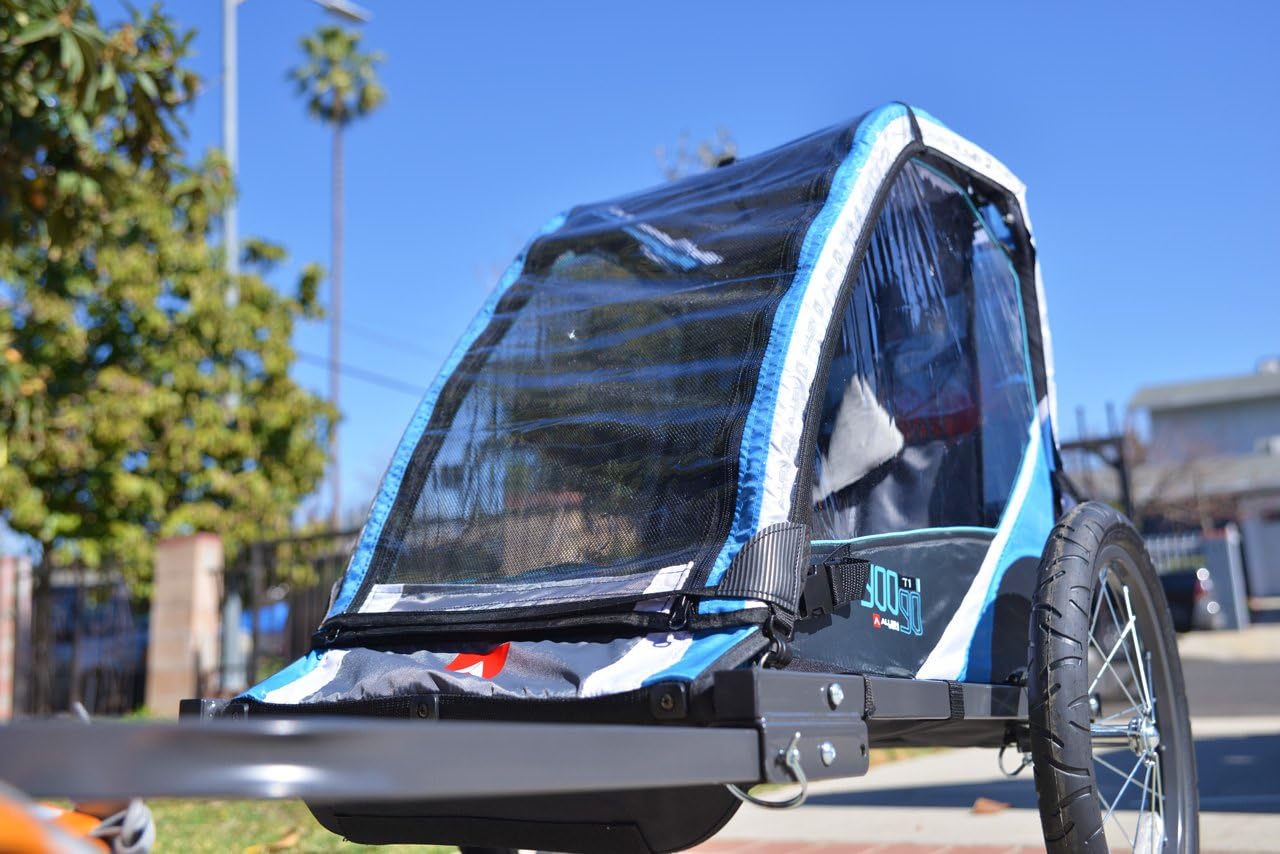
You started with a Burley D’Lite — a tow-behind trailer that hitches to almost any adult bike and hauls one or two small children — and it worked. It got the kids to the park, survived a summer, and cost less than a tank of gas plus a car payment. But now the routine has shifted: school drop-off every day, grocery runs twice a week, a second child in the mix, and a growing suspicion that the family car is doing a lot of trips it doesn’t actually need to do. That’s exactly the moment when cyclists start researching cargo bikes — purpose-built two-wheelers (and some three-wheelers) with extended frames, integrated racks, or long front decks designed to carry serious loads as the primary function, not an afterthought. This guide walks through the math and the tradeoffs so you can decide whether a $3,000–$5,000 electric cargo bike genuinely earns its price tag for your household — or whether a better trailer is all you actually need.
| EDITOR'S PICK[Burley Encore X](https://www.amazon.com/dp/B0BW29W3XH?tag=greenflower20-20) | Mid-tier[Schwinn Echo Child Bike Trailer](https://www.amazon.com/dp/B00E3IGR7U?tag=greenflower20-20) | Budget pick[Instep Sync Single Seat Bike Ch…](https://www.amazon.com/dp/B002QAZ8WC?tag=greenflower20-20) | |
|---|---|---|---|
| Capacity | 2 seat | 2 seat | 1 seat |
| Max Weight | — | 80 lbs. | 40 lbs. |
| Wheel Size | — | 20-inch | — |
| Stroller Mode | ✓ | — | — |
| Folding Frame | — | — | ✓ |
| 5-Point Harness | — | — | ✓ |
| Price | $559.88 | $199.99 | $118.98 |
| See on Amazon → | See on Amazon → | See on Amazon → |
When the Trailer Stops Being Enough
A tow-behind trailer like the Burley D’Lite or the entry-level Schwinn Suburban Carrier has a real ceiling. Wirecutter’s guide to best kids’ bike trailers notes that the sweet spot for these products is children under five and cargo loads under 100 lbs combined — which is exactly right for a toddler and a bag of groceries, but starts straining when you add a second child, a week’s worth of shopping, or a kindergartner who’s graduated out of the 40-lb-per-child limit.
The subtler problem is ergonomics and route flexibility. A trailer adds roughly 35–40 inches to your total length and about 15 lbs of dead weight before any passengers. On a mixed urban route with tight turns, bike-lane gaps, and parking garage ramps, that geometry penalty is constant. Owners of tow-behind setups consistently report that certain routes — narrow alleys, sharper switchbacks, loading dock drop-offs — simply get avoided.
The practical trigger points that signal a real upgrade need:
- Two children simultaneously (combined child weight exceeds 80–100 lbs)
- Regular grocery or supply loads over 50 lbs
- Hilly terrain where a non-electric bike + loaded trailer becomes genuinely exhausting
- Commute distance over 4–5 miles one-way
- A goal of eliminating one car from the household
If you’re hitting two or more of these, the cargo bike conversation is legitimate. If you’re hitting just one, a mid-tier trailer upgrade — something like the Thule Chariot Cross, which manufacturer specs rate for two children and includes a suspension system — may resolve the issue for far less money.
The Intermediate Step: Trailer Upgrade vs. Cargo Bike
Before committing to a four-figure electric cargo bike, it’s worth being honest about what a better trailer can solve.
By the numbers:
| Option | Approx. Price | Max Child Capacity | Cargo Capacity | Electric Assist |
|---|---|---|---|---|
| Burley D’Lite X | ~$500–$600 | 2 children / 100 lbs | ~20 lbs gear | No |
| Thule Chariot Cross 2 | ~$2,400–$2,600 | 2 children / 100 lbs | ~20 lbs gear | No |
| Tern GSD S10 | ~$4,299 (2025 MSRP) | 2 children + cargo rack | 200 lbs payload | Yes |
| Rad Power RadWagon 4 | ~$1,999 (2025 MSRP) | 2 children + rear deck | 350 lbs total | Yes |
The Thule Chariot Cross is the most capable non-powered trailer on the market — BikeRadar’s cargo bike buyer’s guide treats it as the benchmark for multi-sport child transport — but at $2,400–$2,600, you’re spending 50–60% of a RadWagon’s price for a solution that still requires a capable tow bike and still adds the trailer drag problem. If your tow bike is already a mid-range ebike, a premium trailer is a legitimate choice. If your tow bike is a basic commuter, you’re stacking the wrong upgrades.
The cleaner decision rule: if the limiting factor is cargo capacity and convenience, a better trailer fixes it. If the limiting factor is range, hills, speed, or genuine car-replacement, you need the cargo bike.
The Cargo Bike Tier That Actually Replaces a Car
“Car replacement” is a phrase that gets used loosely. Let’s define what it actually requires: making 80–90% of your household’s daily driving trips — school, groceries, short errands under 8 miles — by bike instead, with children, in weather, without arriving exhausted. That’s a meaningful performance bar, and it filters the cargo bike market quickly.
Tern GSD S10 (~$4,299): The GSD is a compact longtail — a long-deck bike that fits a regular bike rack and parking spot despite carrying two kids and substantial cargo. Published specs show a 200-lb payload capacity, a Bosch Performance Line CX motor (85 Nm torque), and a range of 40–100 miles depending on assist level and load. Electric Bike Review’s coverage of the GSD S10 consistently highlights the Bosch motor’s hill-climbing behavior under load as one of its defining strengths. Owners in long-run reviews note that the bike handles school runs and full grocery hauls — including two child seats — without the motor feeling strained. The tradeoff: at $4,299, it’s a deliberate purchase, and the compact geometry, while clever, means cargo loading ergonomics take some learning.
Rad Power Bikes RadWagon 4 (~$1,999): The RadWagon’s published specs put total system capacity at 350 lbs, with a 750W hub motor and a claimed range of 25–45 miles. Bicycling.com notes the RadWagon as one of the most accessible entry points to genuine cargo biking, with a wide rear deck that accepts aftermarket child seats and cargo panniers without proprietary accessories. Owners consistently report that the hub motor is adequate for flat-to-moderate terrain but noticeably less confident than a mid-drive (like the Bosch) on steep hills under full load. At roughly half the GSD’s price, it’s the right answer for flatter cities where range and hill-climbing are secondary concerns.
The mid-market gap: There’s a meaningful void between ~$2,000 and ~$3,500 in the electric cargo bike market that trips up buyers expecting a “good enough” option at $2,500. PeopleForBikes’ 2024 e-bike benefits and barriers report identifies price sensitivity right at this range as one of the primary friction points in cargo ebike adoption — buyers often expect more bike at $2,500 than the category currently delivers. If budget tops out at $2,500, the RadWagon or a Lectric XP Cargo (around $1,499–$1,699) are the realistic choices; the step up to a Tern or a Riese & Müller requires committing to the $4,000–$6,000+ range.
The Real Cost Comparison: Trailer Life vs. Cargo Bike Life
This is where the upgrade path decision gets grounded in household math rather than aspiration.
A typical trailer ownership arc looks like this: $120–$150 for a Burley D’Lite, 2–3 years of active use, resale at $60–$80 if it’s clean. Net cost: roughly $60–$90/year for the trailer. The tow bike stays unchanged.
A cargo bike at $2,000–$4,500 amortizes differently, especially if it displaces car trips. Outside Online’s guide to choosing a cargo bike puts the average U.S. short urban trip (under 5 miles) cost by car at roughly $0.25–$0.45/mile when you factor in fuel, depreciation, and parking — which means a household doing 10 car-replacement trips per week at an average of 3 miles round-trip eliminates roughly $390–$700/year in direct driving costs, before insurance and maintenance savings. At that rate, a $2,000 RadWagon breaks even in 3–5 years on direct operating costs alone; a $4,300 GSD takes 6–11 years on that math, but the calculation improves sharply if a car is actually sold or a second car purchase is avoided.
The honest caveat: this math only works if you actually use the cargo bike for the trips it’s designed to replace. Owners who buy a cargo bike and still drive for most errands don’t see the break-even. The families who report the strongest satisfaction — across forums and long-term owner reviews at Electric Bike Review and BikeRadar — are those who committed to the cargo bike as a default for a defined category of trips before purchasing, not after.
Decision Rules: Which Path Is Yours
Pull these together into the framework you actually need at decision time:
If X = you have one child under 5, a flat commute, and a working tow bike: → A mid-tier trailer upgrade (Burley D’Lite X, ~$500) solves your problem cleanly. Revisit the cargo bike in 2 years.
If X = two children, hilly terrain, or loads consistently over 75 lbs: → The trailer has hit its ceiling. A RadWagon 4 at ~$1,999 is the lowest-friction entry into cargo biking that handles this load profile — just verify your typical route grade against the hub-motor reality.
If X = genuine car-replacement is the goal, with two kids, hills, and year-round use: → Budget to the Tern GSD S10 or equivalent mid-drive longtail. The Bosch motor’s performance under full load in variable weather is not something the hub-motor tier reliably matches, per the pattern in long-run owner reviews.
If X = budget is firm at under $2,000 and cargo biking is new territory: → Start with the Lectric XP Cargo or the RadWagon 4. These are real cargo bikes, not compromises, and the lower entry point lets you validate the car-replacement use case before committing to premium-tier spend.
The trailer that started this journey did its job. Whether a cargo bike does a fundamentally different one — or just a more expensive version of the same job — depends entirely on which of those X conditions is actually true for your household. Name the real constraint, match it to the spec tier that solves it, and the upgrade path clarifies itself.