August 5, 2026 • Neil Hayes • 10 min reading time • Prices verified June 25, 2026
Rear Bike Racks That Actually Fit: Matching the Right Rack to Your Bike and Load
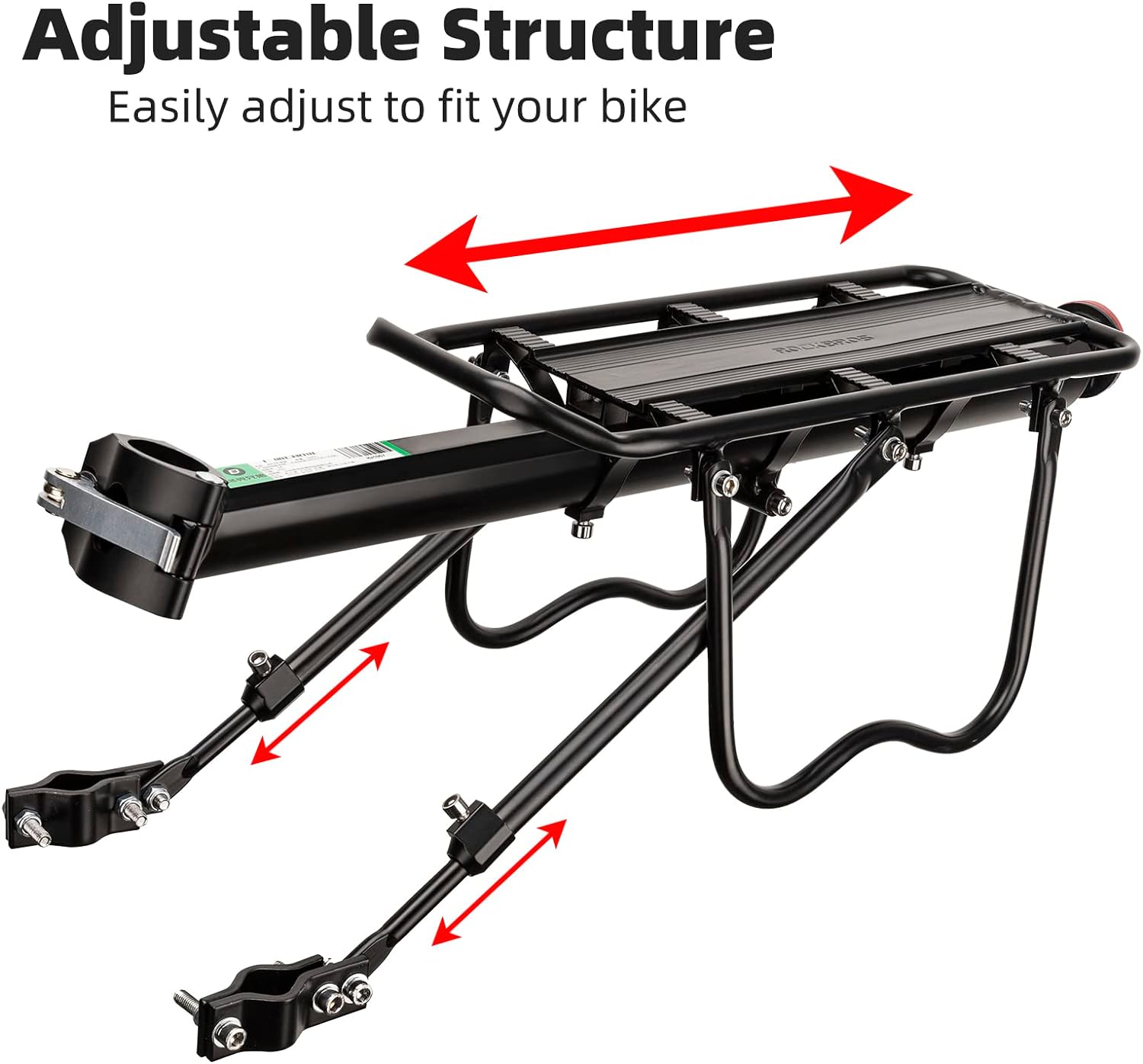
A rear bike rack is simply a platform bolted to the back of your bicycle that lets you carry things — groceries, panniers (saddlebag-style bags that hang from the sides of the rack), a child seat, or a wire basket — without putting the weight on your body. If you’ve ever tried to balance a heavy backpack on a long ride and arrived with a sore back, you already understand the appeal. The problem most buyers hit is that “fits bikes” on a product listing is close to meaningless: tire width, frame mounting points called eyelets (threaded holes built into the frame specifically for bolting on accessories), and whether your rack needs to touch the seat post all affect whether a given rack will actually work on your specific bike. This guide walks through the real compatibility questions — by bike type, load use case, and accessory ecosystem — so you’re not returning a rack two weeks after it arrives.
Why Fit Is the Whole Game (and What Controls It)
Before you look at weight ratings or finish options, three variables determine whether a rack is even possible on your bike:
1. Tire clearance. A rack’s struts — the arms that angle down from the platform to attach near the rear axle — have to pass over or around your tires. Standard racks are designed for tires up to roughly 2.1–2.4 inches wide. Fat-tire bikes, which run tires from 3.8 to 5+ inches wide, create a clearance problem that most racks simply cannot solve without modification. Reviewers on fat-tire e-bikes (a growing category documented in electricbikereview.com’s accessory compatibility roundup) consistently report that standard racks either won’t mount at all or sit so close to the tire that any flex under load risks contact.
The Retrospec Haul rack surfaces in owner accounts specifically because of how one reviewer solved this: they fabricated a small DIY bracket that moved the lower attachment point outward, achieving clearance on both sides of a bike with 4.9-inch fat tires. That’s not a typical install — it requires some mechanical confidence — but it illustrates the core principle: strut geometry, not just platform width, is what limits fat-tire compatibility.
2. Frame eyelets. Most quality rear racks attach at two points near the rear axle (called dropout eyelets) and at one or two points higher on the seatstay tubes. If your frame has no eyelets — common on performance road bikes, carbon frames, and some budget bikes — you’re limited to seat-post clamp mounting, which changes the physics of load-carrying significantly (more on that below). Bicycling magazine’s rack compatibility overview notes that eyelet absence is the single most common reason a buyer ends up with an incompatible rack.
3. Seat-post attachment vs. pure frame mounting. This is the variable that surprises the most buyers. Some racks use a clamp that bites onto the seat post — the vertical tube your saddle sits on — as their upper attachment point. That’s convenient on frames without eyelets, but it introduces a problem: if you ever need to adjust your saddle height (common when fitting a bike for different riders, or dialing in a fit), you have to remove the rack first. It also limits the rack’s load capacity, because the seat post is not designed to bear lateral and vertical stress the way welded frame eyelets are.
The Retrospec Haul rack’s design was explicitly called out by one reviewer as a differentiator: it does not attach to the seat post. The upper mount goes to the frame’s seatstay eyelets, which means saddle height stays adjustable independent of the rack. For daily-use cargo riders, that’s not a small thing.
Matching Rack Type to Bike Type
Road and Gravel Bikes (Often Eyelet-Equipped)
Modern gravel bikes — bikes with wider tires and more relaxed geometry designed for mixed-surface riding — have increasingly standardized on rear rack eyelets, which means you have full rack options. Owners of ROCKBROS racks in aggregated reviews at BikeRadar note a specific compatibility advantage: because the rack’s mounting geometry is consistent across product generations, panniers bought for one bike transferred directly to a second build (in one documented case, a new gravel e-bike) without any fit issues. That cross-bike pannier compatibility is worth real money if you’re already invested in a pannier system.
For road bikes without eyelets, seat-post racks work but impose real limits. Published manufacturer specs across major rack brands (Topeak, Thule, Bontrager) consistently cap seat-post rack loads at 15–18 kg (33–40 lbs), while frame-mount racks on the same bikes can be rated to 25 kg (55 lbs) or more. If you’re carrying grocery loads — which can easily hit 20+ lbs — that gap matters.
Fat-Tire and E-Bikes
This is the segment with the most landmines. Fat-tire bikes (3.8”+ tires) and many electric cargo bikes present three simultaneous challenges: wider tires, heavier baseline bike weight that makes load management more critical, and — on e-bikes specifically — motor and battery positioning that sometimes interferes with rack strut routing.
By the numbers:
- Standard rack: rated for tires up to ~2.4 inches wide
- Fat-tire threshold: 3.8–5+ inches (requires wide-clearance or DIY-modified struts)
- Typical frame-mount rack capacity: 25–55 kg depending on model and frame
- Seat-post rack capacity ceiling: 15–18 kg across most published specs
Electricbikereview.com’s fat-tire accessory roundup documents that the most reliable approach for 4”+ tires is either a rack marketed explicitly as fat-tire compatible, or a standard rack where the owner has confirmed strut clearance by measuring the gap between tire sidewall and strut path before ordering. Measuring costs nothing; a return shipment costs time and sometimes money.
Cargo Bikes (Tern GSD, RadWagon, Riese & Müller Load)
Dedicated cargo bikes are a different animal. Most long-tail cargo bikes (bikes with an extended rear frame designed specifically for cargo) ship with proprietary or semi-proprietary rack systems. The Tern GSD S10’s Atlas Cargo Rack, for example, is load-rated to 50 kg and integrates with Tern’s own bag and child-seat ecosystem. Swapping in a third-party rack is technically possible but usually means losing compatibility with the accessories the bike was designed around — and potentially voiding load-related warranty coverage. PeopleForBikes’ 2024 cargo bike adoption report notes that cargo bike fleet operators consistently cite “ecosystem lock-in” as both a limitation and a feature, depending on whether their accessory choices are already standardized.
For these bikes, the rack question is usually: what accessories do you want to carry, and does the OEM rack support them, or do you need a secondary mounting solution?
Wire Baskets: The Accessory Ecosystem Question
Wire baskets (open-top metal baskets that mount to the rack platform) are increasingly popular for grocery and errand riding, and owner reviews across multiple rack categories point to a consistent pattern: the basket alone is half the product. Owners consistently mention that the included cargo net — an elastic mesh that stretches over the basket opening to prevent items from bouncing out — and a waterproof cover are what make the basket functional in actual use, not just the basket itself.
One reviewer’s note is worth flagging specifically: their wire basket arrived with zip ties as an alternative mounting method alongside the standard hardware. Zip ties suggest the rack interface isn’t perfectly standardized — which means a basket sized for one rack may not sit flush or secure properly on a different brand’s platform, even if the tube spacing looks similar. If you’re buying a basket separately from your rack, check whether the basket manufacturer publishes compatible rack models, or plan to verify tube diameter and spacing before committing.
The practical implication: when evaluating wire baskets, treat the cargo net and waterproof cover as mandatory accessories, not optional add-ons. A basket without a net in an urban environment is a liability at every pothole.
Can I Mount a Child Seat on These Racks?
Child seats that mount to rear racks (as opposed to mid-frame or handlebar-mounted seats) require racks that are explicitly rated and tested for child seat use. This is not a weight-limit question alone — it’s a structural certification question. In Europe, EN 14344 is the relevant standard; in the U.S., ASTM F1625 covers child bicycle seats. A rack rated to 25 kg for cargo is not automatically certified for a 22 kg child, because the load dynamics — a living, moving child who shifts weight — are different from a static bag.
Bicycling magazine’s rack overview notes that Thule, Hamax, and Yepp publish explicit compatibility lists for their child seats. If you’re planning to run a child seat, verify the seat manufacturer’s rack compatibility list before buying the rack, not after.
Frequently Asked Questions
How do I know if a rear rack will fit my fat-tire e-bike? Measure the widest point of your rear tire (the actual inflated width, not just the marked size, which can vary). Then check the rack manufacturer’s published clearance spec for the lower struts. If the spec isn’t published, measure the strut path on the rack itself and compare. Fat tires wider than 3.8 inches usually require a rack explicitly marketed for fat-tire use, or a DIY bracket solution like the one documented in Retrospec Haul owner accounts.
Will my existing panniers fit a different brand’s rack? Usually yes, with caveats. Most panniers use a hook system designed around a tube diameter of 8–16mm. The ROCKBROS owner who bought a second rack specifically because their mountain bike panniers transferred to a new gravel e-bike is a real example of this compatibility working — but it depends on tube diameter and hook design. Check your pannier’s hook spec against the new rack’s rail dimensions.
Can I mount a child seat on these racks? Only if the rack is explicitly certified for child seat use and the seat manufacturer lists it as compatible. Don’t rely on weight ratings alone — check the certification and compatibility list.
What’s the real weight limit for daily grocery hauling? A full grocery run for a small household can hit 15–22 lbs (7–10 kg) easily, and a large run can exceed 30 lbs. Frame-mount racks rated to 25 kg (55 lbs) handle this without issue. Seat-post racks rated to 15–18 kg are workable for light grocery trips but get close to their limit on heavier loads.
Do I need eyelets on my frame to mount a rack? No — seat-post clamp racks work on frames without eyelets. But they limit your load capacity and lock your saddle height to the rack position. If your frame has eyelets, use them.
What’s the difference between a rack with seat-post attachment and a pure frame-mount rack? A seat-post attachment clamps to your saddle’s vertical tube, which is convenient but limits load capacity and saddle adjustability. A pure frame-mount rack attaches only to frame eyelets — no seat-post contact — which preserves saddle height adjustment and typically supports higher load ratings. The Retrospec Haul’s pure frame-mount design is a specific reason owners with fitting-sensitive setups favor it.
The Decision Rule
If your bike has frame eyelets and standard tires (under 2.4 inches): buy a frame-mount rack rated to at least 25 kg, verify pannier rail diameter matches your existing bags, and treat the cargo net as a mandatory accessory for any basket setup.
If your bike has fat tires (3.8”+): confirm clearance before ordering, and either buy a rack explicitly rated for fat tires or plan for a bracket modification.
If your bike has no frame eyelets: a seat-post rack works for loads under 15 kg; for heavier use, consider whether a different bike — or a dedicated cargo bike — is the right long-term answer.
If you’re planning to add a child seat: start with the seat manufacturer’s rack compatibility list and work backward to the rack, not the other way around.