August 8, 2026 • Neil Hayes • 10 min reading time • Prices verified June 25, 2026
The Two-Kid Trailer Question: Burley Bee and D'Lite X vs. Budget Double Seats
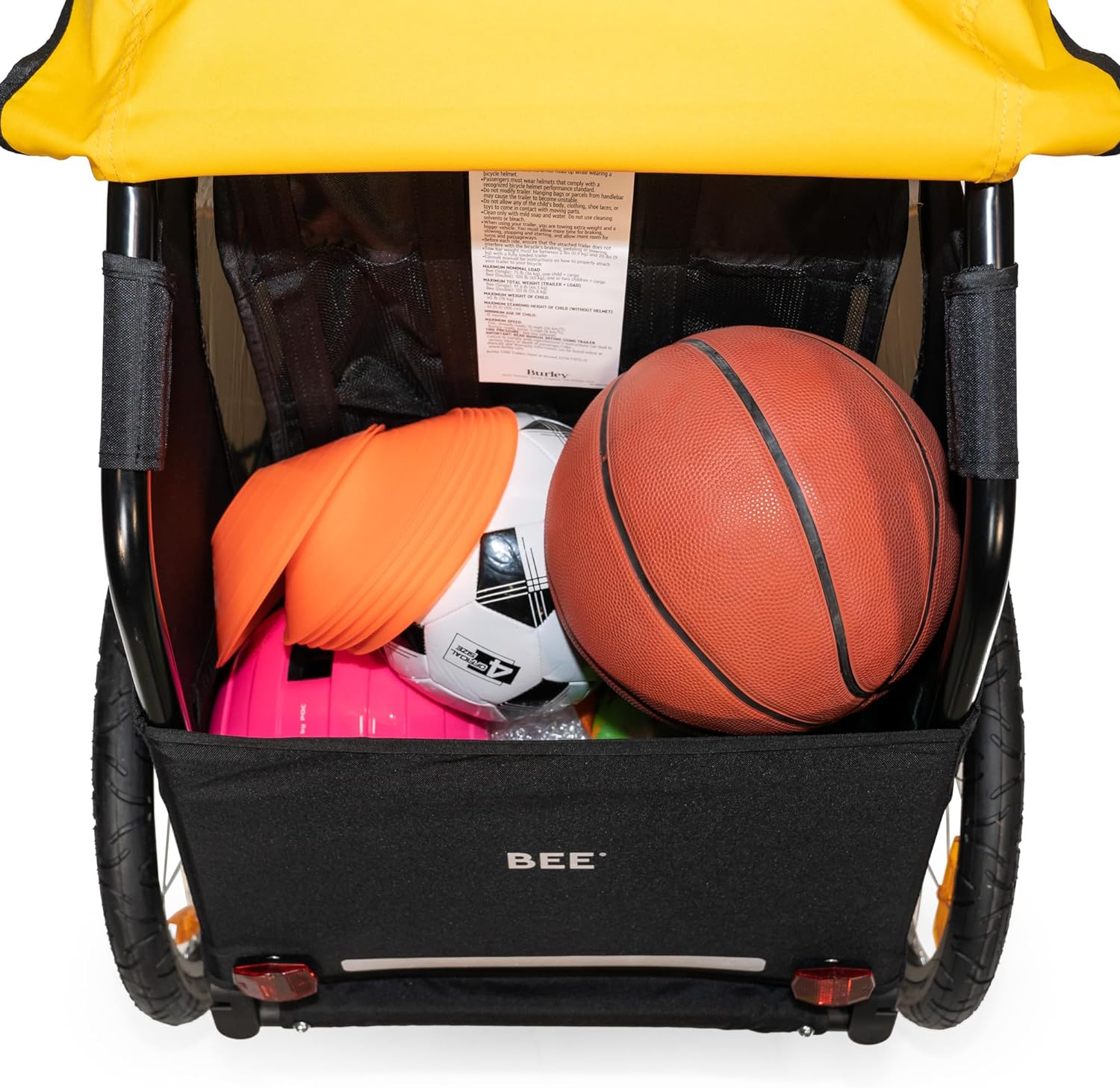
If you’re new to the bike trailer market: a two-child bike trailer is a covered cart that hitches to the rear axle or seatpost of an adult bicycle and carries one or two children — typically aged one to six — behind the rider. They look like small fabric-and-aluminum strollers without a push handle, and most convert to a jogging stroller or push stroller with an accessory wheel kit. The market splits roughly into two camps: mid-range premium trailers from brands like Burley ($300–$600) and budget imports in the $100–$175 range. If you’re a parent with two young kids who’s already committed to hauling them by bike — and you’re trying to figure out whether the price gap is real or marketing — this article is the comparison you’re looking for. We’ll work through the specs, sourced editorial guidance, and the tradeoffs that actually matter for a one-and-three-year-old sitting shoulder-to-shoulder.
| EDITOR'S PICKBurley Bee | Mid-tierInStep Take 2 Kids Bike Trailer | Budget pickAllen Sports Deluxe Steel Child… | |
|---|---|---|---|
| Seating | 1 or 2 | 2 | 1 |
| Bug screen | — | ✓ | — |
| Weather shield | — | ✓ | — |
| Folding frame | — | ✓ | — |
| Quick-release | — | ✓ | — |
| Coupler | — | Universal | — |
| Price | $288.69 | $154.95 | $121.11 |
| See on Amazon → | See on Amazon → | See on Amazon → |
What You’re Actually Comparing: The Spec Baseline
Before getting into feel and owner opinion, it helps to put the core numbers side by side. The products in the conversation here are the Burley Bee, the Burley D’Lite X, the Allen Sports Premier, and the Sepnine (sometimes listed under similar rebadge names) — a genuine mid-market option that gets underreported in most roundups.
Published manufacturer specs and verified retail listings, 2025–2026:
| Model | Approx. Price | Interior Width | Weight Capacity | Suspension |
|---|---|---|---|---|
| Burley Bee | ~$300 | 20 in | 100 lb total | None |
| Burley D’Lite X | ~$600 | 20 in | 100 lb total | Yes (coil spring) |
| Allen Sports Premier | ~$120–$140 | ~17–18 in | 88 lb total | None |
| Sepnine / Clevr | ~$170–$220 | ~18–19 in | 88–100 lb total | Yes (claimed) |
A few things jump out immediately. First, neither Burley model is wider than 20 inches at the seat — that’s a meaningful number when you’re seating a toddler and a preschooler side by side. Second, the Allen Sports sits notably narrower than the Burleys. Third, the Sepnine is the only budget option with claimed suspension, which makes it interesting in a way its price doesn’t suggest.
Bicycling Magazine’s guide “How to Choose a Bike Trailer” (2023) notes that interior seating width and harness quality are the two specs most parents underweight when comparing trailers at first glance. Consumer Reports’ child trailer ratings (2024) consistently flag interior space as a primary comfort differentiator between budget and premium categories.
The Premium Tier: Where the Money Actually Goes
Burley has been building bike trailers in Eugene, Oregon since 1978, and its lineup anchors the premium end of the two-child category. The D’Lite X is the flagship; the Bee is the entry point in the family — same hitch system, same frame DNA, stripped of suspension and a few fabric details to reach a lower price point.
Burley D’Lite X — The Flagship
The suspension is the headline feature, but the hitch system is what long-run reviewers keep returning to. Burley’s axle-mount hitch — which attaches to the rear axle rather than clamping to the seatpost or frame — creates a lower, more stable pivot point that reduces lateral sway under acceleration, braking, and cornering. Wirecutter’s “Best Bike Trailers for Kids” guide (New York Times, updated 2024) specifically names hitch stability as a meaningful differentiator once families are doing longer rides or loaded climbs, and identifies the axle-mount design as a consistent advantage of premium trailers over generic bar-clamp couplers.
The coil-spring rear suspension earns its price on mixed surfaces — chip seal roads, gravel connectors, cracked urban pavement — where the spring meaningfully absorbs shock that rattles straight through a rigid frame. On smooth, well-maintained paved paths, the practical ride-quality difference versus the Bee is minimal, according to editorial consensus across Wirecutter and Outside Online’s 2024 trailer roundup.
One durability data point worth naming: premium Burley trailers regularly appear in used-gear markets after five to eight years of active family use, with the hitch and frame still functional. That longevity track record is not something budget-tier trailers have established.
Burley
$288.69
In stock on Amazon
Check price on AmazonBurley Bee — The Practical Step-Down
The Bee’s value case comes down to one question: do you need the suspension? If your riding is primarily on paved bike paths and smooth neighborhood roads, the Bee’s ride quality is comparable to the D’Lite X on those surfaces. You retain the same axle-mount hitch system and the same 20-inch interior seat width — the two features that define the Burley ownership experience — while dropping roughly $300 from the purchase price.
The honest caveat applies to both Burley models: even at the premium tier, seating a one-year-old and a three-year-old together is genuinely snug at 20 inches. That’s not a flaw — it’s a physical reality of the category. Budget for 12 to 18 months of comfortable two-child use from roughly age 1 to 4, then expect to transition out as shoulder width grows.
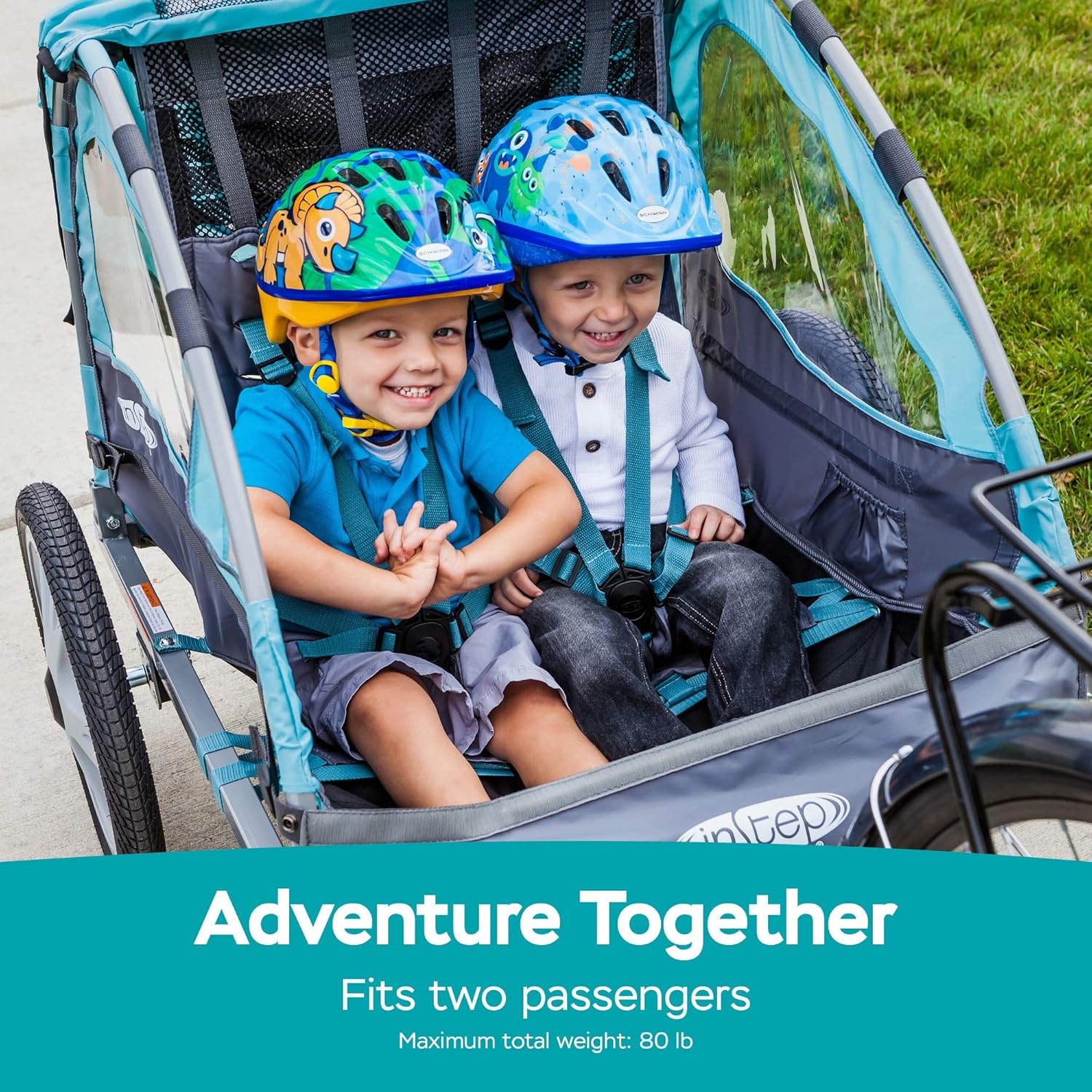
InStep
$154.95
In stock on Amazon
Check price on AmazonBudget Trailers — Allen Sports Premier and Sepnine
The Allen Sports Premier is the canonical entry-level two-child trailer — widely available, straightforward to assemble, and adequate for families who ride occasionally on smooth paths. Outside Online’s “Best Kids Bike Trailers for Every Ride” (2024) describes budget trailers in this category as suitable for weekend rides and light-use families who don’t need to prioritize durability beyond two seasons.
Interior width of approximately 17 to 18 inches — derived from external dimensions — is noticeably tighter than the Burley’s 20 inches. With two kids at ages 1 and 3, you’ll feel it. By ages 2 and 4, the fit may become uncomfortable enough to shorten trips. One specific owner-pattern worth noting in this category: the mesh screen windows on budget trailers use simpler zipper or snap closures that an active toddler can push open from inside. That is not a catastrophic failure, but it is a fit-and-habit detail worth knowing before your first ride near traffic.
The Sepnine (also sold under similar rebadge names) is the underreported middle option. It sits between Allen Sports and Burley Bee in both price and feature set, with a claimed suspension system that owners describe as functional rather than nominal. At roughly $170 to $220 depending on variant, it splits the difference meaningfully. Consumer Reports has historically noted that budget trailer brands show more variable assembly fit than established mid-range and premium brands — and unlike Burley’s controlled manufacturing, rebadged import trailers can vary between production runs. The Sepnine earns a recommendation for families with moderate riding frequency and a limited budget, but its durability ceiling under hard daily use is genuinely unknown compared to the decade-plus longevity Burley owners regularly report.
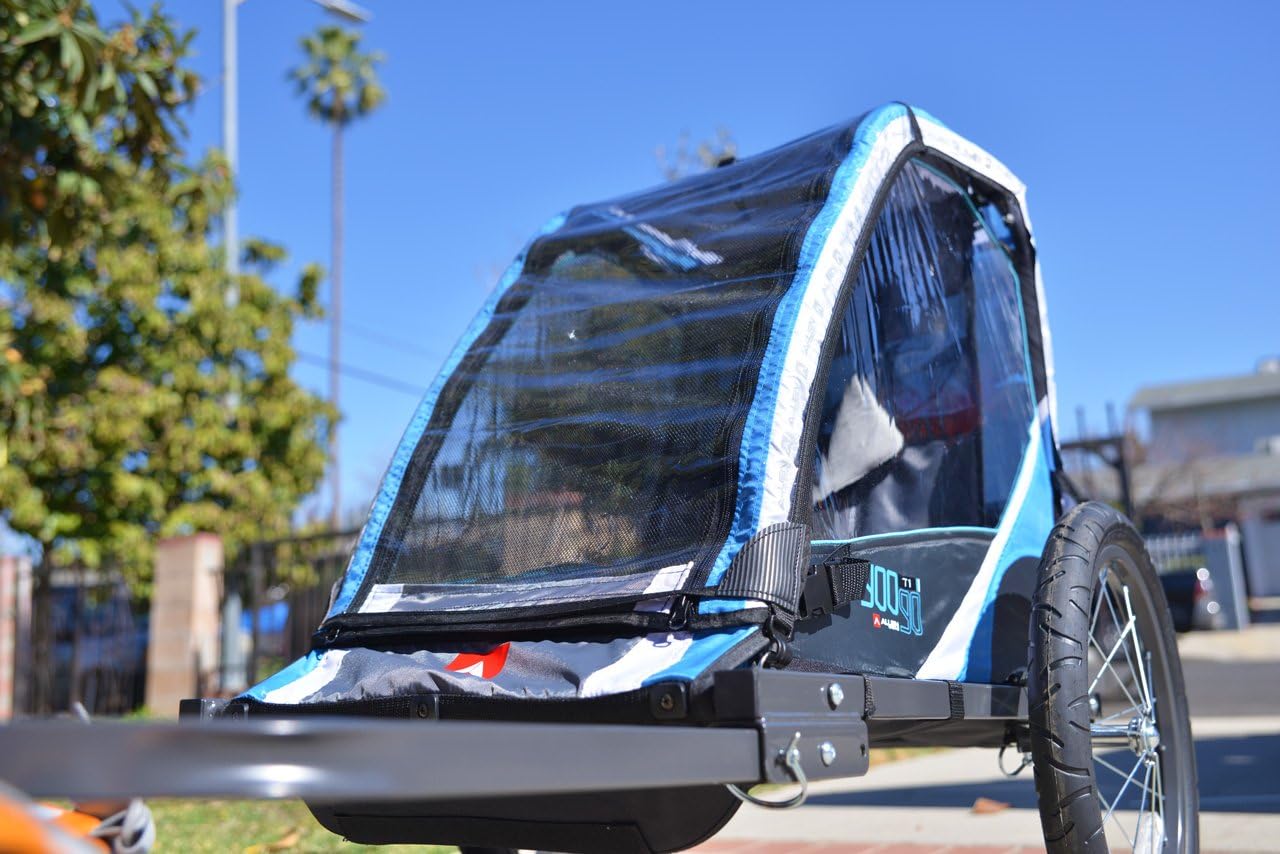
Allen
$121.11
In stock on Amazon
Check price on AmazonThe Hitch Question: Does Coupler Quality Actually Matter?
This is a real tradeoff and worth naming directly. Burley’s hitch system mounts to the rear axle of the bike, creating a low, stable pivot point that keeps the trailer from swaying when you accelerate, brake, or corner. Budget trailers almost universally use a generic bar-clamp coupler that mounts to the bike’s seatpost or frame.
Bicycling Magazine’s “How to Choose a Bike Trailer” (2023) notes that generic couplers work adequately for leisure riding but can develop lateral play on higher-speed descents or with heavier bikes — and that wobble transfers directly to the trailer. For a family riding flat rail-trails at 10 mph, this probably won’t matter. For a parent commuting on a loaded cargo bike, doing fast descents, or covering more than 10 miles regularly, the axle-mount hitch is a meaningful upgrade.
Outside Online’s 2024 trailer guide makes the point clearly: the hitch is the component where premium trailers most consistently justify their price difference. That editorial consensus — from two independent outlets — is worth weighting heavily in your decision.
Frequently Asked Questions
What’s the actual interior width for two children sitting side by side?
Published specs from Burley put both the Bee and D’Lite X at 20 inches of interior seat width. Budget trailers in the Allen Sports range come in at approximately 17 to 18 inches based on external dimensions and owner-reported measurements. The Sepnine falls in between at roughly 18 to 19 inches. For context: two children in winter coats at ages 2 and 4 will feel the difference between 17 and 20 inches in a way that shortens trips.
Does suspension matter if we only ride on paved bike paths?
For smooth, well-maintained paved paths, suspension adds minimal benefit — a point on which Wirecutter’s “Best Bike Trailers for Kids” (New York Times, updated 2024) and owner consensus align. If your riding environment is genuinely smooth, the Bee or a budget trailer will ride comparably to the D’Lite X. Suspension earns its value on chip seal, gravel connectors, or cracked urban pavement.
Can I use a budget trailer as a jogging stroller too?
Most two-child trailers include a front stroller wheel as standard or as a low-cost add-on. Budget trailers convert adequately for casual walks but are generally not ergonomic enough for running. The D’Lite X is specifically engineered for stroller use; multiple owners describe it as a genuine jogging stroller substitute, which makes it a consolidation purchase for families already shopping in the $400–$600 jogging stroller market.
How long do budget trailers realistically last for two children?
Aggregated owner sentiment and editorial guidance from Consumer Reports (2024) suggest two to three seasons of regular use for budget-tier trailers with two children before fabric wear, zipper failure, or frame flex becomes noticeable. Burley trailers regularly appear in used-gear markets after five to eight years of active family use with hitch and frame still functional. If you plan to ride three or more times per week, the durability difference compounds quickly.
At what age and size do kids outgrow a two-child trailer?
Most two-child trailers — including Burley’s — are rated to a combined weight of 88 to 100 pounds. The practical outgrowth limit is almost always height and shoulder width before weight. Burley’s published guidance puts the usable range at approximately age one through age six. In practice, two children together typically exhaust the seating comfort by ages four and six, or when the taller child’s head approaches the canopy frame.
The Decision Rule
If your family rides three or more times per week, uses the trailer as a stroller substitute, or rides on anything other than smooth asphalt — the Burley D’Lite X justifies its price, especially if you’re already shopping in the jogging stroller market and can consolidate that spend into one purchase. The Burley Bee is the right call if you ride on smooth pavement and want the hitch quality without paying for suspension you won’t use.
If your rides are weekend-only, under 10 miles, on paved paths, and you’re not planning to jog with it: a budget trailer handles the job. The Sepnine earns a look as the middle option if you want real suspension without the Burley price — buy it understanding that you’re accepting some durability uncertainty that Burley’s track record removes. The Allen Sports Premier is the honest choice for occasional riders who need the function without the investment — but take the screen-closure detail seriously if you have an active toddler.
One number to hold onto regardless of what you spend: 20 inches of interior width is the Burley threshold, and two growing kids will eventually fill any trailer. Budget for the transition accordingly.